A magnitude-4.6 earthquake rattled Southern California on Friday, sending tremors from the coast to inland areas, causing widespread shaking and stirring memories of past seismic events.
The quake and aftershocks
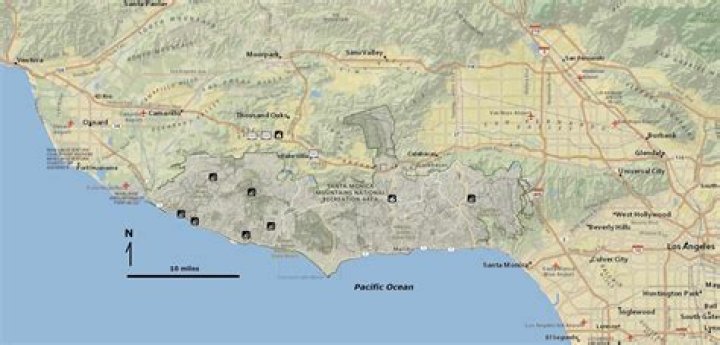
The quake struck just before 2 p.m., about 7 miles northwest of Malibu in the Santa Monica Mountains. Following the initial tremor, more than a dozen aftershocks, including ones measuring magnitudes of 3.0 and 2.7, were reported within an hour in the same vicinity.
Seismologist Dr. Lucy Jones described the aftershock sequence as "robust," but reassured that the likelihood of a larger seismic event diminishes over time.
Impact and response
Shaking was felt across the greater Los Angeles area, potentially affecting as many as 12 million people. Reports of tremors came from coastal regions like LA, Orange, and Ventura counties, stretching inland to areas such as the San Fernando Valley, downtown LA, Riverside, Irvine, and Anaheim. Even parts of north San Diego County experienced weak to light shaking.
Despite the intensity of the quake, there were no immediate reports of significant damage. Standard procedure was followed, with the Los Angeles Fire Department conducting a damage survey to assess any potential impacts.
Fault lines and historical context
The earthquake possibly occurred along the Malibu Coast Fault, which traverses the Santa Monica Mountains near communities such as Pacific Palisades, Westwood, Beverly Hills, and Santa Monica. This fault line, along with others in the region, underscores Southern California's susceptibility to seismic activity.
AdvertisementCoincidentally, the quake struck on the same date as the deadly 1971 San Fernando earthquake, a magnitude 6.5, resulted in numerous fatalities and extensive property damage. This historical event serves as a reminder of the region's seismic vulnerability and the importance of preparedness.
Unrelated seismic activity in Hawaii
In addition to the Southern California earthquake, a magnitude-5.7 quake rattled Hawaii's Big Island, causing tremors that were felt as far as 200 miles away on Oahu, including in Honolulu. However, this event was unrelated to the seismic activity experienced in Southern California.
While Friday's earthquake served as a stark reminder of Southern California's seismic activity, it once again proved that prompt response measures and ongoing monitoring efforts continue to be essential in ensuring the safety and resilience of communities in earthquake-prone regions.
Advertisement