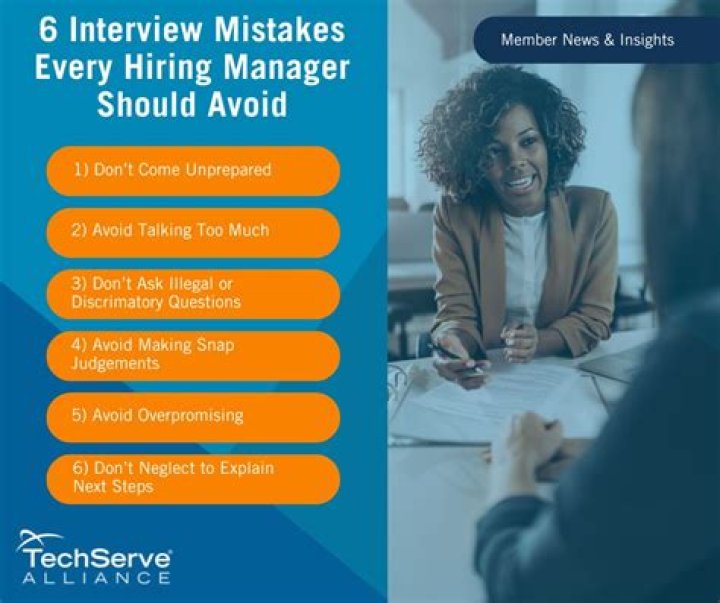
What shouldn’t you do when interviewing? There are mistakes you can make that will knock you out of the contention, or make an interviewer think twice about inviting you for a second interview or offering you a job.
Jobvite’s 2017 Recruiter Nation Report said there are some things that can automatically disqualify a candidate, including being rude to the receptionist or other support staff (86%), checking your phone (71%), showing up late (58%), bad hygiene (52%), interrupting the interviewer (39%) and bringing food to the interview (38%).
What else shouldn’t you do when interviewing? Here are some of the top interview mistakes, blunders, and errors a candidate for employment can make. Spend time preparing to interview, so these don’t happen to you!
10 Interview Mistakes to Avoid
1. Not Preparing: Not being able to answer the question “What do you know about this company?” might just end your quest for employment, at least with this employer. Background information including company history, locations, divisions, and a mission statement are available in an “About Us” section on most company websites. Review it ahead of time, then print it out and read it over just before your interview to refresh your memory. Also check the company’s LinkedIn page and Facebook page, if they have one. You should be prepared to answer the most common interview questions and know which of your qualifications and experience are most relevant to the position.
2. Dress Inappropriately: Dressing inappropriately can work both ways — outfits can too casual or too formal for a position. Calibrate your interview outfit to the industry and company style. You will certainly want to wear a suit if you are interviewing for a professional position. When interviewing for a summer job at your local theme park or as a lifeguard, though, a suit just doesn’t make sense. Instead, dress in neat and casual attire. If you aren’t sure what to wear, visit the organization and watch employees coming in and out of the office to see what they are wearing.
3. Poor Communication Skills: It’s important to communicate well with everyone you meet in your search for employment. It is, however, most important to positively connect with the person who might hire you. Shake hands, make eye contact, exude confidence, engage the person you are speaking with, and you will let the interviewer know that you are an excellent candidate for this position — before you even answer an interview question.
4. Too Much Communication: Believe it or not, a recent candidate for employment, who, by the way, didn’t get the job, didn’t hesitate to answer his cell phone when it rang during an interview. Leave the phone behind or at least turn it off before you enter the building. Same goes for coffee, food and anything else other than you, your resume, your job application, and your list of references. They don’t belong in an interview.
5. Talk Too Much: There is nothing much worse than interviewing someone who goes on and on and on. The interviewer really doesn’t need to know your whole life story. Keep your answers succinct, to-the-point, and focused. Don’t ramble – simply answer the question.
6. Don’t Talk Enough: It’s really hard to communicate with someone who answers a question with a word or two. So, even though you shouldn’t talk too much, you do want to be responsive and fully answer the question as best you can.
7. Fuzzy Facts: Even if you submitted a resume when you applied for the job, you may also be asked to fill out a job application. Make sure you know the information you will need to complete an application including dates of prior employment, graduation dates, and employer contact information.
8. Give the Wrong Answer: Make sure you listen to the question and take a moment to gather your thoughts before you respond. Like the following candidate, you’ll knock yourself out of contention if you give the wrong answer.
The interviewer had completely described a sales and marketing position to the candidate. She emphasized that cold calling and prospecting were the most important skills and experiences needed for the position. The candidate responded to the question about what she did or didn’t like to do in sales, with these words: “I hate to do cold calling and prospecting, and I’m not good at it.” That response ensured that she wouldn’t get the job!
9. Badmouthing Past Employers: Your last boss was an idiot? Everyone in the company was a jerk? You hated your job and couldn’t wait to leave? Even if it’s true don’t say so.
It’s sometimes a smaller world than you think and you don’t know who your interviewer might know, including that boss who is an idiot. You also don’t want the interviewer to think that you might speak that way about his or her company if you leave on terms that aren’t the best.
10. Forget to Follow Up: Afraid you didn’t make the best impression? Are you sure that you aced the interviewed? Either way, be sure to follow up with a thank you note reiterating your interest in the position and the company.
Finally, even if you do flub the interview, don’t take it to heart. I don’t think there is anyone hasn’t blown an interview or two. If it happens, look at it like it just wasn’t meant to be, learn from your mistakes and move on to the next opportunity.
No matter how qualified or talented you are, there are a few mistakes you can make in a job interview that will reduce your chances of getting a job offer.
Making a less than stellar first impression.
Your job interview starts the second you walk through the building doors. Be polite to everyone you meet, from the doorman to the people you ride the elevator with. Remove your headphones and put your phone away when you check in with the receptionist. This shows respect and also ensures that you won’t be distracted by a notification when someone is speaking to you.
Companies are starting to enlist the help of their teams to help choose candidates. This means that your interaction with the receptionist is actually part of the job interview, and you’ll be judged by how you treated her or him. Same goes for the doorman – did you say thank you when they opened the door or did you just walk by? The way you treat people when you aren’t being watched speaks volumes, so treat everyone you meet with respect. This extends far beyond just job interviews – we should treat people with respect at all times.
Complaining.
How Breast Cancer Turned This Entrepreneur Into A Better Business Woman
An Artist With Down Syndrome, A Tote Bag, And Joe Biden: How One Man’s Work Led To A Zoom Meeting With His ‘Hero’
The Necessary Ingredients For Launching Any Tech Product
There is never a good reason to complain in a job interview. It doesn’t matter how terrible your boss or coworkers are, or how much you absolutely despise your current role. Complaining in a job interview is a one-way ticket to not getting hired.
When speaking about things that you aren’t happy about in your current role, especially when you’re asked about why you’re leaving, frame it as a learning experience. Use the framework of a very brief description of the situation followed by the lesson you’ve learned from it.
If you’re coming from a toxic workplace, speak about how your experience, both positive and negative, has helped you define your own working style and preferences. If you had a boss who micromanaged you, speak about how you enjoy a challenge of figuring things out on your own with the support and guidance of a leader.
Showing up late.
Nothing is worse than showing up late to a job interview. Besides it being disrespectful to the hiring manager, you’ll also cause yourself unnecessary stress and you’ll be in a less than optimal frame of mind going into the interview. Being early means you can dedicate 100% of your brainpower to the interview itself. If you know your nerves tend to get the best of you, being early gives you a few minutes to sit before the interview to get grounded and try to relax.
You should arrive at least ten minutes ahead of time. Remember, you might have to wait to check in at the front desk or take the world’s slowest elevator, both things that can take more time than they should. Always plan for extra time to account for traffic or transit delays, and the time it takes to walk from the subway, bus stop, or parking lot. It’s better to arrive early and sit in your car or find a café nearby to pass the time than to be scrambling and running into the interview.
Not being prepared.
It’s not just talent and credentials alone that get you hired. It’s how you show up to the interview. The hiring manager wants to see that you’ve researched the company and the role. Know the job requirements and how you can add value specifically related to points mentioned in the job description. Practice answering mock interview questions to get over any nerves you might have.
You also want to have well thought out questions to ask at the end of the interview. This of course helps you get to know more about the job and the company, and it also shows the hiring manager that you’re truly interested in pursuing the opportunity.
When hiring managers find multiple qualified candidates, it’s the mistakes that are made that set people apart – but not in a good way. Avoid these mistakes and end your interview on a high note by giving a sincere thank you to the hiring manager. Thank them for their time, the opportunity, and reiterate your interest in the job.
NO MATTER HOW PREPARED YOU ARE FOR AN INTERVIEW, YOU CAN STILL END UP MAKING ONE OF THESE MISTAKES THAT’LL TAKE YOU OUT OF THE RUNNING.
Great news! You’ve gotten an interview for that job you want, so the next step is to ace it and get closer to getting hired. You’ve done your homework, researching both the company and the hiring manager you’re about to meet. You’re prepared with intelligent questions and great examples of past accomplishments that prove you’d be a great fit for this position.
What could go wrong? According to a new CareerBuilder survey, employers site these five instant deal breakers:
- Candidate is caught lying about something: 66 percent
- Candidate answers a cellphone or text during the interview: 64 percent
- Candidate appears arrogant or entitled: 59 percent
- Candidate dresses inappropriately: 49 percent
- Candidate appears to have a lack of accountability: 48 percent
Three tips to improve interview performance
Unfortunately, it’s easy to make these mistakes without even realizing it — and many of them are more common than you might think. So how can you avoid making a potentially interview-ending blunder?
Be self-aware. If you find you were accidentally rude, then apologize calmly and genuinely. Then leave it behind you and get on with the rest of the interview. If you dwell on it, it will affect your performance.
Make a good first impression. Unfortunately, no matter how hard the interviewer tries, a lot of decisions are made in the first few minutes of contact. According to the CareerBuilder survey, around half of employers (51 percent) know within the first five minutes of an interview if a candidate is a good fit for a position. If you make a strong first impression, the interviewer will be more inclined to overlook “imperfections” in your answers.
Be yourself. As you prepare for your session, are you planning to pretend to be someone you’re not? Do you intend to exaggerate your accomplishments or, worse, say whatever you think the interviewer wants to hear? Stop right there. You’ll win more points and make more allies if you present yourself as yourself
This year’s 12 most outrageous job interview mistakes
Not all mistakes employers have seen in interviews are so common. In fact, some are downright wacky. As part of the CareerBuilder survey, employers and hiring managers recalled the following strange-but-true examples:
- Candidate asked to step away to call his wife to ask her if the starting salary was enough before he agreed to continue with the interview.
- Candidate asked where the nearest bar was located.
- Candidate brought his childhood toys to the interview.
- Candidate ate a pizza he brought with him (and didn’t offer to share).
- Candidate asked interviewer why her aura didn’t like the candidate.
- Candidate invited interviewer to dinner afterwards.
- Candidate stated that if the interviewer wanted to get to heaven, she would hire him.
- Candidate ate crumbs off the table.
- Candidate said her hair was perfect when asked why she should become part of the team.
- Candidate sang to a song on the radio playing overhead.
- Candidate bragged about the fact that they were in the local newspaper for allegedly stealing a treadmill from an older woman’s house.
- Candidate put on and took off her sunglasses repeatedly.
Tweet at @CareerBuilder: What’s the biggest interview mistake you’ve made, and what did you do to fix it?
7 minute read
60% of interviewers know within 15 minutes whether they will hire you.
So every second counts.
Today we’ll look at the mistakes you don’t know you’re making.
The mistakes that could be holding you back.
The mistakes hiring managers notice straight away.
And how to avoid them.
Let’s get started.
1. Lack of Knowledge of the Company
It’s no secret that, according to employers, this is the #1 most common mistake they see in interviews.
Luckily it’s also the #1 most avoidable.
How to avoid: Do your research on the company. Find out as much as you possibly can about the company, the interviewer, and anything else of interest.
The best tool for this is LinkedIn , where you’ll find plenty of information about the company plus your interviewer’s employment history. 87% of recruiters use LinkedIn to vet candidates , so you should be using it too.
This will also give you great questions to ask in your interview , which can really set you apart.
2. Lack of Eye Contact
If you want to act like you don’t want the job, avoiding eye contact is how to do it. It tells the interviewer you aren’t confident, aren’t paying attention, or just aren’t interested.
How to avoid: Of course we can’t all magically become super confident. And concentrating on maintaining eye contact 60-70% of the time while telling someone you just met why they should hire you is a tall order.
Practice eye contact with your friends or family next time you talk to them. This will make it feel more natural plus they can give you feedback – paying attention or staring into their soul?
Bonus Tip: Alternate which eye you look into when talking to the interviewer, especially when they are talking. It will help you convey your interest while preventing you from staring too intensely.
3. Badmouthing Your Previous Employer
Your interviewer will assume that you will do the same for them.
How to avoid: Regardless of how you left your previous job, talk respectfully about your last employer. It will reflect positively on you and shows you can be professional.
Hiring managers know better than most that it isn’t always a clean break, but no one wants to go on a date with someone who complains about their ex the whole time.
4. Not Asking for the Job
This is something hiring managers really like to see but no one seems to know about. Confidence and self-esteem aside, not asking for the job can ruin your chances.
How to avoid: I’m not implying you should say “Can I have the job please?” before you leave. But there are some nifty ways you can ask for the job without actually asking, for example: “I’m really excited about what you’re doing and would love to be a part of it”.
If that feels too strong, you can go for “Can you tell me the next steps in the interview process”. You need to show your interest and enthusiasm.
Oh look, that’s next.
5. Lack of Interest/Enthusiasm
Body language, knowledge of the company and asking for the job are great ways to show interest. Here’s another key one.
Don’t just answer the question. You need to show you understand why you’re being asked that question.
• Why would they want to know?
• What does your answer say about you?
• What kind of things do you think they would want to hear?
Pause to think about the ‘why’ before you dive into answering.
6. Lacking Humour, Warmth or Personality
If you’re at an interview, you’re most likely suitable for the job – on paper. But a lack of warmth will give your interviewer cold feet. In fact in an Accountemps survey 79% of chief financial officers said an employee’s sense of humour is important .
Time for a personality check.
It’s definitely not a good idea to force jokes into your answers. However, if your answer has a fun mini-anecdote blended in, that can go down well.
Another great opportunity for humour is a hobbies/interests question. If you’re still not feeling funny, that’s ok, just be sure to smile. It can do wonders.
7. Over-Explaining Why You Lost Your Last Job
This is a big interview faux-pas.
How to avoid: If you were let go from your last job, it’s ok to touch on it. Briefly. It’s worth preparing a short answer for the “Why did you leave your last position” question to ensure you don’t waffle.
8. Speaking Too Fast
I am a fast-talker, guilty as charged.
While it’s nothing to be ashamed of, speaking at lightspeed in an interview can make you seem nervous and put the interviewer off (unless you’re applying to be an auctioneer ).
How to avoid: This is my own personal tip. Once the interviewer has finished asking the question, have a sip of water.
This will give you a bit of time to think about your answer without just sitting in silence. Speaking too fast and rambling are usually a result of diving into the answer prematurely.
Give your brain a head start on your mouth. This is extra important when it comes to telephone interviews.
9. Bad Body Language
Fidgeting, a weak handshake, playing with your hair and more. Not only are these distracting and potentially irritating for the interviewer, but they can also affect their decision. Here’s how to stay still and focused.
How to avoid: If you’re feeling restless at minute 44 of the interview, try to breathe nice and slowly. It will slow your heart rate and make you feel calmer.
If this doesn’t work, try clenching and unclenching your toes. It’s a great way to use up any unwanted energy without visibly moving.
10. Lying About Hobbies
A friend of mine was interviewing a candidate. In the candidate’s CV she had listed yoga as one of her hobbies. But when asked about it, it was immediately clear that she had never done yoga in her life. It didn’t cost her the job in the end, but it still reflected badly.
How to avoid: Be honest about your hobbies when writing your cv .
It’s ok if you’re not a kite-surfing, spoon-carving, Michelin starred chef on the weekends. Put down what you like to do with your free time, but only if it’s something you could discuss in an interview.
When used properly, hobbies can be a secret weapon in your interview and CV arsenal. A way to be relatable, show your true colours and make yourself a memorable interviewee.
You’ve landed an interview for an exciting new role, congratulations!
Now comes the real work — preparing for the big day. While it’s common to consider all of the things you should do, like ask thoughtful questions, dress appropriately, and check your internet connection if it’s a video interview, you may forget about the things they shouldn’t do that could jeopardize your chance of getting the job.
We’re uncovering common interview mistakes that you should avoid so you’re not sent back to the applicant pool.
Badmouthing Past Colleagues
When interviewing for a job, you want to assure the employer that you’re easy to get along with, thrive in a team setting, and can handle work conflicts in a mature and effective manner. By badmouthing past co-workers or managers, you’re sending your interviewer some huge red flags. You want to avoid causing doubts that you may be a negative contributor to the company or team, so err on the side of respect, and choose your words carefully.
Sure, your former boss or project manager may have been terrible, but by cleverly spinning negatives into positives that showcase your accomplishments and optimism, your future team will see your willingness to look on the bright side.
Connie Thanasoulis-Cerrachio , career coach and co-founder of SixFigureStart gives this great example: “If your manager was a micromanager, say the truth but in a good way. For example: ‘We had a very tight working relationship. He/she liked to be kept up to date on even the minutest details and that was fine with me. After the first few months, he/she knew I was doing a great job so the confidence was high, but we continued to check in because no time was wasted when I knew I was going in the right direction.’ “
Sometimes the world is smaller than you expect; the last thing you want is to talk poorly about someone that your interviewer may know personally. Keep it honest but kind when discussing past experiences.
Failing To Research The Company
One of the biggest complaints from hiring managers is that a candidate didn’t know much about the company or role prior to the interview. If you aren’t interested enough to do some homework in advance, the interviewer will rightfully assume that you won’t care once you’re in the position. Remember that most interviewers have a large applicant pipeline so the competition is always there and waiting to seize an opportunity.
To avoid this mistake, become familiar with information on their website, the mission and core values, recent events, and structure of the company as a whole. Your consultant advisor can provide valuable information about the role and the company, so be sure to utilize yours as a resource.
Pro tip: Research not only the role but your interviewers and the leaders of the company. Do you have anything in common with them, such as studying at the same university, mutual connections, or the same unique hobbies? These small details will go a long way, and help foster a connection and build early rapport .
Negative Body Language
Non-verbal communication is just as important as verbal communication, especially in an interview setting. Avoid body language habits such as slouching, minimal eye contact, and crossing your arms, as this gives off a closed-off, insecure, and uninterested vibe to your interviewers.
For some, nervousness often manifests as restlessness. Try your best to avoid distracting hair twirling, nail-biting, or tapping your feet. It’s normal to be nervous, but you want to appear calm and confident. To ease your jitters, practice some interview questions with a friend or colleague, being sure to avoid over-using filler words such as ‘um’ and ‘like’, and speaking in a confident, yet friendly tone.
Applicants that display warm, professional, and enthusiastic energy during an interview is often what sways employers towards hiring them over someone else. Remember to sit up straight, smile genuinely, and give friendly eye contact. Even if your interview is via phone or video , these tips can still come across positively to your interviewer.
Pro tip: Try to imagine how you would talk naturally with a friend. Constant, unwavering eye contact can seem aggressive and strange, but zero eye contact will make you seem distant. Aim for somewhere in the middle.
Getting Too Personal
Say goodbye to “ TMI ”. Nothing will hurt you more during an interview than revealing too much personal information about yourself. Think of an interview as a first date in the professional world. Would you tell a blind date about your messy divorce, childcare woes, or nightmare of a roommate? Maybe, but a second date surely won’t follow.
An applicant that reveals dramatic, personal details about themselves will appear unpredictable and lacking good judgment and professional appropriateness.
Keep the focus of the conversation and your answers to the job and its responsibilities. If you have specific concerns about how your personal life will interfere with your work, then ask to reach out to the company’s human resources department before accepting additional rounds of interviews.
Interview Like A Pro
Now that we’ve uncovered these cringeworthy interview mistakes, you can be sure to avoid them on the big day. Armed with these tips, you can start your interview prep by practicing some question response techniques.
Just getting back into the interview game after some time off? Discover best practices on how to address resume gaps during your next interview .
No job interview is flawless. One of good techniques preparing for your upcoming job interview is learning from others’ mistakes and knowing how to avoid these common mistakes.
This article reviews and discusses common mistakes made in an interview and provides tips on how to avoid these interviewing mistakes.
After reading this article, you may be interested in reading the article: what to say and what not to say in an interview.
You’ve worked hard to get to that job interview.
You passed many obstacles and now it is your time for the face to face interaction with this potential employer. You don’t want to miss this opportunity and screw it up.
Read further..
20 Common interview mistakes to avoid – the biggest job interview mistakes
The following are the ost common mistakes people make in interviews – the biggest make or break interviewing mistakes:
1. Lack of a good preparation: A research failure and lack of knowledge are the first mistakes one want to avoid. One has to prepare himself making a good research on the company, the position and for every related questions that may be asked. Therefore, refine your answers to the technical questions, the hard questions and to the frequently asked interview questions. The more you practice, the more professional answers you deliver.
2. Failure to highlight your achievements: you should provide good examples of your background and skills against the position. Why you are good fit for the position? Sell yourself. Take the opportunity to talk about your past experience and achievements – sell yourself to the said position.
3. Few words answers or talking too much: uttering unexpected answers like saying the wrong things, wrong ideas, too-short-answers or at the opposite too-long-answers are the guaranteed ways to get eliminated from consideration.
4. Arriving late: avoid arriving late to job interviews. Though it may happen because of many good reasons, you should apologize first for recovering from this first interaction failure.
5. Dressing inappropriately: you should dress for an interview success as your job interview dress code is the first impression you make. So, show up like one who really wants the job.
6. Body language failures: a poor eye contact, bad handshake, sitting inappropriately and not smiling naturally are the best recipes for losing a job interview. Don’t let nerves get the better of you – relax before an interview. Smile when it seems the right time and keep an eye contact with the interviewer as these little things make a difference.
7. Lack of integrity – un-loyal – a complainer: avoid negative speeches and complain – don’t say bad things about previous jobs and employers as this reflects back to you. The first impression you create when you’re negative about someone is that your loyalty and integrity is questionable. How you speak about your previous employers gives an idea of how you’ll speak about the next employers.
8. Interrupting the interviewer: you should firstly listen carefully to the interviewer questions before answering. You want your answers to be precise and professional. Therefore, respond only after you fully understand the question.
9. Rambling the answer to weaknesses and strengths: refer to the article how to answer weakness and strength question.
10. Bringing up personal details: when answering the questions “tell me about yourself” candidates sometimes think the interviewer wants personal stories – sadly this is not the case. In fact, this is one of the most common interview mistakes. Be sure you have a set clear story about – who you are, what you are about this career and most importantly what you want to achieve from this position. Therefore, avoid offering irrelevant personal details unless you are asked. Refer to the article interview question tell us about yourself.
11. Failure to ask good questions: when it is your turn to ask questions, you should show your interest about the job by asking intelligent questions about the job opportunities and the position duties. Asking questions clearly indicates that you have done your homework about the organization. However, do not ask too many questions for the sake of asking questions – connect yourself to the job and take the initiative to ask technical questions and other questions that present your ambitious to advance your career.
12. Asking about salary: you should avoid asking about salary during an interview unless and until the interviewer mention this issue. You don’t want the employer think that all you are interested in is how much they pay. Many interviewers want have some details about your salary expectations so let them make the first move. You may ask about salary range only after several interview interactions And at the very end of an interview as a ‘curious’ question.
13. Being unprofessional: do not forget why you are there – keep it professional and be serious. Though some interviews are set in a comfortable atmosphere that may trick you, remember to focus on your objectives and the said job description.
14. Not asking about the next interviewing process: once the interview has concluded, you should state that you are interested in the job and like to know about the next interview stage. Let the interviewer know your thoughts don’t let him guess that the job is in your best interests.
15. Smoking before the interview: it smells and draws a negative impression before you even start the interview.
16. Answering cell phone calls in an interview: this is one of the biggest interview mistakes and one of the worse manners. You don’t want the interviewer wait for you to hang up the cell-phone during the job interview. Needless to say that answering a call during an interview is the worse thing you can do.
17. Failure to show an interest and motivation about the said job: and about the company and the profession. Your answers as well as your questions as an interviewee should reflect your enthusiasm about the industry that you are applying for. The attitude is one of the ‘must have’ interactions between two professionals. Therefore, lack of passion and failure to show ambition is one of these job interview mistakes you want to avoid.
18. Over confidence: an inflated ego drives bad reactions and antagonism. Do not exaggerate your achievements – be honest and humble. Many employers follow up asking your references about every aspect you have provided them.
19. Lying: lies have short legs. If the interview goes to delicate topics, the best way is being honest and mature enough to handle these questions properly. The employers may call your references and other colleges to verify your answers.
20. Not following up after the interview: if you don’t follow up with a thank you email/note or a letter after an interview, you may miss a good opportunity to present your interest about the said job. Read follow up after interview.
Make Sure the Impression You Make During Your Interview Is a Good One
- Share
- Ph.D., English, University of Pennsylvania
- M.A., English, University of Pennsylvania
- B.S., Materials Science & Engineering and Literature, MIT
- Facebook Facebook
- Twitter Twitter
The college interview probably isn’t the most important part of your application, but it can help you if you make a good impression. When a college has holistic admissions, the interview is a great place to put a face and personality to your application. A bad impression can hurt your chances of getting accepted.
If you’re preparing for a college interview, make sure you to avoid the following mistakes.
Showing Up Late
Your interviewers are busy people. Alumni interviewers are probably taking time out of their full-time jobs to meet with you, and campus admissions folks often have back-to-back appointments scheduled. Lateness disrupts schedules and shows irresponsibility on your part. Not only will you be beginning your interview with an annoyed interviewer, but you’re suggesting that you’ll be a bad college student. Students who can’t manage their time typically struggle in college coursework.
Underdressing
Business casual is your safest bet, but the main thing is to look neat and put-together. You’ll look like you don’t care if you show up wearing ripped jeans or saran wrap. Keep in mind that guidelines for your clothing will vary depending on the personality of the college and the time of year. At a campus summer interview, for example, shorts might be fine, but you wouldn’t want to wear shorts to an interview at an alumni interviewer’s place of business. These articles can help guide you:
Talking Too Little
Your interviewer wants to get to know you. If you answer every question with a “yes,” “no,” or a grunt, you’re not impressing anyone, and you’re not demonstrating that you can contribute to the intellectual life of the campus. In a successful interview, you demonstrate your interest in a college. Silence and short answers will often make you seem disinterested. It’s understandable that you might be nervous during the interview, but try to overcome your nerves enough to contribute to the conversation. You can also prepare for common interview questions, like one that asks about a book you’re reading or would recommend.
Making a Prepared Speech
You want to sound like yourself during your interview. If you have prepared answers to questions, you might come off sounding artificial and insincere. If a college has interviews, it is because it has holistic admissions. The school wants to get to know you as a whole person. A prepared speech on your leadership experience will probably sound rehearsed, and it may fail to impress.
Chewing Gum
It’s distracting and annoying, and it will also appear disrespectful. You want your interviewer to be listening to your answers, not to your smacking mouth noises. By putting something in your mouth for an interview, you send the message that you have little interest in having a meaningful conversation.
Bringing Your Parents
Your interviewer wants to get to know you, not your parents. Also, it’s hard to look like you’re mature enough for college if Dad is asking all the questions for you. Often your parents won’t be invited to join in on the interview, and it’s best to not ask if they can sit in. College is about learning to be independent, and the interview is one of the first places where you can show that you’re up for the challenge.
Showing Disinterest
This should be a no-brainer, but you’d be surprised what some students will say. A comment like “you’re my back-up school” or “I’m here because my parents told me to apply” is an easy way to lose points during the interview. When colleges give out acceptance offers, they want to get a high yield on those offers. Disinterested students won’t help them accomplish that important goal. Even students who are academically overqualified for a school sometimes get rejection letters if they demonstrate no real interest in a school.
Failing to Research the College
If you ask questions that could easily be answered by the college’s website, you’ll send the message that you don’t care enough about the school to do a little research. Ask questions that show you know the place: “I’m interested in your Honors Program; could you tell me more about it?” Questions about the size of the school or the admissions standards can easily be figured out on your own (for example, look up the school in the list of A to Z College Profiles).
Lying
This should be obvious, but some students do get themselves in trouble by fabricating half truths or exaggerating during the interview. A lie can come back and bite you, and no college is interested in enrolling dishonest students.
Being Rude
Good manners go a long way. Shake hands. Address your interviewer by name. Say “thank you.” Introduce your parents if they are in the waiting area. Say “thank you” again. Send a thank you note. The interviewer is looking for people to contribute to the campus community in positive ways, and rude students won’t be welcome.
Key Takeaways
- If you chew gum, show up late, or act disinterested, your disrespectful behavior will make a bad impression.
- Show that you are an independent adult. Check in yourself when you arrive at the interview location, and don’t try to bring your parents with you for your interview.
- Make sure you research the college and have questions you want to ask your interviewer. Ignorance of the school and silence during the interview will work against you.
A Final Word on College Interviews: Before you set foot in the interview room, make sure you have answers for these 12 common interview questions. If you want to be extra prepared, also think through answers to these 20 additional interview questions. Your interviewer isn’t going to try and stump you or ask difficult questions, but you do want to make sure you’ve thought through some of the most common questions.
You slip into that blazer that says “professional, yet approachable,” print out a copy of your resume and walk confidently into the interview for your dream job. You think it went well, and start dreaming about the day you can put in your two-weeks notice. A few weeks go by before you get the dreaded email: “Thank you for your interest in the position, but we have decided to go with another candidate.”
What went wrong? Could you have done anything differently that would have changed the outcome in your favor?
The truth is, without even realizing it you may have made a handful of mistakes during the interview process that hurt your chances of snagging the job.
Allison Andrade, lead recruiter at Betts Recruiting, sees them all the time. Learn from these mistakes and snag the job — and the salary — you deserve.
1. Showing up unprepared
According to a new CareerBuilder survey conducted by The Harris Poll, half of employers know within the first five minutes of an interview if a candidate is a good or bad fit for a position. Which means how you present yourself in those initial moments is crucial. And this starts before you even set foot in the building: “Never show up with less than five copies of your printed out resume, you never know who you will meet with,” says Andrade. “Never wear jeans. Even if the company you are interviewing with is casual, that doesn’t give you license to be casual on your interview. And I hope this goes without saying, but do your research on not only the company, but the people you are interviewing with as well.”
Your pre-interview research should include, “the companies [your interviewer has] come from, career progression, mutual connections if they are strong, where they went to school…” says Andrade. “Go one step further and take advantage of all of the social media tools we have and see who they are as a person or if they are a thought leader in that field. Bring it up and ask questions about it.”
And it’s not just your verbal language, but your body language that matters, too. The Harris Poll found the biggest body language mistakes that reflected poorly on the interviewee were: failure to make eye contact, not smiling, playing with something on the table and fidgeting too much in his/her seat and bad posture.
“As prepared as you can be, you will likely get an out-of-the-box question. Answer as direct as possible and don’t dance around it,” says Andrade. “If you don’t know the answer, tell them you need a bit of time to think about it and you will get back to them.” Some of the biggest head scratchers she’s seen thrown at people? “Tell me about a time where you failed and how you recovered and what you learned?” and “Can you teach me something right now?” are two of the toughest to get right. An insider tip from Andrade: “The best answer [to the second question] is to teach them how to make a peanut butter and jelly sandwich and walk them through that.”
7 of the Oddest Job Interview Questions
2. Not interviewing the hiring manager
A Gallup study of 7,272 U.S. adults revealed that one in two had left their job because of a bad manager. So even if you do manage to snag the position, you may not be there long if you get yourself into a situation where you’re working for a manager who isn’t motivating, or created an overly stressful or uncomfortable environment at the office.
“You are both interviewing each other: They need to sell themselves and their company to you, just as much as you are selling to them,” says Andrade. “We spend a huge chunk of time over the course of our lives at work, so it needs to be a two-way street. People tend to get very bogged down in the job title, money and duties, and forget to ask about culture, people, team and growth opportunities.”
Often when we ask a broad question about company culture, we get a cookie cutter answer. To really get to the heart of what day-to-day life is like, and what the opportunity for growth is, Andrade suggests asking the following questions:
- Tell me about your most successful, latest hire.
- What is a trait across teams that successful people share?
- What is the longest tenure of the current employee within the team?
- What is one thing about your company culture that you feel sets you apart from other companies?
- How did the CEO start the company, what is the mission of the company and how do you see that being driven everyday throughout the office?
- How many people have been promoted internally within the last 12 months?
- If people are successful here how are they rewarded for their success in terms of their career?
- How do your company values align with promoting from within?”
3. Thinking you’re only being judged in the interview room
Were you short with the receptionist? Didn’t hold the door for another employee? Let a four-letter word slip on the phone with a friend while you were waiting for the elevator?
“You’re being judged in every aspect of the interview process. They will interpret the way you act and communicate during the interview as how you would in the role, be that with a client, leadership, coworkers, the IT department …” says Andrade. “How you act with them should mirror how you would conduct yourself as an employee at that company. Everything is a test, from your application to the offer acceptance in the interview room.”
Many prospective employees make the same mistakes during interviews, here is how to avoid them
Many of us have been there; after the thrill of scheduling an interview for a position we would love, nerves set in. We begin to lose the confidence of a professional and worry we will be unable to perform at our best. Dozens of scenarios run through our minds, with questions that leave us feeling ill-prepared. Will we fail? Will we make mistakes that could be avoided if we knew what to expect? What should we expect?
Unfortunately, the best nurses may be poorly skilled at interviewing, especially as jobs in urban areas become harder to acquire. Nurses may look great on paper, and be highly skilled when facing clinical tasks, but be underwhelming when responding to a variety of human resource queries. Additionally, they may have started a career when nurses were told “they would always have a job”, prior to the latest merges, layoffs, restructuring, right-sizing, and reconfiguration of healthcare to meet changes in pay structure and patient needs. Nurses who expected to retire from their positions now may find themselves combing the market as new hires, and it’s a bit intimidating.
Of course, the obvious mistakes in a job interview would be ones a new graduate could predict; being late (naturally!) or inappropriately dressed on arrival. Even if you just completed a shift, it would be unsuitable to arrive in scrubs unless covered by a professional jacket or crisp white lab coat. If you carry a cell phone or pager, assure they are turned off prior to the interview, that includes turning off vibrate mode. If for an unforeseen reason, you cannot arrive on time, or will be more than 15 minutes late, call ahead and reschedule the interview. Apologize. Do not forget this step or blow off the interview as this will follow you throughout a job search. The job market becomes limited, and prospective employers may talk. 4
Once arriving at an interview, body language and demeanor become important. I have become less interested in applicants who appeared apathetic, tired, or bored while being questioned. I wondered if they were excited about the position, or just marking time, waiting for another position to open. Worse, if they appeared angry or frustrated or sullen in any way, and it showed , I wondered if they needed more time to deal with those feelings. 1
If you had a horrible commute on the way, possibly got lost or didn’t allow enough time to locate a parking spot plus hoofing it to the office, don’t let it show. Similarly, if you had a bad day at work, or an argument with a spouse, take a moment to inhale deeply to compose yourself prior to entering the room. Offer a firm handshake and a friendly smile, as well as a warm greeting. Think of a patient who touched you in a positive way…your face and eyes will reflect the warmth and the lovely memory, and the thoughts will refresh your mind. 2
Once in the interview, you should be prepared to be the best candidate. Don’t assume, as many nurses do, that you are the only candidate for the position. There are likely to be several. Be prepared. Many nurses arrive without the means for follow-up. Have a business card to swap with your contact information and take one of theirs. If you don’t have one, they can be purchased easily through online vendors or retailers such as Office Max. Be knowledgeable regarding the job position, and have a few questions prepared. Having no questions of your own is a mistake; it demonstrates that the applicant has not done their homework. 2
Do you have a working knowledge of the hospital/clinic/system’s history? Have they recently merged with another system or laid off C-suite employees or a specialty service in order to add another? What type of aggregate populations do they serve? Are they known in their region for delivering superb cancer care, neurological services or pediatrics? Having a head-ups on the type of specialty care the facility advertises as their area of expertise would be a must for an interview. Knowing the facility has achieved Level I Trauma status would be a boon for a nurse interviewing as an experienced Med/Surg clinician who was working on certification versus an inexperienced nurse without those aspirations. 3
One mistake to avoid is elaborating on the reason for leaving a previous employer. Be succinct, especially if the reason for leaving was negative. A simple “it didn’t work out” should suffice, or “it wasn’t a good fit”. If more questions are asked, you can elaborate at a follow-up interview. You may hint at a lack of growth opportunities, or a lack of professional support, but avoid saying too much during a first interview. What would be worse would be to say anything negative about a former employer or health system before you are considered a serious candidate for the position; your words might be repeated. 4
When arriving for an interview, be prepared for questions about yourself. You might be asked about a time when you caused conflict on the job, either with a patient or a nursing colleague or boss. What would you do differently if you caused conflict at this institution? Why? 5
What are your values? How do you integrate those values at work? What drew you to this position and how does it represent those values to you? Be prepared to not only answer questions like these but also to have questions for the interviewer so there are no long silences in between questions. When I interviewed applicants, I was always impressed by those that could surprise me with their questions. The ones who wanted to know the goals of the institution for the future were impressive. Those who spent time between my questions nervously examining their cuticles or staring at their lap seemed disinterested in learning anything about the job. They seemed poised to leap out of the chair, leaving me wondering…would they treat the position the same way? 1
Nurses who are interested in nailing an interview want to know everything they can about the position, and the institution they might be joining. Will the institution become Magnet certified? Will they have nurses sitting on the hospital board? Are nurses currently performing research? What types of issues are being studied? What is the median length of time nurses are employed? What types of situations do nurses discuss regarding job satisfaction, if that information is available? Do physicians and nurses work collaboratively, etc., etc.?
Finally, the nurse should be prepared to answer a question that might be asked towards the end of an interview: what is an area of weakness? Most applicants are asked about their strengths, and what they might bring to the position, but the interviewer could be undecided. They might decide to pull out the ultimate ace and ask about areas of opportunity. This is the time an applicant needs to shine, and demonstrate a weakness as a growth area, perhaps a recognized educational plan. Maybe you have already signed up to learn heart sounds, or to take a research class. Whatever it is, have a plan. You’re being tested. This is a chance to acknowledge that successful nurses identify their education needs on a continuum, rather than by rote. 5
You can describe yourself as a dedicated professional with sound values who recognizes growth areas and cements them into established career goals, which is exactly what led you to this interview. See?
All possible job interview mistakes have been averted. I think you might have nailed it!
Congrats! After impressing the hiring manager with your resume and formidable skill set, you’ve landed the job interview.
That was the easy part.
Job interviews can be nerve-wracking and there’s a variety of common mistakes candidates can make, from wearing the wrong attire to not following up post-interview.
We’ve compiled the 10 most common job interview mistakes for you – and advice for how to avoid them.
1. Showing up Late
Every job interview is about making a great impression on the hiring managers, and hopefully one that shows reliability and professionalism. Showing up late is one way to demonstrate the exact opposite.
Arriving late to an interview will make the manager think you either don’t take the position seriously, you’re bad with deadlines, or you’re simply unorganized.
Plus, you’d be disrupting a manager’s busy schedule.
2. Dressing Inappropriately
Sure, your resume is great. Your portfolio is top-notch, too, and you’re 15 minutes early for the interview. All of that may be negated, though, if what you’re wearing doesn’t send the right signals.
A common mistake to avoid is to dress too casually for an interview. Career experts suggest researching what the company’s culture and dress code is like, and then dressing one step above that.
3. Forgetting to Bring Your Resume
You’ve likely emailed a copy of your resume to the decision maker , and your entire job history can be found on LinkedIn. Still, it is always a good idea to bring two or three hard copies of your resume to the interview.
Bringing hard copies of your resume shows you’re prepared and professional. Plus, while the manager may have a good idea of what your experience is, it’s always best to put the details right in front of him or her.
4. Not Researching the Company
Hiring managers want to know that you’re truly interested in their company and the open position. Coming into the interview without doing thorough research of the company is one mistake that gives the impression you just want any job – not necessarily one with their company.
Research the company and position as much as you can so you look knowledgeable and interested in the job. You’ll be able to ask the right questions when you’ve done your research, which will demonstrate you’ve done your homework and you’re excited for the opportunity.
5. Not Turning Off Your Phone
Avoid looking at your phone during an interview – it’s a sure-fire mistake that shows a manager you don’t take the interview seriously. It’s also a sign of disrespect to the manager’s time.
We live in an age of 24/7 connectivity, but that’s still not an excuse. Always turn your phone off during an interview, and even take the extra step of turning it off before you enter the building. Spend time reviewing and proofreading your resume and portfolio before the interview – instead of checking Instagram or surfing the internet.
6. Badmouthing Previous Employers
Talking smack on a previous (or current) employer is one of the worst interview mistakes you can make, and one to avoid at all costs.
Even if you feel justified in making negative remarks, voicing them in an interview raises too many questions for a manager. It gives the impression you’re difficult to get along with and you don’t handle conflict well.
Be neutral in your responses about former employers who have ticked you off, keep your answers brief, and put a positive spin on it.
7. Talking About Salary
If you make it far enough in the interview process, you will negotiate your salary and benefits. But the initial interview is never an appropriate time to bring the topic up, unless the manager asks you directly.
Asking about salary and benefits in the initial interview is one mistake that shows you only care about money, and not the company or the job itself. You’re much better focusing on gaining the trust and respect of the interviewers and showing the value you can bring to their company.
8. Not Asking Questions
Most every interview ends with the manager asking the candidate if they have any questions. The worst possible response is, well, you don’t have any.
Having zero questions at the end of the interview sends the signal you either don’t want the job or, worse, you’re unprepared. Avoid this by coming into the interview with a list of questions you’d like to ask.
Hiring managers are usually more impressed by candidates who ask thoughtful questions rather than the selling points candidates make about themselves.
9. Not Being Prepared
Most hiring managers have go-to questions they ask every candidate, such as the dreaded, “Tell me about yourself,” or, “Where do you see yourself in five years?” Stumbling over common questions like these is a mistake that will raise an eyebrow or two from the interviewers.
Avoid this gaffe by researching the most commonly asked interview questions and practicing your answers. While you don’t want to sound like you’re reading from a script, it’s smart to have a general idea of how you’ll respond.
10. Not Following Up
A common mistake many job candidates make is not following up after the interview. A follow-up email or phone call shows interest in the job and gratitude for the opportunity – all things that will further impress the hiring manager.
A follow-up email doesn’t need to be long but try to personalize it by mentioning something discussed in the interview. This may be the icing on the cake that can push you over the top and get you the job.
Maria Gold is a Content Manager/Writer for Empire Resume. She is dedicated to helping educate and motivate people with the latest career articles and job search advice. Her interests range from writing to programming and design. She is also passionate about innovation, entrepreneurship, and technology.
I’ve conducted hundreds of job interviews in my career. To this day, I’m still surprised by the number of mistakes interviewees make, turning an opportunity to shine into a pointless waste of time for me and for them.
Here are the five most common interview mistakes I’ve seen and advice for how not to make the same blunders.
Common Interview Mistakes to Avoid
Mistake 1: Not Doing Your Homework
If you show up at an interview without a fundamental understanding of what a company does, it’s hard to take your interest in the job seriously. Why should an employer trust you with important work when you couldn’t be bothered to learn who they are?
Spend time on the internet absorbing all you can about your potential employer. If it’s a larger firm, read press releases to get an understanding of major events from the last year, and find ways to ask about those events in the interview. If it’s a public company, go to places like Yahoo Finance and read what analysts are saying about the enterprise. Research the company’s competitors and be ready to ask how the organization differentiates itself from the rest of the market.
These small things are relatively easy to do and show a level of interest that will impress the interviewer every time.
Mistake 2: Asking About Pay or Benefits Before an Offer Is Made
I was once interviewing a woman for a job in a startup that had just gotten going. The interview was at 7 p.m., and the office was still buzzing with employees as we scrambled to get a product launched ahead of a competitor. Not 15 minutes into our discussion, she asked me how much vacation she would get and if she could leave early two days a week.
Needless to say, she wasn’t hired. I’m not saying everyone who worked for us had to commit to a 60-hour week, but the timing was off. Don’t ask about benefits until you have an offer in hand. It implies the job is more about you than the team. And don’t ask for a modified schedule until you’re closer to securing a job offer.
Most employers today are happy to do flex arrangements. But most are not interested in fielding that request during a first-round interview.
Mistake 3: Making the Job About Advancing Your Career
Don’t make your resume, or your interview, all about you. That may seem strange, since a resume is, by definition, “all about you,” but I’m talking about statements people put under a heading like “Objective.”
Avoid objectives or stated goals that are too self-centered, like, “I want to find a job where I can advance my skills in marketing so I can, one day, lead a marketing team.” No matter how employee-focused a firm is, they’re hiring you to advance their mission and financial objectives.
Make your objective about them. Instead, write, “I hope to use the skills I’ve developed in marketing to make Acme.com build a larger prospect funnel.” That will be music to an interviewer’s ears. And if you do your job well, you’ll get that promotion to lead a team in due course.
Mistake 4: Not Writing a Thank You Note
There is controversy in the HR world about this. Many say writing a thank you note isn’t necessary, but I still feel strongly about it.
Writing a thank you no longer means a longhand note and trip to the post office. Fortunately, email is sufficient today and so much easier. And because it’s easier, there’s absolutely no excuse for not doing it. It’s polite and reminds the employer of your interest.
If done well, it also gives you an opportunity to review what you learned in the interview, which can help you stand out from the crowd. Even if the note isn’t your best piece of work, it can help propel you to the front of the line, over candidates that didn’t send a thoughtful post-interview message.
Mistake 5: Not Answering Questions with Specificity
You may have heard you should include metrics in your resume to illustrate achievements. It’s not good enough to say, “Improved invoice handling process.” Instead, say, “Reduced invoice handling costs by 12%, saving $50,000.” The same goes for the interview. Be specific.
Numbers in stories make them more believable (but don’t lie about the numbers!). In addition to having metrics at your fingertips, be sure to clearly explain what you did to drive the results.
Finally, when appropriate, acknowledge when you were part of a team and give your colleagues some of the credit. When someone says, “I did this” and “I did that” over and over, they may come off as arrogant and, perhaps, send a signal that they’re not a team player. Language matters and precise language can communicate things that are hard to convey in a short meeting.
Preparing for Your Next Interview
If you have a job interview coming up, remember that preparation is key. Stepping into the meeting armed with company facts, and the appropriate talking points, can put you one step closer to landing the job. In the end, success in a job search is closely related to the things we learned when we were young: be conscientious, be humble, and say thank you. It really is that simple.