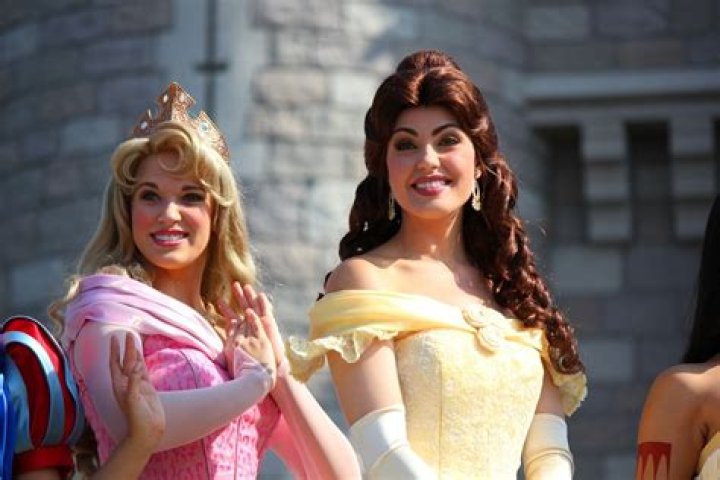
Ever since I was a little girl, I always admired the Disney princesses. When I got the opportunity to meet them in person I was even more enamored with their beauty and poise. Unfortunately in adulthood I realized that the beautiful princesses I had seen as a child were merely talented actresses, however I soon reached the epiphany that maybe one day I could be one of those actresses bringing dreams to life! As I prepare for my first audition for Disney I wanted to find out exactly what it takes to be a Disney Princess and here’s what I found.
1. Height Requirement: For most of the princesses there is a height requirement between 5’4 and 5’7 to help preserve character integrity as well as costume fitting.
2. Sizing: The largest size Disney carries for their princess costumes is size 10. Former Disney princesses have stated in their blogs that they have found these to be true to size.
3. Auditioning: To be a character at the parks, you must go through the audition process. Check out the audition calendar at DisneyAuditions.com to find your nearest audition. Look for the auditions that say Female Character Look-Alike and this usually means they are looking for princesses. At the audition you will learn a simple dance routine, and if you progress past the dance, you will get a chance to read a script, do some improve and an interview. It can be a very lengthy process, but Disney casting directors are keen on finding the best girls to fit the roles.
4. Age: Disney is very specific on the age. You have to be at least 18 years old to audition and you have to be legal to work in the U.S. Most face characters are 18-23 according to a former Disney princess during her AMA (Ask Me Anything) session on Reddit last year. It is rare to find a princess over 27 but it is not uncommon for princesses to be 24-26 if they’ve been there awhile.
5. Make-Up: Luckily if you are cast as a princess, you are supplied with make-up and are taught how to apply it properly. This is to ensure that all the Snow Whites look the same, all the Belles, all the Auroras, etc. This helps to keep that character integrity.
6. Training: Disney trains their princesses for five days and it is usually an extensive analysis of the film. You will learn your character’s mannerisms and voice inflection, as well as the standard signature every princess has.
7. Strict Rules: While working for the Disney parks, you are not allowed to discuss what character you are portraying. You can’t post about it on social media and you can’t even tell people which character you are. Disney is very strict about that. Very. Princesses also cannot reference anything outside the Disney realm. Ariel cannot say she is friends with Spongebob, for example.
8. Miscellaneous Requirements: A great place to look for more information about being a Disney princess is Jennifer Oakes’ YouTube channel. She performed as Jasmine and Pocahontas and she has some wonderful videos about how to do your character make-up and what the work day is like as a princess. She has three videos called Confessions of Former Disney Princesses, and they are very informative and worth watching!
9. Work Contracts: Disney offers full time roles, which must be at least one full year of service. They do offer part-time and seasonal roles for face characters as well. You can also be a character if you are in the Disney College Program, though you might not get the best shifts because DCP participants are the lowest on the totem pole.
10. Weather: Cinderella, Rapunzel, Anna and Elsa are usually are stationed inside at the Magic Kingdom but most other princesses in the MK and other parks are outside. You have to be able to handle the extreme heat in the Orlando summer as well as the chilly winter weather that does happen around Christmas.
Bonus Tip!
BONUS TIP: Consider planning and booking your next Disney trip with an Authorized Disney Vacation Planner you can trust like Mickey Travels. They’ll help you get the best Disney travel deal, share expert advice and their services are totally FREE! It’s genius! Discover More >
11. Improv skills: You need to know everything about your character and ready to answer any questions thrown your way. If a child asks Rapunzel where Pascal is, she needs to have an answer ready to go.
12. Smiling: Be ready to smile while you are “on set” as they say. You have to keep that smile because princesses are never sad or upset. A former Belle interviewed by Cosmo said her face hurt the first couple weeks from her constant smiling.
13. Uncomfortable Guest Situations: Princesses get the wonderful job of making dreams come true for children, however you also will have guests situations that make you uncomfortable. Former princesses have discussed having to fend off creepy men or guests who have been inappropriate to them. It can be awkward and scary but princesses have to find away to control the situation while keeping the guests happy.
It’s not easy to be a princess, but in the end it’s worth it to bring joy to thousands every day.
BONUS TIP for PRINCESS LOVERS: Consider planning and booking your next Disney trip with an Authorized Disney Vacation Planner you can trust like Mickey Travels. They’ll help you get the best price for your vacation, share expert advice and their services are totally FREE! It’s genius!
Got a daughter who dreams of being a princess? Take it from someone who’s worked as a real princess at Disney World–the job is not all it’s cracked up to be. A former Snow White actress from Disney theme parks—called a “face character” in Disney parlance—is anonymously dishing behind-the-scenes policies and drama in a Reddit AMA (Ask Me Anything), summarized on Business Insider. Among the juicy tidbits from the Disney princess confidential:
—You’ve got to have the right body type. While princesses are between 5’4″ and 5’7″, Tinkerbell, Alice and Wendy must be more petite—between 4’11” to 5’2″.
—Princess age out quickly. Most are played by women between 18 and 23. A 27-year-old princess would be considered over the hill—ouch!
—There’s some serious princess primping. Getting the look—costume, makeup-wig — takes about an hour, with frequent touch-ups throughout the day.
—Princesses deal with stalkers. This particular actress dealt with a creepy fan who became was convinced she was the real Snow White, and threatened to kill the imitators. Security!
—It’s hard to make it a career. Princesses make about $13 to $16 an hour, which works out to a starting salary of around $27,000, with little chance for a significant raise.
—There’s no world except Disney World. A princess can never acknowledge things outside her character’s world (so she’s totally not gonna get that SpongeBob shirt you’re wearing). Also, off the clock, talking about Disney (or even revealing what princess she plays) on social media is verboten. Guess that’s why she’s staying anonymous!
A version of this story originally appeared on iVillage.
Join the Community
A Disney princess is one of the many female heroines of Disney animated films. While not always princesses by birth, these women are usually praised for their determination, skills and strong wills. Disney has long used princesses as main characters, from the virtuous Snow White to the modern and feisty Mulan.
“Cinderella” is a classic Disney princess story.
In the early films, the princess was often the heroine of a traditional fairy tale. She met the standards of early-20th century American ideals for beauty, obedience and sweetness. Frequently, the early films feature a damsel-in-distress theme, where the heroine needs rescuing by a handsome nearby prince. Cinderella, for instance, is doomed to stay in her enforced servitude until she can escape by marriage. While these tales did draw on traditional legends, they quickly lost favor as the rights of women became a serious issue in America.
In the rise of feminism, this type of Disney princess became a thorn in the side of women’s rights activists. Cinderella, Snow White and Sleeping Beauty seem incapable of helping themselves out of their own troubles. They are all forced to rely on men for their escape, even trading themselves in marriage in order to get out of their unpleasant situation. Disney did attempt to soften the anti-strong female image by suggesting that the Disney princess always happened to be the true love of their rescuer, yet the woman in jeopardy plot began to wear thin in the wake of the 1960s.
In the 1980s the Disney princess was reinvented with the release of The Little Mermaid. While Ariel the mermaid does still marry her true love at the end of the movie, she is written as a rebellious and ambitious girl who plays a serious role in her own success. The enormous success of The Little Mermaid led to a tremendous revival, both for the Disney princess and the Disney animation department.
Soon, Disney princesses could do just about anything they wanted. Pocahontas bravely put her own life at risk to save an innocent stranger, while the wily Mulan fought off an entire invading Hun army and saves China from total destruction. Girls of the 1980s and 1990s were given a new set of role-models in these fiery princesses, which did little to diminish the enjoyment of the earlier princesses as well. Today, girls and boys can choose identity figures from the Disney canon that match their own preferences or ambitions, with Cinderella and Jasmine holding equal popularity among Disney princess fans.
The Disney princess is an important figure for more reasons that simply its influence on young girls. Disney films in general tend to feature female heroines more frequently than male heroes, for a variety of reasons. Some experts, like writer and Buffy the Vampire Slayer creator Joss Whedon believe that it is easier even for men to identify with a female power figure than a male one. Cultural gender stereotyping allows powerful females to remain more in contact with their weaknesses and insecurities, where typical male heroes are often portrayed as hard and consistently strong. Some suggest that the Disney princess provides a universal role model for viewers of both sexes, whereas a Disney prince may be more difficult to make accessible to a wide audience.
Oh My Disney
Oh My Disney Contributor
Do you ever wonder what makes a princess a princess (apart from the whole daughter of a king/queen thing)? We do. These are the really important questions we ask ourselves here at Oh My Disney. Even some of the Disney Princesses themselves sometimes don’t realize they’re princesses for most of their movies. It can be hard to figure out if you’re a princess or not. So, what follows are some foolproof signs that you might, in fact, be a princess. Take note.
If You Have a Pet Tiger
Pet tigers aren’t an everyday thing. If you have one, you’re important, and it logically follows that you’re probably a princess.
If You Were Raised by Three Women in the Woods
Again, this is not a typical living situation. Flora, Fauna, and Merryweather do their best to hide that they’re fairies, but we feel like they most likely slipped a few times in sixteen years. Pay close attention to your caregivers when being raised in the woods, because if this sounds like your life, you’re most likely a princess.
If it’s Totally Normal for You Talk to Animals
Newsflash princesses: Animals don’t talk to us normal people. If they’re talking to you (and are actively helping you achieve your happily ever after), it’s pretty much guaranteed that you have some royal blood.
If When the Prince Sees You, No One Else Matters
Cinderella didn’t start out as a princess, but Prince Charming knows princess material when he sees it.
If Your Presence Makes Everyone a Better Person
By “everyone” we mean the grumpiest of dwarfs, the sweetest of woodland creatures, and even a huntsman whose job was literally to kill you.
If You’re the Only One in Your Village Cool Enough to go to the Enchanted Castle
Belle was always princess material, but it was her sense of adventure and ability to see beyond appearances that set her apart. She knew she wanted more than that provincial life. And she totally got it.
If You Just Saved China
You might be a princess. And you. are. awesome.
If Lanterns Appear in the Sky Every Year on Your Birthday
Lanterns have yet to appear in the sky on our birthdays, and (sadly) we’re not princesses. So if there are lanterns in the sky every year on your birthday, take the hint.
If You’ll Be Shootin’ For Your Own Hand
Not everyone gets to attend a tournament in which various men vie for their hand in marriage via archery. Whether you decide to shoot for you own hand or not, the fact that there’s competition involved raises the probability that you’re a princess.
If You Can Paint with all the Colors of the Wind
You have mad skillz. Also, you’re probably a princess.
If You’ve Kissed a Frog
You either want to be a princess REALLY badly, you are a princess, or you want to open a restaurant. We hope it was worth it. (Totally was for our girl Tiana!)
If You Live with an Evil Queen
Evil Queens are a telltale sign that you’re secretly a princess. Because, well, they’re queens and they’re evil. They walk around talking to mirrors, carrying boxes of hearts, and generally try to ruin your life. We’re not great at math, but if you live with an evil queen, we think it adds up to you being a princess.
If The Entire Kingdom Comes to Hear You Sing
You probably have a great voice, but you’re definitely a princess. Who would turn down an invite to the palace from the King himself? No one. (Except Ariel…what are we gonna do with that girl?)
If There is a Spell on You Involving a Spindle
Firstly, yikes, we’re really sorry about the evil spell thing. Secondly, the only reason a crazy witch would have to arrange such a spell would be because you’re a princess and she’s not happy about it. So this one’s good and bad, really. But it all works out in the end!
If Animals Band Together to Help You
We’re back to the animals thing, but it’s really important. If animals (that we’ve already established are your friends and biggest fans) start making things for you, like a dress for example, you’re special. And princesses are special.
These aren’t the only signs you might be a princess, but they’re super important ones. So, we hope you were paying attention. Think you might be a princess? Good for you. As earlier established we are not princesses, and are therefore jealous of you.
Credit: Disney
The enneagram is a scary-accurate personality model with nine points, each representing a different, interconnected personality type. Knowing your enneagram personality (and the psychological types of those around you) can improve your relationships with everyone from your spouse to your hairdresser. If you haven’t already, you can take a free enneagram test here.
The enneagram can also be a lot of fun ! Every enneagram type has a sister princess. Find out if your favorite princess shares your deepest personality traits in this, the ultimate guide to Disney princess enneagrams .
Credit: Disney
Type 1 – Elsa
Elsa is the archetypal enneagram Type 1, “The Reformer.” Although she’s not technically a princess, Elsa is a perfect match for the traits that define this personality type. A purpose-driven perfectionist, Elsa is constantly trying to improve the world around her for the better.
Key traits :
- Always striving to reach a higher standard, but afraid of making a mistake.
- Terrified of becoming evil or corrupt.
- Concerned with being ethical above all else.
Type 2 – Anna
Keeping it in the family, Anna is a clear Type 2. Known as “The Helper,” enneagram 2s frequently put themselves and their own needs on the back-burner in order to help others. Anna exhibits this every time she puts her sister first.
Key traits :
- Extremely generous, sometimes to a fault.
- Innate desire to feel loved and needed.
- Have the ability to love others unconditionally.
Credit: Disney
Type 3 – Tiana
Enneagram Type 3’s are “The Achievers.” Driven and success-oriented, Type 3s like Tiana don’t suffer fools and don’t have time for frivolity. Tiana is hyper-focused on her dream of opening her restaurant and this intense motivation is typical of all Type 3 people.
Key traits :
- Incredibly ambitious and don’t stop until they get what they want.
- Can be considered workaholics.
- Energetic and motivated, inspiring others around them to be better.
Credit: Disney
Type 4 – Rapunzel
Rapunzel’s struggle to find her own identity is the core hardship for all Type 4s. These creative, dramatic types are known as “The Individualists.” Type 4s are self-aware and, at their best, can transform everyday life into an amazing experience, just like Rapunzel does in her tower.
Key traits :
- Core desire to find who they are and create a meaningful identity.
- Can be moody at times.
- Desire to surround themselves with beauty in every facet of life.
Credit: Disney
Type 5 – Belle
Type 5s are known as “The Investigators.” Belle’s constant desire to learn more about the world around her (and penchant to get lost in her books to drown out “real life”) are hallmarks of this type. Like other enneagram Type 5s, Belle can also find herself isolated from those around her.
Key traits :
- Visionaries who solve complex problems and are often ahead of their times.
- Frequently prefer their own thoughts and ideas to reality.
- Have an intense desire to possess knowledge.
Credit: Disney
Type 6 – Mulan
Mulan is an enneagram Type 6 , “The Loyalist.” Type 6s like to be ready for anything and are motivated by feelings of safety and security. One of their strengths is that they are willing to do anything for those they love , just like Mulan did when she took her father’s place.
Key traits :
- Always responsible and prepared for every eventuality.
- At their best, a stable, secure presence for those they love .
- Can struggle with self-doubt and anxiety.
Credit Disney
Type 7 – Ariel
Type 7, “The Enthusiast,” fits Ariel to a “T”. Excitable and sometimes scattered, Type 7s are known for their enthusiasm for everything life has to offer. This type’s core fear is of being deprived, just like when Ariel is terrified that she’ll never get to experience the human world.
Key traits :
- Extroverted and fun -loving.
- Have an abundance of energy and love being on-the-go.
- Often impulsive.
Source: Disney
Type 8 – Merida
Merida is the epitome of enneagram Type 8 , “The Challenger.” Though this type can be willful and dominant, they are also immensely protective of those they love , just like Merida. Type 8s are driven by a desire for justice and, at their best, can illicit change for the better.
Key traits :
- In times of stress, can become controlling and domineering.
- Passionate about things that are important to them.
- Always assertive and straightforward.
Credit: Disney
Type 9 – Pocahontas
Known as “The Peacemaker,” Type 9s strive to avoid conflict and support others, just like Pocahontas strives to avoid discord between her own people and the English. This type has an ability to bring people together and see all sides of any situation.
This week, I’m excited to present an interview with my longtime friend and former casting associate Jamie Sparer Roberts. She has spent over 20 years in the casting community. After starting at Disney as a casting executive in features, she began her current role as head of the Walt Disney Animation Studios casting department, where she has been for the last 10 years. During her tenure there, she has cast such iconic films as “Tangled,” “Frozen,” “Wreck-It Ralph,” “Moana,” “Zootopia,” and the upcoming “Ralph Breaks the Internet” and “Frozen 2.” She has won the coveted Casting Society of America’s Artios Award for outstanding achievement in animation three times—plus, Elle magazine named her one of the most powerful women in entertainment in 2014.
In the 10 years you’ve been doing animation casting, how have things changed?
When I started in animation, I really only had live-action experience. I continue to run my auditions the same way that I did prior to joining the animated world. The real changes have come with the ability to receive instant recorded auditions from anywhere in the world, creating an endless reach to talent everywhere. For myself, the process of animation casting came in the form of exercising muscles that I didn’t know I had. My imagination and my ability to really “listen” to a performance, as well as learning to rely on my skill to find truth in an actor’s voice, has become crucial to my process.
When does casting get involved in a project?
At Disney, casting gets involved in projects when they are very early in development. Historically, we cast the project three times. The first time is in the form of a table read prior to the greenlight. The second time is during the storyboarding process, where actors’ voices are used for internal development of the film prior to production. Finally, we cast the actual voices for the production dialogue; these are the actors who end up in the theatrical release. Many times, the final cast includes actors from the original table read as well as “scratch” development dialogue. Typically, all I ever see before casting is a rough sketch of the character. Animation usually doesn’t take place until after the actor signs on and records. Many times, the artists use video of the actors as reference for bringing the character to life.
What is auditioning for you like?
In order to protect the creative process at the studio, we release very little information about the projects and characters to anyone outside of the company. Occasionally, the director will share rough sketches with the actor at the live audition. In fact, the sides that we use are not usually made up of material that is in the actual film. For example, most of my “Frozen 2” audition material for new roles has been made up of scenes pulled from various existing stage plays that echo the emotion of our film.
How can an actor prep for a character if they aren’t given much information about it?
When auditioning for a Disney animated feature, an actor must come prepared to use their imagination and, in some instances, improvise. Our auditions are not as much about the words on the page as they are about finding the essence of a character in the actor’s interpreted performance mixed with the sound of their voice.
Other than the obvious, what are some differences between casting and acting for an animated project vs. live-action?
Disney animation prides itself on the ability to give audiences characters that [they] can relate to. We’ve found that hiring actors whose performances are grounded and not over-the-top or cartoony helps us move toward the type of deeper storytelling that we are known for.
What happens when you hire a child actor for an animated project and their voice changes while working?
Every case is different, and it really has a lot to do with the age of the character as well as the sound of the other actors that will be featured in the scenes with the young character. Sometimes, we cast actors that are older whose voices have probably settled. Other times, we are careful to wait as long as possible to cast a role with the actor whose voice will be used in the final version of the film, using temporary dialogue as a place holder.
What kind of actors are you looking for?
Actors that I have found to have the most skill in the recording booth are those who have theater, improv, and sketch comedy training and experience. We are looking for actors with real acting chops who are able to transmit emotion through voice only, think on their feet, and really come ready to dig in and collaborate.
What would surprise people most about casting animation?
Most people think that animation casting is about finding people who can “put on” voices. I cannot speak for other studios because I have only worked in animation at Disney, but I almost never hire someone to do a voice that is not their own or some slight variation thereof.
Ready to get to work? Check out Backstage’s voiceover audition listings!
Credit: Disney
The enneagram is a scary-accurate personality model with nine points, each representing a different, interconnected personality type. Knowing your enneagram personality (and the psychological types of those around you) can improve your relationships with everyone from your spouse to your hairdresser. If you haven’t already, you can take a free enneagram test here.
The enneagram can also be a lot of fun ! Every enneagram type has a sister princess. Find out if your favorite princess shares your deepest personality traits in this, the ultimate guide to Disney princess enneagrams .
Credit: Disney
Type 1 – Elsa
Elsa is the archetypal enneagram Type 1, “The Reformer.” Although she’s not technically a princess, Elsa is a perfect match for the traits that define this personality type. A purpose-driven perfectionist, Elsa is constantly trying to improve the world around her for the better.
Key traits :
- Always striving to reach a higher standard, but afraid of making a mistake.
- Terrified of becoming evil or corrupt.
- Concerned with being ethical above all else.
Type 2 – Anna
Keeping it in the family, Anna is a clear Type 2. Known as “The Helper,” enneagram 2s frequently put themselves and their own needs on the back-burner in order to help others. Anna exhibits this every time she puts her sister first.
Key traits :
- Extremely generous, sometimes to a fault.
- Innate desire to feel loved and needed.
- Have the ability to love others unconditionally.
Credit: Disney
Type 3 – Tiana
Enneagram Type 3’s are “The Achievers.” Driven and success-oriented, Type 3s like Tiana don’t suffer fools and don’t have time for frivolity. Tiana is hyper-focused on her dream of opening her restaurant and this intense motivation is typical of all Type 3 people.
Key traits :
- Incredibly ambitious and don’t stop until they get what they want.
- Can be considered workaholics.
- Energetic and motivated, inspiring others around them to be better.
Credit: Disney
Type 4 – Rapunzel
Rapunzel’s struggle to find her own identity is the core hardship for all Type 4s. These creative, dramatic types are known as “The Individualists.” Type 4s are self-aware and, at their best, can transform everyday life into an amazing experience, just like Rapunzel does in her tower.
Key traits :
- Core desire to find who they are and create a meaningful identity.
- Can be moody at times.
- Desire to surround themselves with beauty in every facet of life.
Credit: Disney
Type 5 – Belle
Type 5s are known as “The Investigators.” Belle’s constant desire to learn more about the world around her (and penchant to get lost in her books to drown out “real life”) are hallmarks of this type. Like other enneagram Type 5s, Belle can also find herself isolated from those around her.
Key traits :
- Visionaries who solve complex problems and are often ahead of their times.
- Frequently prefer their own thoughts and ideas to reality.
- Have an intense desire to possess knowledge.
Credit: Disney
Type 6 – Mulan
Mulan is an enneagram Type 6 , “The Loyalist.” Type 6s like to be ready for anything and are motivated by feelings of safety and security. One of their strengths is that they are willing to do anything for those they love , just like Mulan did when she took her father’s place.
Key traits :
- Always responsible and prepared for every eventuality.
- At their best, a stable, secure presence for those they love .
- Can struggle with self-doubt and anxiety.
Credit Disney
Type 7 – Ariel
Type 7, “The Enthusiast,” fits Ariel to a “T”. Excitable and sometimes scattered, Type 7s are known for their enthusiasm for everything life has to offer. This type’s core fear is of being deprived, just like when Ariel is terrified that she’ll never get to experience the human world.
Key traits :
- Extroverted and fun -loving.
- Have an abundance of energy and love being on-the-go.
- Often impulsive.
Source: Disney
Type 8 – Merida
Merida is the epitome of enneagram Type 8 , “The Challenger.” Though this type can be willful and dominant, they are also immensely protective of those they love , just like Merida. Type 8s are driven by a desire for justice and, at their best, can illicit change for the better.
Key traits :
- In times of stress, can become controlling and domineering.
- Passionate about things that are important to them.
- Always assertive and straightforward.
Credit: Disney
Type 9 – Pocahontas
Known as “The Peacemaker,” Type 9s strive to avoid conflict and support others, just like Pocahontas strives to avoid discord between her own people and the English. This type has an ability to bring people together and see all sides of any situation.
You’ll be able to stream season 2 of The Mandalorian at the same time as your friends.
Disney Plus is rolling out a GroupWatch feature, so you can watch shows at the same time as your friends, wherever you are.
Earlier in October, Disney Plus rolled out GroupWatch, a feature allowing subscribers to watch all shows and movies on the streaming service simultaneously with friends and family from afar, within the US. Up to seven people can sync their screens to watch together across web, mobile, connected TVs and smart TVs, and share emoji reactions in real time — just in time for the season 2 premiere of The Mandalorian next week.
GroupWatch is Disney Plus’ version of Netflix Party and Amazon Prime Video Watch Party, which gained popularity during coronavirus quarantines. Unlike those offerings, GroupWatch works natively across any device, with no extension or app necessary. However, it currently lacks a chat feature — instead, viewers can send emoji reactions to the group screen from the Disney Plus app. But you can still text or video chat with your friends as you watch along together. And a chat option may arrive in the future, said Jerrell B. Jimerson, senior vice president of product management for Disney Plus.
For more like this
“In this time when it’s hard to hang out with friends irrespective of what your age is, it’s a great way to connect and reconnect with friends and family,” Jimerson told CNET.
GroupWatch is now available on the web and all other platforms.
Anyone in your group can play, pause, fast forward or rewind as you watch together.
How to set up Disney Plus GroupWatch
Here’s how to use Disney Plus GroupWatch to watch all the Disney, Star Wars, Marvel, Pixar and National Geographic content you want at the same time as your friends and family, wherever you live. (One note: If the user has a Kids Profile, they won’t be able to start or join a GroupWatch from that profile.)
- Open the Disney Plus app or website and tap or click on the title you want to watch.
React to what you’re watching with an emoji in the Disney Plus app.
Disney Plus
GroupWatch launched in September in Canada and New Zealand. It launched in the UK in October.
If you’re looking for some GroupWatch inspiration, check out every show, movie and original now on Disney Plus , and our list of the 11 best TV shows and 30 best movies on the streaming service.
It’s not in a textbook, but Princess Syndrome is real.
Posted Apr 02, 2012
You may not find it in a medical textbook, but many young girls suffer from Princess Syndrome (PS) daily. A girl who suffers from PS lives life as a fairy-tale: focusing only on the pretty things, putting herself at the center of the universe, and obsessing about her looks (even if she’s only headed to the playground). While this can be fun and whimsical when a girl is a toddler, it can also set the tone for how she develops into a young woman, influencing her self-esteem, her dependence on others, how she takes care of herself, and how empowered she feels in her life.
There are messages everywhere presented to girls that being a princess is the best, and only, way to be. In today’s society, with its focus on appearance, having only the finest things, and the need to be number one, it is understandable that girls are having a difficult time deciphering the messages they observe.
And why wouldn’t they? Clothing stores sell t-shirts that tell them they are “too pretty to do homework.” Other stores sell thongs to 7-to-10-year-olds with slogans on them, such as “wink wink” or “eye candy;” one has even started selling crotchless underwear for girls within this age range. Abercrombie and Fitch, a nationally known clothing company, sold bikinis with push up tops in them designed for children as young as 5. How do young girls learn that they have worth beyond their appearance, when pressure on them to “do this” or “look like that” begins so young? Current research shows that girls as young as 11 are having issues with their bodies.
Parents often have the misconception that their daughters can avoid being affected by the messages they are receiving. Unfortunately, it takes an incredible amount of self-confidence and self-awareness to avoid being seduced by these messages. Advertising is incredibly powerful and impacts all of us at all ages. Expecting your daughter, at age 3, 4, or 5 to understand that life is better if you have solid values, good friends, and a healthy lifestyle, in comparison to the princess lifestyle, is unrealistic. It is up to you as a parent to combat the pressures.
Of course, Princess Syndrome isn’t solely about appearance and impaired body image. It is also important to consider the other messages that your daughter gets from the fairy-tale life. She may learn that she cannot be self-sufficient, and that she has to rely on a savior to make it all better. This can include friendships that are vapid and superficial, boyfriends who get to dictate to her what she can and cannot do, and a lack of internal motivation because she “expects” it all to come to her. Being a princess has its place; being a princess who is empowered to create her kingdom herself? A much better option.
So, what can a parent do to help his/her daughter create her own happily ever after? Your first instinct may be to try to shield your daughter from all potentially negative influences. Unfortunately, this is virtually impossible. Rather than avoid it, teach her how to deal with the pressure, and to develop positive self-esteem, a realistic body-image, and self-sufficiency.
As a parent, you can teach your daughter how to replace “princess symptoms” with “heroine values.” By starting young, you can set the stage for your daughter as she grows up. But where to start?
As you become more aware of the messages in toys, clothing, and television shows, you can begin to share them with your daughter and teach her things that will help her create a more positive, empowered sense of herself:
1. Question the media. Teach your daughter to be an educated consumer and to think about the messages she receives. Start to help her formulate questions about the things she wants, why she likes certain celebrities, why appearance may be so important. Help her develop her own ideas about what it means to be strong, independent, and confident, and to seek out similar things within the media.
2. Teach her about dressing appropriately. Everywhere you turn, clothes are getting skimpier and skimpier. Skirts are getting shorter; tops are getting tighter. Similarly, clothes that used to be appropriate for teens are now being worn by fifth-graders. Start teaching your daughter about the messages she sends by the clothes she wears. You certainly are not going to get into a discussion with your five-year-old about what is sexy. You may, though, talk about what might be more comfortable or easy to wear when playing with friends, and how much more fun she will have if she is comfortable. This does not mean thwarting your daughter’s individuality and sense of style; it may mean promoting it. Let her be mismatched. She’s exploring who she is, and having fun while doing it.
3. Help her find her voice. Encourage your daughter to speak up and ask questions. If she sees something she doesn’t like, like a doll or a shirt with a mixed message, support her choice to talk with you about it. If she comes to you with a concern, make time to talk with her. Too often girls avoid speaking up for fear of damaging relationships. The more comfortable they feel talking with you about their feelings, and the earlier it starts, the more likely they will be able to do it as they develop into teens—which is when you really want them talking with you.
4. Remember: Conformity is not required. Sometimes your daughter is going to want what other kids have, just because they have it. Giving in to this pressure is easy to do. Help guide your daughter to understand that being an individual is good. Encourage her to embrace her differences and even celebrate them. This will only help her as she grows up and develops a strong sense of herself, her likes and dislikes, and how she determines what she will or will not do.
Throughout your daughter’s development, she will be pulled in lots of directions to act, think and behave in certain ways. As her parent, it is important to use your influence to direct her toward things that will promote her ability to find her best self, and fight the allure of the princess syndrome. Getting her into some “princess recovery” might be the best way to help her grow into the heroine you know she can be.
Did you know that there’s an official line-up of Disney Princesses? Yes, fans can call any character they want a Princess, but only Disney itself decides whether or not she earns the title.
How the Title “Disney Princess” Came to Be
The Disney Princess line-up first came to be during the early 2000s, created as a separate franchise from the films in which the Princesses were introduced. Andy Mooney, the brains behind the operation, came up with the idea to appeal to little girls’ desires to live out the princess fantasy. He and Disney started a whole line of Disney Princess merchandise, which has turned into a pop culture phenomenon in the last decade.
As of 2018, there are 11 Disney Princesses in the official line-up. Believe it or not, they get a whole coronation when they are inducted.
Snow White from Snow White and the Seven Dwarfs, Cinderella from Cinderella, and Aurora from Sleeping Beauty are the Princesses of classic Disney. Following them are the Princesses of the Disney Renaissance: Ariel from The Little Mermaid, Belle from Beauty and the Beast, Jasmine from Aladdin, Pocahontas from Pocahontas, and Mulan from Mulan. Then there’s Tiana from The Princess and the Frog, Rapunzel from Tangled, and Merida from Brave.
The Criteria
So how does Disney choose which of its heroines belong in the Disney Princess line-up? There is a set of criteria that can be found online, although it doesn’t seem to have been verified:
1. The heroine must have human-like qualities.
2. The heroine must star in a Disney animated film.
3. The heroine must not be introduced through a sequel.
4. The heroine must be a Princess by blood, marry into a royal family, or show exceptional heroism.
5. The heroine’s film must be a commercial success.
So this means Mulan is in good shape since she saved all of China, but Nala from The Lion King will never be inducted because she’s a lion. And as awesome as Kida from Atlantis: The Lost Empire is, she doesn’t grace the list because her film was a box office failure. So these criteria mostly make sense. Yet there are still Disney fans who debate about what makes a Disney Princess or not.
What Really Makes a Disney Princess?
The question is, if Disney has ever used criteria like this as guidelines for choosing Princess candidates, does the company really care about them? Tinkerbell, who was neither royal nor particularly heroic in Peter Pan (although she did save Peter’s life) used to have Disney Princess status until she was removed from the line-up and given her own book and movie series.
While she plays a significant role in Aladdin, Jasmine is more of a supporting character than a main one. Then there’s Merida, who has a spot on the list even though she’s a Disney Pixar character rather than Disney Animation Studios.
Yet supporting characters like Meg from Hercules, Jane Porter from Tarzan, and Esmeralda from The Hunchback of Notre Dame remain excluded from the list. One would also think Anna and Elsa, who captured the hearts of children everywhere, would make the spot without a problem. Yet four years later, they still haven’t earned their titles.
The Princess Mythology
In Moana, Maui says, “If you wear a dress and you have an animal side kick, then you’re a princess.” Blogger Jon Negroni noticed this line and suggested that this was Disney’s way of trying to put the Disney Princess issue to rest. After all, as daughter of the village chief, Moana doesn’t consider herself a princess. But because Disney owns the Princesses, the company can do whatever it likes.
Supposedly Mooney called the Princesses and the worlds they originated from part of “the Princess mythology.” This was his reasoning for removing Tinkerbell from the line-up, having decided she just didn’t fit.
So perhaps what matters to Disney is not a bunch of criteria in a list, but instead whatever characteristics they think will be marketable to their audience. As great as characters like Esmeralda and Meg may be, it’s the shimmery dresses, quests for love and adventure, and sense of magic that spark a child’s imagination.
With The Walt Disney Company’s acquisition of 21st Century Fox now complete, many fans are wondering if any of the princess characters acquired by Fox will join the ranks of the 12 official Disney Princesses.
Does the Fox acquisition make Anastasia an official Disney Princess?
It would be easy to say, “Yes! Every Fox princess is now a Disney Princess!” – but there’s more to joining the royal ranks than you think.
Currently, there are 12 princesses that make up the official Disney Princess lineup:
- Snow White
- Cinderella
- Aurora
- Ariel
- Belle
- Jasmine
- Pocahontas
- Mulan
- Tiana
- Rapunzel
- Merida
- Moana
Anna, Queen Elsa, and Princess Elena of Avalor are royalty in their films and television show, respectively, but are currently not included in the official Disney Princess lineup.
Occasionally, when princesses are added to the lineup, the event is celebrated with a coronation ceremony to induct them into the Disney Princess Royal Court. Tiana was the first princess to receive this honor in New York City, followed by Rapunzel in London, and Merida at Walt Disney World. Moana has yet to have a coronation ceremony.
A few of 21st Century Fox’s royals have been confused for Disney Princesses in the past, namely Anastasia, whose 1997 animated film was directed by Don Bluth – who was formerly a chief Disney animator before leaving to start his own studio. Other “princesses” worth noting are Neytiri from James Cameron’s “Avatar,” and, per many memes on social media, the queen Xenomorph from the “Alien” films.
But what does this mean for these princesses, who now are residing in Disney’s intellectual property castle? Simply this: while Disney now owns the rights to these new princesses, until they are officially added to the lineup, they are not Disney Princesses.
You can learn more about The Walt Disney Company’s acquisition of 21st Century Fox and its properties here. Check out our videos of special Disney Princess ceremonies, including coronations, below: