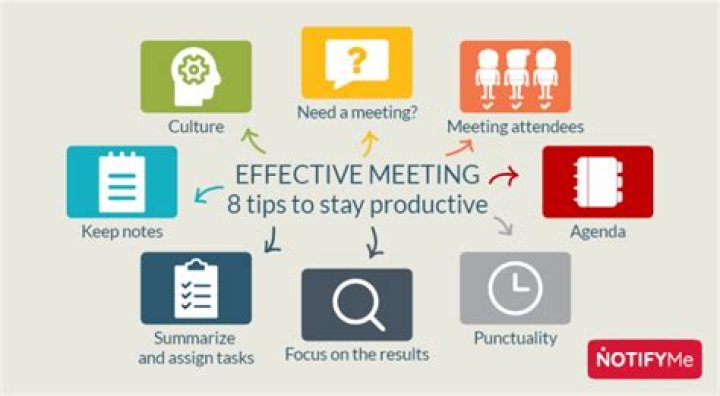
Every business, whether it has 2 employees or 2,000, has meetings as a regular part of getting things done. Although employees can communicate with one another in an organization in many different ways, business meetings — if they are conducted the right way — can be incredibly effective and efficient.
Meetings are not only one of the most important ways for employees to communicate within organizations, but they’re also the way that teams get their work done. Although individual team members work on tasks outside of meetings, team meetings give members the opportunity to come together to determine the team’s goals, its plans for achieving its goals, and who will do what — and when.
Take a close look at what makes meetings tick and find out how to conduct better business meetings.
The good news (and the bad) about meetings
We’ve all experienced more than our share of both good and bad meetings. What makes some meetings terrific, while others are simply the pits?
Employees benefit in several ways when a meeting is well run. Here’s the good news about business meetings that fall into this category:
- Meetings are empowering.
- Meetings are a great way to communicate.
- Meetings develop work skills and leadership.
- Meetings are morale boosting.
Unfortunately, meetings are prone to fall into nonproductive pitfalls. Here’s the negative side of meetings:
- Meetings may not have focus.
- Companies have too many meetings.
- Attendees may be unprepared.
- Most meeting time is wasted.
Although this bad news may seem bleak, there is hope. For each of these problems, and for the many other kinds of problems that often plague business meetings, solutions are available. You simply need to be open to changing the way that meetings are conducted in your organization. You may even need to take on a leadership role, if necessary, to make your meetings work better.
Eight ways to make meetings better
Everyone has suffered through far too many meetings that took up far too much time and accomplished far too little. Unfortunately, this sad state of affairs has happened so often that you may find yourself becoming numb to the fact that your meetings aren’t as good as they should be — and could be, if you just had some way to fix them.
Help is close at hand! You can make your meetings better, and you don’t have to tolerate meetings that accomplish little or nothing. The power is within you, whether you are a meeting leader or a participant. Do you want to find out how? Here are some time-tested techniques to ensure better business meetings:
- Be prepared. Meetings are work, so, just as in any other work activity, the better prepared you are for them, the better the results you can expect.
- Have an agenda. An agenda — a list of the topics to be covered during the course of a meeting — can play a critical role in the success of any meeting. It shows participants where they are going, but it’s then up to the participants to figure out how to get there. Be sure to distribute the agenda and any prework in advance. By distributing the agenda and prework before the meeting, participants can prepare for the meeting ahead of time. As a result, they will be immediately engaged in the business of the meeting, and they’ll waste far less time throughout the meeting.
- Start on time and end on time. Everyone has suffered through meetings that went waybeyond the scheduled ending time. That situation would be fine if no one had anything else to do at work. But in these days of faster and more flexible organizations, everyone always has plenty of work on the to-do list. If you announce the length of the meeting and then stick to it, fewer participants will keep looking at their watches, and more participants will take an active role in your meetings.
- Have fewer (but better) meetings. Call a meeting only when it is absolutely necessary. Before you call a meeting, ask yourself whether you can achieve your goal in some other way, perhaps through a one-on-one discussion with someone in your organization, a telephone conference call, or a simple exchange of e-mail. As you reduce the number of meetings you have, be sure to improve their quality.
This article is by Neal Hartman, a senior lecturer in managerial communication at MIT Sloan School of Management.
The meeting that drones on and on; the meeting where everyone sits fiddling with his or her smartphone; the meeting that Doug from Accounting hijacks; or the meeting where almost everyone in the room is wondering the same thing: Why am I even here?
Meetings fill an increasing number of hours in the workday, and yet most employees consider them as a waste of time. According to a survey of U.S. professionals by Salary.com, meetings ranked as the number one office productivity killer. (Dealing with office politics was a close second, according to the 2012 survey.)
But there are ways to run effective, efficient meetings that leave your employees feeling energized and excited about their work. Here are some tips:
1, Make your objective clear. A meeting must have a specific and defined purpose. Before you send that calendar invite, ask yourself: What do I seek to accomplish? Are you alerting people to a change in management or a shift in strategy? Are you seeking input from others on a problem facing the company? Are you looking to arrive at a decision on a particular matter? Standing meetings with vague purposes, such as “status updates,” are rarely a good use of time.
IRS: Claim Your $1,200 Stimulus Check By October 15
The Truth About Hunter Biden — And Why Republicans Are So Disappointed
More Than Juneteenth? What’s In Trump’s $500 Billion “Platinum Plan” For Black America
2. Consider who is invited. When you’re calling a meeting, take time to think about who really needs to be there. If you’re announcing a change, invite the people who are affected by the announcement. If you’re trying to solve a problem, invite the people who will be good sources of information for a solution. When people feel that what’s being discussed isn’t relevant to them, or that they lack the skills or expertise to be of assistance, they’ll view their attendance at the meeting as a waste of time.
3. Stick to your schedule. Create an agenda that lays out everything you plan to cover in the meeting, along with a timeline that allots a certain number of minutes to each item, and email it to people in advance. Once you’re in the meeting, put that agenda up on a screen or whiteboard for others to see. This keeps people focused.
4. Take no hostages. Nothing derails a meeting faster than one person talking more than his fair share. If you notice one person monopolizing the conversation, call him out. Say, “We appreciate your contributions, but now we need input from others before making a decision.” Be public about it. Establishing ground rules early on will create a framework for how your group functions.
5. Start on time, end on time. If you have responsibility for running regular meetings and you have a reputation for being someone who starts and ends promptly, you will be amazed how many of your colleagues will make every effort to attend your meetings. People appreciate it when you understand that their time is valuable. Another note on time: Do not schedule any meeting to last longer than an hour. Sixty minutes is generally the longest time workers can remain truly engaged.
6. Ban technology. The reality is that if people are allowed to bring iPads or BlackBerries into the room, they won’t be focusing on the meeting or contributing to it. Instead, they’ll be emailing, surfing the web, or just playing around with their technology. Eyes up here, please.
7. Follow up. It’s quite common for people to come away from the same meeting with very different interpretations of what went on. To reduce this risk, email a memo highlighting what was accomplished to all who attended within 24 hours after the meeting. Document the responsibilities given, tasks delegated, and any assigned deadlines. That way, everyone will be on the same page.
Meetings truly can be valuable and productive. You just have to take the steps to make them that way.
If appropriate preparations have been made, then the scene is set for an effective meeting.В
Agendas will have been produced and circulated. Participants will arrive knowing what is to be discussed and with sufficient background information to make relevant contributions.В If appropriate, they will have consulted with people they represent and discussed any pertinent issues.
This page examines the role of the chairperson whose job it is to run the meeting.
The Role of the Chairperson
In a more formal meeting, the chairperson will outline the purpose of the meeting and remind members why they are there.В
In such a meeting there is little need to refer to this procedure as this is implicit in the established etiquette, namely:
- The chair controls the meeting.
- All remarks are addressed through the chair.
- Members do not interrupt each other.
- Members aim to reach a consensus.
- A vote is taken if consensus is not reached.
- The majority wins the vote.
- All members accept the majority decision.
This is one model but alternative models may be adopted.
When discussion is underway, it is the chairperson’s responsibility to ensure that it continues to flow smoothly by involving all members present and by not permitting one or two people to dominate the meeting.В Summarising by the chairperson during meetings can:
- Indicate progress, or lack of.
- Refocus discussion that has wandered off the point.
- Conclude one point and lead into the next.
- Highlight important points.
- Assist the secretary if necessary.
- Clarify any misunderstanding.
The chairperson should pace the meeting, ensuring it runs to time.В If the planning has been properly executed, this should not prove to be a problem.В
At the end of a meeting, the chairperson should remind members what they have achieved and thank them for their contributions.В Finally, the time and date of the next meeting should be arranged.В Again this is one common model for effective meetings, successful outcomes can be achieved in different ways with different strategies for different purposes, so adapt as appropriate to specific situations.
The Role of the Members
While it is the role of the chairperson to run the meeting, the participation of all members is also fundamental to the success of the meeting.В
To ensure an effective meeting, all participants should:
- Undertake any necessary preparation prior to the meeting.
- Arrive on time.
- Keep an open mind.
- Listen to the opinions of others.
- Participate.
- Avoid dominating the proceedings.
- Avoid conflict situations.
- Avoid side conversations which distract others.
- Ask questions to clarify understanding.
- Note down any action agreed upon. (See: Note-Taking)
- After the meeting, undertake any agreed action and brief others as appropriate.
Why Meetings May be Ineffective
There are many reasons why meetings are not effective, some of these include:
- The meeting is unnecessary and revolves around discussion of trivial issues, thus wasting members’ valuable time.
- The meeting lacks a clarity of purpose, i.e., the aims and objectives are not clearly defined.
- Inappropriate style of leadership, i.e., the chairperson dominates and closes down or disregards other contributions. See our page: Leadership Styles.
- The chairperson exercises little control and allows one or two members to dominate the proceedings.
- The meeting is too large thereby limiting the flow of discussion and preventing all members being able to contribute.
- Decisions emerge that are not truly representative.
- Problems are talked about rather than being talked through.
- Decisions are delayed or not acted upon.
- No clear-cut decisions are made.
- Minutes are inaccurate or seen as being manipulated by the chairperson or secretary for his/her own purposes.
- The wrong people are present, thus preventing the meeting proceeding effectively, e.g., those present have to refer back to another person and are therefore unable to comment effectively.
Summary
There are many types of meetings and many reasons why meetings may be ineffective.В
For meetings to be effective, participation is required from all those present.В The key skills of interpersonal communication and listening are important.
To ensure the success of a meeting, good preparation is essential and the role of the chairperson is paramount.В If these conditions are met, then all participants should leave the meeting feeling a sense of accomplishment, not as if their time has been wasted.
7 Tips for a Well Run Meeting
- Share
- Pin
Do you dread attending the weekly staff meeting? Do you ever find yourself sitting there, twirling your pen, and resisting the temptation to peek at your Smartphone, wondering why on earth you are there when you have so many other things to do? Or worse, are you at the head of the table leading the meeting as you observe other’s disinterest? You are not alone. Poorly managed meetings are a productivity killer and they certainly don’t help employee morale. Say goodbye to those boring meetings and learn how to conduct effective meetings that leave employees engaged and motivated.
7 Tips For Effective Meetings
Establish the Meeting’s Objective
Before sending out a meeting alert and putting it on your calendar, ask yourself why you want to hold a meeting and determine the objective. Is it a meeting to bring employees up to speed on a change in management? Are you making a decision regarding a project? Is it a brainstorming session for a new business strategy? Be certain that gathering employees in a room for face-to-face discussion and interaction is necessary for your objective; if the purpose of the meeting is a status update, perhaps sending out a group email is a better use of everyone’s time.
Communicate the Purpose of the Meeting
When inviting others to your meeting, be clear about the purpose of the meeting. This will not only keep you focused but will enable employees to attend the meeting prepared either with documents or with thoughts on the matter at hand. Communication is essential for an effective meeting.
Be Selective about Attendees
No one appreciates attending a meeting that has no connection to them or their work. Determine who really needs to be there and why. Whose input do you need? Which colleagues must participate and will likely have questions on the matter? If someone is on your list that simply needs to be informed of what was discussed, then do them a favor and take them off the list. They can be easily updated with a follow-up email. Time is valuable and no employer wants to negatively impact productivity by having employees sit in on meetings that are unnecessary.
You Must Create a Meeting Agenda
Holding a meeting without a set meeting agenda is akin to climbing into a sailboat and hoping the wind takes you where you want to go. You will – quite literally – be lost at sea. Your meeting agenda will guide you to your final destination. Include topics to be discussed and who will be addressing each item if others are taking part. Email the agenda to attendees ahead of time so everyone knows what to expect and comes prepared.
Stick to Your Plan
Even the best-planned meeting will go awry if the discussion gets derailed and goes off on tangential topics. This is why most meetings fail to achieve their objective – they do not stay on track. At the outset of your meeting, establish ground rules and a specified time allotment for each item on your agenda as well as the overall meeting. For example, “Thank you for coming today. Everyone’s time is valuable and it is my goal to keep this meeting to less than an hour. Let’s stick to the items at hand and reserve discussion on other subjects for a later time.” Rein in anyone who is monopolizing the discussion or introducing topics, not on the agenda.
Keep Them Engaged
Visual aids go a long way in keeping everyone focused on the meeting and not on their phones or the clock. Post the agenda on a Smart Board in the front of the room. Project visuals onto a large screen using a computer; anything to keep their eyes up front.
Summarize the Meeting
Ever leave a meeting and have a totally different takeaway than your colleague? Make sure this doesn’t happen with your meeting by emailing a follow up within 24 hours. Include a summary, highlight key topics addressed, tasks assigned and indicate deadlines. Sending this out in a timely fashion will ensure that attendees don’t head in the wrong direction.
Management guru Henry Mintzberg was one of the first researchers to provide a glimpse into the daily lives of CEOs.
Mintzberg followed a handful of business leaders around the office for his Ph.D. thesis at MIT Sloan. His primary observation appears obvious:
CEOs go to a lot of meetings. Roughly 80 percent of their work hours are spent in meetings.
That was over four decades ago. A more recent study by Oriana Bandiera of London School of Economics and colleagues had the personal assistants of 94 CEOs provide detailed time sheets over a pre-specified week.
The results were similar to Mintzberg’s observations: 85 percent of the CEO’s time was spent working with other people through meetings, phone calls, and public appearances.
Table of Contents
Why CEOs Need Meetings
Meetings dominate a CEO’s day because personal interactions provide valuable information critical to effectively running a business.
Harvard Business School professors Michael Porter and Nitin Nohria argue that the ability to extract critical details needed to inform big decisions from employees is partly what defines the most effective CEOs.
Meetings also provide CEOs with an opportunity to communicate what they think is vital for their organization to know.
The Downside to Meetings
Another management guru, Peter Drucker, had strong views about meetings. In The Effective Executive, Drucker wrote,
“Meetings are by definition a concession to a deficient organization. For one either meets or one works. One cannot do both at the same time.”
Or, as economist John Kenneth Galbraith put it, meetings are “indispensable when you don’t want to do anything.”
The problem is two-fold. First, we have too many meetings. Second, too many of them are unproductive.
12 Ground Rules for Effective Meetings
Your goal isn’t to eliminate meetings but to improve their effectiveness as well as reduce their duration and frequency whenever possible.
Here’s a list of 12 ways to help you master the art of running effective meetings:
- Clarify the purpose of the meeting when it’s scheduled. Request that participants come to the meeting prepared in advance.
- Clarify the objective of the meeting at its start. Every meeting should have purposeful direction.
- Be mindful of meeting duration. Many 60-minute meetings can be done in 30 minutes. Many 30-minute meetings require only 15 minutes.
- Start meetings on time regardless of who is late.
- Reward the behavior you seek: Don’t invest time in reviewing meeting content with latecomers. Doing so rewards tardiness and penalizes timeliness.
- Evaluate who really needs to attend each meeting. The more people, the more challenging it is to be productive.
- Avoid holding meetings for informational purposes; that’s the proper function of digital communication.
- Elect a meeting moderator responsible for guiding the discussion toward the desired end goal. Don’t let specific participants dominate the meeting with endless conversation.
- Whenever possible, end meetings early. The extra time can create a positive experience for participants.
- Reduce distractions by closing the door and requesting that members do not use their phones during meetings.
- Ask participants distracted with things unrelated to the meeting to leave. A meeting should be an active dialogue with all members involved.
- End every meeting with a committed action plan.
Running effective meetings is a skill you can build. Each of the above suggestions can greatly improve the quality, effectiveness, and results of your meetings.
Try it: Cut All Meetings in Half
If you’re intrigued and brave enough, commit to cutting the duration of every meeting in half.
Try this experiment over the course of the next two weeks and observe the results.
You may find that you accomplish just as much. More importantly, you’ll discover a reservoir of free time to invest in more important matters.
If you have a clear objective, the shorter the meeting, the more focused the attention and the better the outcome.
One cannot do both at the same time.”,Or, as economist John Kenneth Galbraith put it, meetings are “indispensable when you don’t want to do anything.”.The problem is two-fold. His primary observation appears obvious:CEOs go to a lot of meetings. It’s one thing to learn how to conduct a business meeting your employees won’t hate, but it’s just as important to hold a meeting that is both efficient and effective.
Find out more about Kirk on his blog.Your journey to a successful startup begins here.Looking for answers to your fundraising questions? Set firm times to begin your meetings, and ensure that all attendees are at least five minutes early. Get proven strategies to activate your highest potential.Management guru Henry Mintzberg was one of the first researchers to provide a glimpse into the daily lives of CEOs.Mintzberg followed a handful of business leaders around the office for his Ph.D. thesis at MIT Sloan. Give a brief introduction of the members/participants … Your agenda should be appropriate for the type of meeting that you wish to conduct. that have posts related to this topic. Many 60-minute meetings can be done in 30 minutes. Each of the above suggestions can greatly improve the quality, effectiveness, and results of your meetings.If you’re intrigued and brave enough, commit to cutting the duration of every meeting in half.Try this experiment over the course of the next two weeks and observe the results.You may find that you accomplish just as much. Identify the purpose and desired outcomes of the meeting. By Kathleen Allen, Peter Economy . The worst meetings bring time to a crawl leaving everyone mentally and emotionally exhausted and more than a little bit frustrated. Lighter Capital’s guides have the answers you need.©2020 Lighter Capital. The reality is, for most teams, their typical meeting structure has been turned upside down as a result of the pandemic. Now it’s Time to Evaluate and Improve!Group Dynamics There are some meetings that are essential and that can take a lot of time, but for many meetings, it’s just a matter of checking in and keeping key team members up to date on projects. Meetings: âAll for One and One for All!â,Effective It’s one thing to learn how to.In a startup, where staff is limited and time is of the essence, it’s important to make meetings as efficient as possible. In,“Meetings are by definition a concession to a deficient organization. The more people, the more challenging it is to be productive.Avoid holding meetings for informational purposes; that’s the proper function of digital communication.Elect a meeting moderator responsible for guiding the discussion toward the desired end goal. Include details of who is attending and what is to be discussed, and stick to the agenda; but don’t hesitate to veer off a bit if something comes up that is tangentially related to the issues at hand. Each of the related topics includes free, online resources.By continuing to use this site, you agree to our,Carter McNamara, MBA, PhD, Authenticity Consulting, LLC,Field Guide to Leadership and Supervision in Business,Field Guide to Leadership and Supervision for Nonprofit Staff,Additional Perspectives About Conducting Successful Meetings,Basics Guide to Conducting A: Know if your virtual meeting was effective by asking for feedback in your meeting follow-up email. Don’t let specific participants dominate the meeting with endless conversation.Whenever possible, end meetings early.
Some short meetings are best in the morning, so people can take action on items discussed in the meeting during the day.
Every business, whether it has 2 employees or 2,000, has meetings as a regular part of getting things done. Effective Meetings.The However, some people may not be comfortable standing for a long time, so keep these meetings short. ; The meeting lacks a clarity of purpose, i.e., the aims and objectives are not clearly defined. There are a number of factors that play a role in making this determination, but different meetings should be held at different times. Instead of each person taking their own notes, which generally only concern their responsibility, have one person take detailed notes and circulate minutes. 12 Ground Rules for Effective Meetings. When was the last time you were trained on how to conduct a meeting? Think about how useful these weekly meetings are and either cut them back, or don’t include everyone on a team in each meeting, if their input isn’t needed.When it comes to implementing effective meeting strategies in the workplace, nothing is more counterproductive than wasting time. All Rights Reserved. the blog or click on “next” near the bottom of a post in the blog.
itemprop=”articleBody”> –> itemscope itemtype=” –>
Add Comment
Cancel reply
Join our Newsletter!
Just Candles, LLC © 2020. All rights reserved. Website Designed & Hosted by A. Louise Creative
Meetings can be an effective and engaging business tool.
Whether you’re an employee or entrepreneur, meetings are a way of life. What percentage of your time at work do you spend in meetings? If you’re a middle manager, it’s likely about 35% of your time, and if you’re in upper management, it can be as much as 50%. Meetings are an essential way to bring people together so they can discuss ideas and drive outcomes. Unfortunately, the word “meeting” usually evokes feelings of dread in the average worker. That’s because many meetings are unproductive, and most managers aren’t prepared to run an effective meeting. When was the last time you were trained on how to conduct a meeting? According to Elise Keith, CEO of Lucid Meetings and author of Where the Action Is, less than 25% of managers receive any training on meetings. Keith says,
Organizations have this assumption that it’s an intuitive activity that people are just supposed to figure out how to do. But it isn’t. Meetings bring together a whole bunch of people who are thinking about the question at hand differently. The trick is to get them all thinking about the same part of the problem in the same way, at the same time and for that you need structure.”
How can we make meetings more productive and encourage engagement at the same time? Elise Keith offers advice on how to do just that based on her experience working with thousands of organizations globally to help them run effective meetings.
IRS: Claim Your $1,200 Stimulus Check By October 15
Ruth Bader Ginsburg Delivered The Best Career Advice You’ll Ever Hear, In Just One Sentence
The 4 Signs You’ve Got A Toxic Boss And What You Can Do About It
1. Know the purpose and outcome. Have a sense of what you’re trying to accomplish and how to do that. This will change depending on the type of meeting. If you can’t state why people are there and what you’re meant to achieve, then you shouldn’t hold a meeting.
2. Structure it to achieve the outcome. Structure could mean creating an agenda—but not necessarily. It could be as simple as each person taking ten minutes to provide a quick update. Use the last five minutes to restate what you accomplished and what’s supposed to happen next.
3. Respect people’s time. This includes the obvious—starting and ending on time. Of course, it also involves scheduling only as much time as you need. Things like only inviting people who need to be there and avoiding scheduling meetings at bad times—like in the middle of a big project—also help.
4. Get everyone engaged. Spend the first few minutes making sure every person who’s in the room says something. Any kind of ice breaker makes a difference. A simple change that has very positive results is to make every meeting optional. If you want to have engagement in meetings, making sure people don’t have to come to them if they’re not going to engage is key! Finally, ask for engagement. Keith says, “when I go out and speak, I’ll invariably get a question from a leader who is trying to make her meetings more engaging. She’ll say, ‘okay, I’ve tried this format, and then I changed it two weeks later. How often should I change things up until I get the engagement I want?’ And I was like, well, that’s an interesting question. Have you asked your team to engage? Have you told them why you keep changing things? Most of the time, they say no.”
5. Take visible notes and then publish them. This step is critical. If you don’t have meeting records and you’re not sharing them somewhere, you can’t make meetings optional.
6. Don’t call it a meeting! By default, that framing is negative. Whereas if you have everybody showing up to something that is called, “Brainstorm 5-year Plan” that’s a different event. Then they walk in the door knowing why they’re there.
Once you start with energy, engagement and clarity, you’re set up to do something meaningful. Use meetings wisely, and they can be a great business tool.
Organizational Effectiveness
PURPOSE
- Identify the purpose and desired outcomes of the meeting.
- Determine if the meeting is necessary or if the issues can be addressed outside of a meeting.
- Should only use meetings for brainstorming, delivering information or gathering information.
PEOPLE
- Identify and invite only the necessary and appropriate people for the meeting.
- Make sure all attendees can contribute.
- Communicate the meeting’s purpose and desired outcomes to all attendees.
- Schedule guests who don’t need to be at the entire meeting, which can be an incentive to stay within the meeting’s time limits.
PREPARATION
- Organize meeting venue.
- Provide the agenda and any other supporting documentation (e.g. reports, handouts and spreadsheets) to the attendees at least 24 hours prior to the meeting time.
- Ensure the comfort, quietness and set-up of the space before the meeting.
- Provide water or other refreshments when possible.
AGENDA
- Include items to be discussed, and then for each item specify the person leading the discussion, the desired outcome, and the estimated time.
- Provide meeting evaluation time and documentation (if applicable).
- Limit number of items to a reasonable amount for the meeting’s timeframe
- Be realistic about the timeframe for each item.
- Schedule breaks periodically for longer meetings.
MEETING LEADER
- Designate a meeting leader who understands meeting principles, is familiar with the agenda and is a skilled facilitator.
- Rotate facilitators for regularly scheduled meetings.
- Open meeting with setting or reviewing ground rules and reviewing the agenda, making changes when appropriate.
- Clarify roles within the group.
- Maintain focus and keep meeting moving at comfortable pace.
- Cover one item at a time.
- Summarize discussion and recommendations at the end of each logical section.
- Make a note of any follow-up actions that can be resolved outside of the meeting and move on to next point.
- Manage discussion and encourage participation, even explicitly inviting everyone to participate.
- Use parking lot list for issues or questions that need to be dealt with outside of the meeting and review at end of meeting.
- Review issues discussed at the meeting and identify each actions step with those responsible for the step and the timeframe.
- Solicit agenda items for the next meeting.
- Review time and place for next meeting, if applicable.
- Lead evaluation discussion or collect written evaluations.
- Thank the attendees.
- Designate a timekeeper who will work with the meeting leader to keep the pace.
- Start and end on time, regardless of late attendees.
- Periodically check the time estimates for each item to see how close they were to the time actually spent.
- Allow flexibility in the schedule when the need arises.
MEETING NORMS
- Request that all pagers and cell phones be turned to silent or vibrate.
- Establish a policy disallowing electronic communications during the meeting.
- Request that any pages or messages be returned outside of the meeting space.
- Determine that each participant’s opinion should be respected.
- Encourage participation and openness.
- Ask questions for clarity.
MINUTES
- Designate a note-taker.
- Make detailed minutes when the record is important and simple lists of decisions made and actions to be taken (with responsible person identified) when the exact record is not as important.
- Capture key points for each item, highlight anything that will be deferred until a future meeting.
- Include timeframes for action steps.
- Include parking lot issues with follow up information.
EVALUATION
- Have each attendee evaluate the meeting, using a round-robin, written, or open discussion approach.
- Ask questions such as “what can we do better next time?” and “what parts of the meeting worked well?”
FOLLOW UP
- Return readable or typed minutes to attendees within 24 hours if possible (same day is even better).
- Be consistent with meeting habits.
Compiled by the HR Organizational Effectiveness Team
- Contact HR
- People Finder
- Leader Central
- HR System Links
- Workers’ Compensation
- HR A-Z
- VERITAS – Occurence/Incident Reporting and First Report of Work Injury
Recent News
© Vanderbilt University · All rights reserved. Site Development: Digital Strategies (Division of Communications)
Vanderbilt University is committed to principles of equal opportunity and affirmative action. Accessibility information.
Vanderbilt®, Vanderbilt University®, V Oak Leaf Design®, Star V Design® and Anchor Down® are trademarks of The Vanderbilt University
Communicating in a meeting is an essential part of effective communication. Some meetings are not conducted in an efficient manner due to which they fail in accomplishing the sole objective of the meeting. It may be because:
- They do not involve participation of all, or
- They may be too long, or
- They may be unsystematic, or
- They may lack a clear agenda, or
- They may not begin on the planned time, or
- They may end without any conclusion.
As a result, such meetings lead to agitation and sheer wastage of time. In order to ensure effectiveness of a meeting, it must be planned, systematic and rational.
The process of running an effective meeting includes the following steps:
Announce/declare the meeting: After planning the meeting and before actually beginning the meeting, the participants should be delivered a message/memorandum to make them aware and ready for the topics to be discussed in the meeting. Give each participant responsibility for the agenda item. Issue the agenda.
Conduct the meeting: Be punctual. Try and arrive before time for the meeting. The meeting should begin on time. State the objective of the meeting in the very beginning so that all are clear with the purpose of the meeting. Give a brief introduction of the members/participants so that all are familiar. Circulate notes and handouts. Involve all attendees during the discussion. Encourage new ideas from the participants. Respect their ideas. Ask for a feedback. Make sure that there are no distractions during the meeting (such as ringing cell phones, or participants fiddling with pen, or gossiping, etc.). Give a quick review of the issues discussed in the meeting. Make sure that all the issues are discussed within the time frame. If time does not permit discussion of all issues, ask the participants if they are comfortable in discussing those issues in next meeting. Fix and decide upon the time for the next meeting.
Effective meetings are productive, positive and absolutely necessary. Meetings are extremely expensive when you consider the costs of commute time, prep time, waiting to begin time, being off the job and a variety of other opportunity costs. The more people involved in the meeting the more the real expense skyrockets. It pays to make them productive!
Stop holding unnecessary meetings that waste money, waste time and are destructive to morale. It is critical for you to know the difference between a useless meeting and an effective meeting and even more critical for you to know how to make all of your meetings effective.
Most companies have far too many meetings and the meetings they do have are typically not efficient nor effective. This webinar will give you all the guidance and methodology you need to always maximize the impact and results you create with meetings.
Benefits of Attending:
- How to plan for a meeting and build an effective agenda
- Learn tricks for staying on the agenda and honoring the time commitments
- How to create successful interaction with participants
- Leave meetings with clarity, understanding and acceptance
- Understand how to follow up and why it is critical
- Feedback and how to “Inspect what you expect”
After attending this webinar your meetings will be productive, positive and participants will look forward to them. Co-workers will even be asking you to share your secrets on how to conduct an effective meeting. Your job will be to use the information and share it with others so all company meetings become effective. Join best-selling author David Rohlander on October 31st and walk away with a game-plan for making your meetings effective.
Guest Speaker
David Rohlander
David Rohlander, The CEO’s Coach, is a former CEO, combat fighter pilot and a Best-selling Author. David’s passion is helping executives create a masterpiece personally and professionally. That’s why he wrote, “The CEO Code,” a Best Seller on AMAZON. That success resulted in Penguin/Alpha Books asking David to write “IDIOT’S GUIDES: Management Skills” released in December 2014.David has “been there & done that” in the military, academia and business. His experience and expertise enable . View Full Profile
Showcase Your Expertise
If you are an expert in your field and you would like additional information on how you can speak at a webinar please contact us via email
Team Training
Enjoy a collaborative and interactive team training environment at your facilities! Click to learn more about on site training today.
Not all issues can be resolved by firing off memos and emails. Complex problems and plans need a meeting or round of meetings to discuss an issue, present solutions, and agree on what needs to be done. But how successful was your meeting? Could it have been better? Shorter? Longer? No slides? More slides?
You can obviously get this feedback from attendees. But the problem is that many people treat business meetings as a welcome break to pass the time and get some rest while others speak. Perhaps that explains the stats below (source: meetingking.com):
- 39% admit to dozing off during meetings; and
- 25% to 50% of meetings are described as a waste of time.
Evoma being a venue for meetings, conference and training sessions, we not only hold our own meetings, but also host a lot of other companies and assist them with their meetings.
So I’m going to take a shot at disproving all this evidence about meetings being a waste of time.
Just follow these steps below to conduct an effective business meeting. You will find that people who were dozing off during your meetings are now fully awake, paying attention and participating.
1. Hold meetings only when required.
Don’t conduct a meeting just because you established a policy of holding meetings once a month. If you don’t have anything significant enough to say or ask, then cancel the meeting.
2. Define a meeting agenda.
Your agenda objective should be specific and measurable. The agenda should be distributed to the participants well in advance, to give them enough time to prepare.
Keep the focus of the meeting agenda on the most important objective. Do not clutter it with different objectives. For example, you should not club an “operations performance review” with “strategic decision making” – these are distinct goals that need different approaches.
Your agenda must list the viable options. A business meeting is typically about deciding or choosing the best option out of the choices available. If there are no real alternatives to present or discuss, the meeting is a waste of time.
3. Invite people relevant to the agenda.
Invite only those who are relevant to the issues on the agenda. If the topic under discussion is not relevant to them, and if they don’t have the skill sets to address issues on the agenda, then one of two things will happen. Either they doze off or they talk about things which they don’t know about. Either way, the meeting is doomed.
4. Stick to the agenda.
Discussing topics that are not on the agenda is a sure way to derail the meeting. So stick to the agenda. Display it on a screen or board to help keep your meetings participants focused. If someone starts wandering off, gently bring them back to the topic. Unrelated topics can be addressed at the end of the meet, if time permits. But it’s really best to flat-out refuse to discuss matters not on the agenda.
5. Stick to the meeting schedule.
Start the meeting on time, and allot a certain timeline against each item on the agenda. End the meeting in time. Any participant making a presentation must be allowed a fair share of the time, and must be reminded to wrap it up quickly after the scheduled time has elapsed.
6: Ban the meeting distractions.
Establish a strict policy on calls, email, browsing, texting and other distractions during the course of the meeting. Put up signs if required like “Please turn off cell phones.” Demand the undivided attention of all the participants. That’s one of the key prerequisites for a successful outcome to a business meeting.
7. Agree to implement decisions made in the meeting.
Not agreeing on what you agreed on in the meeting is the main reason behind a meeting’s failure. Kicking the can down the road will only cause the same issue to crop up repeatedly in your meeting agendas. The issue remains unresolved, and your meeting continues to be a waste of time.
8. Take the meeting minutes.
Assign someone responsible for taking down the meeting minutes. Use a recording device to ensure the accuracy of the minutes.
In conclusion, I’m glad we had this business meeting online, on our website. We started out with the unresolved issue of how to conduct effective business meetings. We discussed all the solutions that could be adopted, and we agree that these eight points listed above will help solve the problem. Now let’s get to it and make sure you follow these guidelines when you plan your next meeting.
By Dorie Clark, Microsoft Guest Author
Many leaders know how to conduct good meetings in person – have a clear agenda and stick to it, don’t allow participants to ramble, and the like. Nowadays, however, an increasing number of meetings are taking place online, and there’s far less guidance about how to conduct web meetings effectively.
Here are three key points to keep in mind if you’re tapped to run an online meeting.
First, if the attendees haven’t met before in person, make sure to allocate time at the beginning of your web meeting for introductions. And even if your team knows each other well, it can be useful to spend a couple of minutes as people are logging on engaging in small talk about what the weather is like where they are, or how their recent travel has been.
This may seem wasteful – why not just get down to business? – but a few minutes invested in building team rapport can pay dividends. As the eminent psychologist Robert Cialdini told me when I interviewed him, “A weakness of Americans is that we tend not to do what is done in many other cultures – spending sociable time interacting with other people so there is a context of commonality recognized by both parties, so subsequent interactions go more smoothly.”
About the author
Dorie Clark is a marketing strategist and professional speaker who teaches at Duke University’s Fuqua School of Business. She is the author of Entrepreneurial You, Reinventing You, and Stand Out. You can receive her free Entrepreneurial You self-assessment.
It is not uncommon to hear employees complain about meetings, both the number of meetings on their calendar and their feelings about the effectiveness of those meetings. Both of these realities are perceived to negatively impact their productivity. This webinar promises to provide a template for conducting meetings that are both effective and meaningful for participants.
Attendees will learn how to:
- Identify the factors that determine the effectiveness of their meetings
- Decide on the true purpose of your meetings and learn how that directs meeting structure
- Understand how employees feel about meetings and how that affects their behavior in meetings
- Develop a plan of action for before and after meetings that will increase the value of their meetings
- Establish guidelines and behavioral norms for meeting participants
Attendees can expect to take away an understanding of where their meetings could be made more effective and the strategies and tactics to use in achieving that goal; making meetings more productive and purposeful for all stakeholders.
Thank you for your interest in this webinar.
Contact a QSG representative for upcoming training dates and information on how your company can receive 100% grant funding for this training!
QSG Featured Content
- QSG Publications
- Training Grants
- Training Courses
- 2020 Quarterly Meetings
- Recent News
Always Keep Improving!
Always
Keep
Improving!
WORLD HEADQUARTERS
USA
319 Littleton Road #206
Westford, MA 01886
Toll Free: 888-336-1124
Contact us anytime and a QSG representative will get back to you promptly.
I wanted to take a moment to express my sincere appreciation for the top notch support QSG has provided to Atrenne. We just completed a remote AS9100 audit and we had NO findings. The audit was conducted remotely and went very smoothly. Derek Churchill was instrumental in providing assistance and expertise in helping us deal with the current COVID-19 challenges. He helped my team become familiar and comfortable in dealing with video conferencing and of course provided his insight and experience in AS9100 compliance. We are a better team and a better company because of the support, training and expertise you and Derek and your organization have provided.
Frank Fitzgerald
Director of Quality Assurance
Atrenne Integrated Solutions
How To Conduct Effective Meetings
A meeting is a manager’s tool for getting across even the biggest change in the company. It is where he or she can discuss thoroughly the plans set by the management, and it is when people can actively contribute to that upcoming change.
However, today, the term “meeting” is quite taken for granted by most people. Based on my observation, this is because a lot of meetings are often derailed from their main points, take too long, don’t actually produce the change they intend to bring, and are actually just where the managers just tell people what to do — like a memo, but with added physical presence.
Here are some tips on how to conduct an effective meeting:
1. Differentiate meetings from memos. Contrary to traditional belief, not everything has to be done in a meeting. A meeting is a gathering of people concerned in one or a small set of given issues, and requires interaction from the participants. A memo, on the other hand, is a straight to the point reminder or order to everyone of interest in the subject matter. Given these differences, we should take note that there are certain things that can be done in meetings, while others can be left as memos. The bottom line is, if the subject matter is small and can be reduced into a short paragraph, produce a memo. This is more convenient for everyone in your office.
2. Provide details. Secrecy is good if it is about additional incentives, vacation trips, or salary increases. However, for any other case, inform everyone about the meeting’s agenda. Provide a short description in your memo so everyone can prepare themselves for it. This will help the meeting go smoother, especially if it is a brainstorming activity where everyone has to pitch in ideas. The details don’t have to be very specific like “sales have gone down, or production manager A has committed X act.” You can give the general nature of the subject like “increasing sales for the year.”
3. Find the right time. Urgent matters obviously require urgent attention, but for things that can be put off for another time, you might want to consider setting up the meeting at a later date. Everyone has his own responsibilities in the office. Some of them even have deadlines. In setting up meetings, weigh first the level of imperativeness of the subject. If the matter needs to be discussed as soon as possible, you may set the meeting on the spot. If not, figure out the time when there is less workload for the majority. Conducting the meeting at the right time will also help you get your people to give their full attention in the meeting.
4. Stick to the schedule. Meetings should be brief—they should only include relevant details for the subject and will not take up the whole day, unless really necessary. This is because: (1) people have short attention spans; (2) a lot of people are just in it for the free food (hopefully, if there are any); and (3) they would rather be somewhere else in the office than be in the meeting room listening to you and looking at your tasteless multimedia presentation. Make a timetable on how the meeting should go about. List down the main points to be discussed and stick with them.
5. Get people involved. Like previously mentioned, a meeting is different from a memo because of it being multilateral, that is, the message sent is not one-sided. An effective meeting is where people are interested and engaged. They participate. They question areas that are questionable. They are involved.
For a meeting to be effective, you must allow the participants to voice out their perspectives. Who knows? The best project might be a result of the synergy of your idea and your subordinates’. If you don’t want them butting in while you are still in the middle of your presentation, then tell them that you will be accommodating them after.
6. Follow through. No one likes attending something where nothing really happens afterwards. For people to be motivated and actually interested in attending company meetings, you have to follow through. This means that you ask for their feedbacks, observe if the changes you discussed before are actually being implemented, or check if the items have already been purchased.
Learning how to conduct effective meeting will bring an exponential increase in productivity as not only you but also many other people’s work would be enhanced. Making an effort to improve your meetings is one of the best ways to increase output.
*Originally published by the Manila Bulletin. Manila Bulletin, C-6, Sunday, May 1, 2016. Written by Ruben Anlacan, Jr. (President, BusinessCoach, Inc.) All rights reserved. May not be reproduced or copied without express written permission of the copyright holders.
Download
Testimonials
Testimonials
The seminar is very helpful. The speaker was able to answer the questions. He was very accomodating and knowledgeable. (Seminar on How to Compute Salaries, Wages, and Benefits)
Margie Ramirez, Activ8
Newsletter
Enter your name & email address to subscribe to this website and receive notifications of new posts by email.
Tips for an effective session that doesn’t sap the soul out of your employees
Team meetings can be a drag and they’re not on everyone’s favorite-things-to-do-at-work list. In fact, a Clarizen survey concluded that 46% of the 2,066 adults surveyed would rather do any unpleasant activity than endure a status meeting, with 17% preferring to watch paint dry.
But the reality is that meetings are an unavoidable aspect of working life. And so, in this article, I’ll show you how you can make your next meeting worthwhile by ensuring that it’s as effective and engaging as it can be.
(Please note that the focus is on in-person meetings, not virtual—perhaps another topic for another time?)
Are team meetings necessary?
Snazzy new technology has allowed teams to communicate and share information conveniently and from all aspects. With email, instant messaging, and task management tools (like Zenkit ), you no longer have to have everyone involved in the same room at the same time to go over pressing topics and resolve issues. Sounds like meetings are no longer needed, right?
Although technology has enabled us to change the way we work and collaborate, there are still moments where discussing information via text simply won’t cut it. There are still objectives that can’t be accomplished or decisions that can’t be settled without first-hand, face-to-face discussion.
GIF by Giphy
A team meeting’s purpose is to help you achieve goals in a more effective and timely manner. If done correctly, it can yield quality results and ensure tasks and projects don’t exceed their deadlines.
There are various reasons why team meetings are organized. They include, but aren’t limited to, the following:
- Brainstorming ideas: team meetings provide a safe space for new concepts to be shared and topics to be discussed.
- Team building: smaller gatherings give colleagues the chance to get to know each other better and understand everyone’s different quirks and ways of working.
- Collecting feedback: feedback is key for improvement and team meetings offer a great opportunity for reflection.
In saying that, however, team meetings get a bad rap. They are known to drag on for an unnecessary amount of time and touch on topics that aren’t always relevant, making them unproductive and a complete waste of time.
So, how can you avoid that?
6 tips on how to run productive team meetings
To conduct a team meeting that doesn’t sap the soul out of your team members, consider the following factors when making arrangements for your next huddle:
1. Determine if it’s essential
Before writing up the agenda and sending out the calendar invites, ask yourself if what you want to discuss is something that can be resolved in an email or another communication platform.
While there are moments that do require in-depth discussion and analysis, there are also times when gathering a group of busy people together isn’t the most effective way to get things done.
GIF by Giphy
2. Assess the invite list
Despite the old adage, in this instance, more isn’t always the merrier. A bigger group is always trickier to manage and adding more people to the table who don’t add value won’t make it easier.
When settling the list, think about who you’re about to invite. Do these people either a) have the authority to make decisions, or b) are experts on the subject that will be discussed. If the answer is no to both, then you may want to rethink their invitation.
You may also want to consider allowing participants who are no longer needed in the team meeting to leave early. It’s fruitless to keep someone there who isn’t providing input as not only will they just sit there disengaged, but it also keeps them away from their work.
3. Have an agenda
If you want your team meeting to be effective, then having an agenda prepared is vital. Not only will this inform participants about what is going to be discussed, but it also acts as a facilitator, keeping everything and everyone on track. It will also ensure that the meeting will end in something actionable (because if it doesn’t, what’s the point?).
Distributing the agenda prior to the meeting, let’s say a day or two in advance, gives people the chance to review and comprehend what’s going to be talked about. This also gives them enough time to frame their ideas and opinions for contribution. This is especially helpful for more introverted participants who aren’t as eager to give their two cents.
4. Rotate the leader
Employee engagement is a crucial factor for an effective meeting as everyone has a unique perspective that can add value to the discussion. But it’s not always the easiest to attain.
Alternating who leads the discussion is a great way to encourage engagement, as well ensure everybody is alert during the meeting. A good way to do this is to have the team leader or whomever called the meeting kick things things off, then pass the baton onto various team members when a new item on the agenda comes up, preferably someone knowledgable in that area.
5. Get creative
Team meetings can get a bit repetitive, especially if they’re scheduled on a regular basis. Switching things up and introducing something different in every meeting can keep participants stimulated and can spur innovative ideas and solutions.
A reaction you want to avoid. GIF by Giphy
It doesn’t have to be anything extravagant. For example, start every session off with a new joke, or if weather permits, go outside for a change of scenery, or, if all else fails, provide snacks—food always wins a crowd.
6. Collect feedback
As previously mentioned, feedback is important for improvement. It is valuable information that can highlight the strengths and weaknesses of a person, group, or business. It is something that everyone can benefit from greatly.
Receiving feedback after a meeting, whether positive or negative, not only reveals that participants were paying attention, but it also indicates that they are interested in getting more out of the meetings. By expressing what they found useful and what they think needs improving, they are assisting in making sure that the next meeting is structured in a way that can optimize everyone’s time and productivity.
Conducting a team meeting that doesn’t suck isn’t rocket science. Although it may take you a few attempts to get things right, it is something worth perfecting. You have to ensure that you’re not wasting people’s time, that there is a genuine purpose to it, and that it results in something actionable. Otherwise, it’s probably best saved for an email.
What keeps you engaged in team meetings? Do share your tips in the comment section as we love hearing the many different ways people stay productive.
Dinnie and the Zenkit Team
By Dorie Clark, Microsoft Guest Author
Many leaders know how to conduct good meetings in person – have a clear agenda and stick to it, don’t allow participants to ramble, and the like. Nowadays, however, an increasing number of meetings are taking place online, and there’s far less guidance about how to conduct web meetings effectively.
Here are three key points to keep in mind if you’re tapped to run an online meeting.
First, if the attendees haven’t met before in person, make sure to allocate time at the beginning of your web meeting for introductions. And even if your team knows each other well, it can be useful to spend a couple of minutes as people are logging on engaging in small talk about what the weather is like where they are, or how their recent travel has been.
This may seem wasteful – why not just get down to business? – but a few minutes invested in building team rapport can pay dividends. As the eminent psychologist Robert Cialdini told me when I interviewed him, “A weakness of Americans is that we tend not to do what is done in many other cultures – spending sociable time interacting with other people so there is a context of commonality recognized by both parties, so subsequent interactions go more smoothly.”
About the author
Dorie Clark is a marketing strategist and professional speaker who teaches at Duke University’s Fuqua School of Business. She is the author of Entrepreneurial You, Reinventing You, and Stand Out. You can receive her free Entrepreneurial You self-assessment.
THE BIG IDEA: Considering the staggering amount of time CEOs spend in meetings, investing time in improving meeting effectiveness is prudent for any outperforming leader.
Management guru Henry Mintzberg was one of the first researchers to provide a glimpse into the daily lives of CEOs.
Mintzberg followed a handful of business leaders around the office for his Ph.D. thesis at MIT Sloan. His primary observation appears obvious: CEOs go to a lot of meetings. Roughly 80 percent of their work hours are spent in meetings.
That was over four decades ago. A more recent study by Oriana Bandiera of London School of Economics and colleagues had the personal assistants of 94 CEOs provide detailed time sheets over a pre-specified week.
The results were similar to Mintzberg’s observations: 85 percent of the CEO’s time was spent working with other people through meetings, phone calls, and public appearances.
Why CEOs Need Meetings
Meetings dominate a CEO’s day because personal interactions provide valuable information critical to effectively running an organization.
Harvard Business School professors Michael Porter and Nitin Nohria argue that the ability to extract critical details needed to inform big decisions from employees is partly what defines the most effective CEOs.
Meetings also provide CEOs with an opportunity to communicate what they think is vital for their teams to know.
The Dark Side of Meetings
Another management guru, Peter Drucker, had strong views about meetings. He wrote, “Meetings are by definition a concession to a deficient organization. For one either meets or one works. One cannot do both at the same time.”
Or, as economist John Kenneth Galbraith said, meetings are “indispensable when you don’t want to do anything.”
The problem is two fold. First, we have too many meetings. Second, too many of them are unproductive.
12 Tips on Conducting Effective Meetings
Your goal, of course, isn’t to eliminate meetings, but to optimize their effectiveness as well as reduce their duration and frequency whenever possible.
Here’s a list of 12 ways to help you master the art of conducting effective meetings:
- Clarify the purpose of the meeting when it’s scheduled. Request that participants come to the meeting prepared in advanced.
- Clarify the objective of the meeting at its start. Every meeting should have purposeful direction.
- Be mindful of meeting duration. Many 60-minute meetings can be done in 30 minutes. Many 30-minute meetings require only 15 minutes.
- Start meetings on time regardless of who is late.
- Reward the behavior you seek: Don’t invest time in reviewing meeting content with latecomers. Doing so rewards tardiness and penalizes timeliness.
- Evaluate who really needs to attend each meeting. The more people, the more challenging it is be productive.
- Avoid holding meetings for informational purposes; that’s the proper function of digital communication.
- Elect a meeting moderator responsible for guiding the discussion toward the desired end goal. Don’t let specific participants dominate the meeting with endless conversation.
- Whenever possible, end meetings early. The extra time can create a positive experience for participants.
- Reduce distractions by closing the door and requesting that members do not use their phones during meetings.
- Ask participants distracted with things unrelated to the meeting to leave. A meeting should be an active dialogue with all members involved.
- End every meeting with a committed action plan.
Each of the above suggestions can greatly improve the quality, effectiveness, and results of your meetings.
A Bold Experiment: Cut All Meetings in Half
If you’re intrigued and brave enough, commit to cutting the duration of every meeting in half. Try this experiment over the course of the next two weeks and observe the results.
If you’re like many of our clients, you’ll find that you accomplish just as much. More importantly, you’ll discover a reservoir of free time that can be invested in more important matters.
If you have a clear objective, the shorter the meeting, the more focused the attention and the better the outcome.
Conducting more effective meetings will give you more time to focus on what matters most: leading with vision, cultivating a thriving organization, and better serving your customers.
How to conduct effective meetings?
Wasting one’s time in a meeting can be one of the most fruitless tasks in a busy working day. However, if you fine-tune your ability to run a meeting, there is no reason why meetings cannot be highly productive. In this unit you can learn how to conduct your meetings and make them both useful and enjoyable.
Preparation
Define the objectives of the meeting: Only hold a meeting if you are quite clear about its objective. A clear notion of what is going to be accomplished is the foundation upon which everything else is based.
Develop an agenda with key participants: Once the objectives are identified. The issues that are to be discussed should be sequenced in a formal agenda so that the topics that are most important appear at the beginning of the meeting. This increases the chances that the most relevant issues will be considered.
Distribute the agenda before the meeting: Publishing the agenda well in advance of the meeting along with any supporting documents will allow participants to review and prepare for the meeting. Keeping the participants informed about the pending meeting increases their sense of responsibility and helps them to be aware of its purposes.
Running the Meeting
Start on time: It is very annoying for attendees to have to wait for other participants before the meeting can begin. Starting on time, even with a very few number of people, sets a precedent and suggests that all members should be punctual.
Review the agenda and set priorities: Often times, agenda items may need to be amended, removed, mixed, reordered, or added. This review gives the group members one more chance to take responsibility for the meeting.
Stick to the agenda: Common problems occur when the chairman allows the participants to explore new topics before completing the established agenda items. Keep the discussion on track. If someone is going off the agenda or is speaking too long, pull him or her back in.
Encourage participation: Encourage active participation from all meeting attendees and prevent a subset of the group from dominating the conversation. Ensure that the meeting environment is one in which all attendees feel comfortable voicing their opinion and sharing comments and thoughts.
Be an Active Listener: Be an active listener to comments and feedback and facilitate ongoing dialogue among participants. Focus your attention solely on the speaker and then summarize the speaker’s points in the listener’s own words before moving on. This process helps the speakers confirm that the audience has understood their message.
Assign responsibilities and establish deadlines for task accomplishment: Decisions that call for tasks that are to be performed, either during or after the meeting, require that members be assigned to carry them out within established deadlines. This does not only promote task accomplishment but also provides a clear sign to all the participants that decisions made at meetings will be pursued. Nothing will motivate group members other than seeing that things are done perfectly.
Summarize agreements reached: Wrap-up each agenda item by summarizing any conclusions out loud. Then move on when no one objects or everyone agrees. This will provide a sense of completion for the participants and will increase the potential that group members will leave in agreement about what occurred.
Close the meeting at or before the agreed-on time: a chairman who asks participants to stay longer to complete a critical agenda item may be perceived as being insensitive to others. It usually is better to end on time or even a few minutes earlier. Attendees will appreciate the chairman’s concern about their other commitments.
Keep a written record: Complete and accurate recorded minutes are important as they provide the attendees and the chairman with the ability to recall decisions that were made at the meeting as well as the responsibilities that were assigned.
Follow up
Following up on a meeting is as important as conducting it. It translates the decisions made at a meeting into tangible results. This includes the development of policy statements, the design of new procedures, and the collection of information. If the follow-up is adequate, succeeding meetings will be viewed positively. If the follow-up is insufficient, subsequent meetings may not be anticipated enthusiastically.
How is the result of your meeting when they finish? Is it good or bad? Do you think it needs some extra help? If yes, then you are right. Every meeting has to be approved even if they have a good result. Sometimes a successful meeting needs some change, if not, they will be annoying. Improve the way your meeting is presented will be essential for you and for your participants. When a business meeting is successful, it is easy for you to make contracts and arrangement. If you would like to make an effective business meeting, we provide some basic tips to do that in this article.
Introduction
As we know, there are two ways to have a business meeting such as physical and online business meeting. Sometimes, both ways can be used for a single business meeting. If you plan to have a business meeting online, you need a video conference software that will provide to you an effective business meeting.
ezTalks Meetings is the best software for an online business meeting. You can use it during a physical meeting so that other collaborator who is far from you and cannot attend to your meeting physically can participate easily. The video conferencing tool guides you through the process of having an effective business meeting because it is easy to use and very useful for an online business. It is easy to know how to run a business meeting effectively when you get some tips. These tips are essential for your meetings.
Tips for Running Effective Business Meetings
●Send agenda before the meeting
To have an effective business meetings, several days before the meeting, send agenda to all your members so that they can prepare themselves before the meeting. The agenda must contain the purpose of your meeting and your meeting’s outline. It can be summarized on a handout, written on a whiteboard or discussed explicitly at the outset, but everyone should know why they have gathered and what they are supposed to be accomplishing.
●Send related document beforehand
Instead of explains deeply the concept of a product, send them a document that explains it so that you can focus on the main point of your meeting. This documents will is important because it contains factual information that can be well written in a document rather than make the reason for the meeting. This document will serve you time and energy and help your participants to be up to date on the current status of projects they are responsible for or that affect their deliberation. It is also useful for a review of completed projects in order to come to a collective judgment.
●Make some audit meeting
Before the day of the meeting arrives, make some audit meeting. This will help you become more confident during your meeting and you will have a control over it even if you mix some points or a problem arrives. An audit meeting consists of train yourself as if the meeting is taking place now.
●Start the meeting punctually
Come to the meeting on time. By doing this, your participants will know that you are totally involved in this meeting and they give their attention to it.
For running effective professional meetings, you have to start on time and end on time. When coming on time, you have to start on time even if there are a few of them who are late. Starting on time will be a lesson for them so they will come on time next time. Time is money, therefore, make sure to finish your meeting on time.
If you know that you will not attend this meeting, it is better to inform all your participants before the days come. If you do not that, you will be sure that your next meeting will take place without them.
●Make sure to have an original meeting
Your meeting needs to overcome all new features like new policy, new strategy, a new sales target, a new product, a new marketing plan, and a new procedure. People get more involved in the discussion when they have something new or something that needs their participation. Asking them about having new items will make your meeting a successful one.
●Be a good listener
An effective business meeting requires a good listener. During the meeting, make sure that you understand your partner request before disagree. Be able to listen properly without making any judgment. It is after analyzing and understanding of what your partner says that you can that you make any decision you want like agree or disagree. Developing the skill of listening properly is very important for an effective business meeting.
●Make you participants engaging
When you host a meeting, consider who is invited. Take time to think about who is real concerns about the purpose of the meeting. When people feel they are not concerns about your meeting, they take it at a waste of time.
Make sure that everyone contributes to the meeting. Let your member speak if they have something to say. This will help you clarify some point that they do not understand during your speech.
●Make effective business meeting strategies
An effective business meeting strategy is needed when making a decision during a meeting, everybody has to follow these decisions outside the meeting. This is how we make an effective business meeting
●Encourage post-meeting feedback
When the meeting ends up, ask your members about what they think about this meeting. Ask them if this meeting was successful and what they learn through it. Because people could not have the same interpretation of what went on, ask them for review will be essential and important for you.
Conclusion
The above are essential useful tips to tell you how to run a business meeting effectively. If you follow these tips, you will be sure to have an effective meeting. These tips are simple to be applied and there are useful for your business meeting to be a success.
Overview
Where
Details
The TrainHR Course is approved by HRCI and SHRM Recertification Provider.
Overview:
Your biggest question should be: Why have a meeting? There needs to be a compelling reason.
We will review various types of meetings and define the purpose of each as well as explore alternatives to holding meetings. Depending on your real purpose, a meeting may not be the best way to accomplish the goal.
Once you determine that a meeting is the best solution there are several questions that need to be answered during the planning process. It is critical to have a good plan.
How do you determine who should attend the meeting? How can you make the meeting memorable and impactful? What should be done to follow up and ensure everyone pulls their weight and fulfills their commitments?
How to build an agenda will be discussed and illustrated. The key ingredients and fundamentals of all meetings will be explained. People are all unique and need various types of interaction. We will share exactly how to deal with each major type of person in the meeting so that the good of the group is accomplished and everyone feels they have made a contribution and are valuable.
Why should you Attend:
Good meetings are productive, positive and absolutely necessary.
Bad or unnecessary meetings waste money, waste time and are destructive to morale. It is critical for you to know the difference between the two. Most companies have far too many meetings that are neither efficient nor effective. This webinar will give you all the guidance and methodology you need to always maximize the impact and results you create with meetings.
The next time you conduct a meeting your co-workers will be asking you to share the secrets you know on how to conduct a meeting. You will learn those secrets and how to conduct effective meetings during this webinar. Your job will be to use the information and share it with others.
The best evidence of the quality of a leader is to watch their behavior while leading others. This is especially true during meetings.
Areas Covered in the Session:
How to plan for a meeting and build an agenda
Tricks for staying on the agenda and honoring the time commitments
Successful interaction with participants
Ensuring clarity, understanding and acceptance
Follow up
Feedback and how to “Inspect what you expect”
Who Will Benefit:
CEO
President
C-Suite Executives
Managers
Supervisors
Instructor:
David’s passion is helping executives create a masterpiece personally and professionally. That’s why he wrote, “The CEO Code,” a Best Seller on AMAZON. That success resulted in Penguin/Alpha Books asking David to write “IDIOT’S GUIDES: Management Skills” released in December 2014.
David has “been there & done that” in the military, academia and business. His experience and expertise enable him to deliver for you:
IMPACT – When you survive bullets and missiles on 208 combat missions as a USAF fighter pilot it gives you an edge, a focus and a “can do” attitude.
This is a guest post by Cornelius Mota of Poise Catalyst.
How much of your time goes into job-related meetings on a weekly basis? My guess is that a lot! Whether you chair the meeting or you are just a participant, meetings occupy a large portion of your time.
Imagine the benefits if you manage to make your meetings just a bit more effective! There is a compound effect at play here and over a month, or over a year for example, you are able to save huge time.
I was both a participant and a chair person in a lot of meetings. As you would expect, I’ve had many different experiences, both positive and negative:
- In some cases, the points discussed in the meeting were on a totally different topic than expected, based on agenda.
- In others, people started to attack each other by surprise, although no concerns were voiced prior to the meeting.
- Other times, a meeting that was expected to last half an hour ended-up lasting for half a day.
- Or how about those meeting that don’t actually accomplish anything?
- Fortunately, there are also effective meetings that help solve problems and push things forward.
Before going further, don’t think about meetings only as a formal gathering of a lot of people. This also means meeting just one colleague to agree the next steps on a project. It’s true that for the purpose of this post we refer mostly to situations in which several people meet. However, the principles apply to pretty much any type of meeting.
Let’s get into a few rules for effective meetings that can really make a difference when applied consistently.
Rule #1: Be Clear on the Objective of the Meeting
Lacking clarity on the objective of the meeting is the number one root cause of wasting time in meetings. Especially with several people in the room, discussions can go into all sorts of directions.
If you chair the meeting, establish and align the objective of the meeting at setting the agenda stage. If you are a participant and the objective is not clearly communicate to you, ask for the objective to be clarified upfront.
Rule #2: Do Your Homework Well
Preparation is a key requirement for effective meetings. Ask yourself how you can contribute in the best way to the meeting and do your homework in advance.
If you chair the meeting, actively ask everybody to have their homework done by the time of the meeting, so that the time is spent to add value, not to update those who came unprepared.
Rule #3: Ask Yourself if You Really Need to Be Part of A Meeting
There are so many meetings going on and we may be expected to attend lots of them. However, you don’t have to attend all the meetings you get invited to.
Ask yourself if you can add value to the meeting. Determine if your presence in the meeting allows you or the others do a better job than if you don’t participate directly. If the answer is no, than decline participation.
Rule #4: Recognize When a Meeting Is Needed
There are situations in which email and phone are the best communication tools to use, and there are also instances in which meetings are much more suitable.
For example, people start adding to never-ending email chains, when a meeting may be a much more constructive and effective approach.
If you find yourself stuck into a situation like this, take the initiative and get all the key stakeholders together. This is particularly effective in the case of very complex projects or when there are tensions that get in the way of effective collaboration.
6 Tips To Note When You Chair a Meeting
- Have a clear agenda. The agenda should be based on the objective(s) of the meeting. This is your best friend in running the meeting. Why so? Because it is a great tool to guide the meeting and brings everybody back on the same page when discussions get off-track. Moreover, having a clear agenda that is distributed well in advance allows participants to prepare properly.
- Keep discussions actionable. The Chair of the meeting is responsible to guide the discussions and keep them actionable. Even if a point is on the agenda, discussions should build towards aligning next steps, as opposed to just voicing comments, opinions and ideas related to the topic. Have all participants contribute and moderate discussions, to make sure no time is wasted with point-scoring, adversarial debates. Read: How to Give Constructive Criticism.
- Set time limits. This works in the same way in which deadlines work for projects. If you don’t set them, a project and/or a discussion may carry-on indefinitely. Setting time limits is very simple, yet very effective!
- Take breaks when needed. People have a limited attention span. Sometimes, in an attempt to cover and do more, there is a tendency to skip breaks. This hardly does any good for making the meeting effective, though. Quite the opposite. However, breaks need to be managed well. The duration should be clearly communicated upfront. Breaks don’t necessarily need to be long. Whatever the duration you decide upon, make sure you regroup in time, as planned.
- Watch the “any other business” section. Many meetings include on the agenda the so called “any other business”. This refers to topics that were not included on the agenda, but are relevant either to the objective of the meeting or to the group of participants. When not managed well, this section may lead to a lot of wasted time. Try to avoid this section completely. Or if you do decide to keep it, set a time limit for it.
- End the meeting with clear next steps, timings and owners assigned for all the action points. This will avoid wasted time in the future, because of lack of clarity in terms of who should do what and when. The entire meeting should be designed to lead up to this, unless there is another specific deliverable that was set.
- 10 Rules of a Great Conversationalist
- 10 Tips to Improve Your Body Language
Here you are! There’s no need to over-complicate things. If you follow the tips above consistently, you will certainly enjoy more effective meetings.
What about you? What is your experience with meetings in the workplace? Have you developed your own lessons after taking part in both effective and ineffective meetings? Share your tips with us!