Respiration is closely tied to the heart and the quality of your heart health directly affects the span of your life.
sparshita saxena | Updated: October 03, 2017 23:10 IST
- The word is derived from ‘Prana’ which stands for ‘life force’
- Yogic texts describe Prana as a potent force
- Breathing lies at the center of human existence
Those who follow yoga may have heard of the practice of pranayam. The word is derived from ‘Prana‘ which stands for ‘life force’ and ‘Ayama‘ which means ‘to lengthen or to work on it’. Prana, in yogic terms, means the force within the body that is vital for the functioning of the body as well as its vitality. Yogic texts describe Prana as a potent force that runs through various chakras and nadis in the body to keep the body healthy, energized and invigorated. Breathing plays an extremely crucial role in the regulation and maintenance of Prana.
It is believed that when the Prana is not able to move freely in the body – due to blockages in chakras or nadis – a person begins to harbour sickness. The concept of prana and its effect on a person’s well-being has more to do with the mental state, mindfulness and the emotional health of a person. Interestingly, just the way we breathe may affect the way we perceive things as well as our mental health. Therefore, pranayama is a simple practice of many breathing techniques and asanas that promote emotional, mental and physical well-being.
Breathing lies at the center of human existence, therefore it forms the core of any yogic practice. Breathing facilitates oxygen supply to the brain as well as to rest of the body. According to your prakriti, pranayam can have varying effects on your state of mind as well as emotional health.
“Most people breathe incorrectly. They use only the small part of their lung’s capacity,” noted yoga expert Anju Kalhan. Shallow breathing – not using lung’s capacity to the fullest – deprives the body of oxygen and prana, which are essential for good health. Correct breathing is also a great way to detoxify the body.
Pranayam benefits
The benefits of practicing pranayam can be many. Apart from rendering vitality to the body, it also enhances the quality of prana and makes you feel more uplifted, motivated, positive and happier. Yoga is essentially a practice that aims at cleansing, balancing, fixing, strengthening and challenging the body both from within as well as on the outside. While you learn to breathe correctly, you’re setting things right internally, giving various bodily processes a thorough cleanse. Pranayam is a practice that helps in bringing the body, mind and soul in sync. Practicing pranayama has great benefits for people suffering from anxiety disorders, depression and other mental-health issues.
Pranayam helps in calming your mind
Yoga breathing techniques
The typical yogic breathing technique is popularly known as the Ujjayi breathing wherein you take a long breath first filling up your stomach and then the chest. While you inhale, the stomach is the first to go in followed by the chest. This facilitates maximum oxygen retention by the body. Yoga expert Mithilesh Kumar calls Ujjayi breathing a great way to get rid of respiratory issues, heart troubles, digestive disorders, stress and lung-related problems.
Types of pranayam
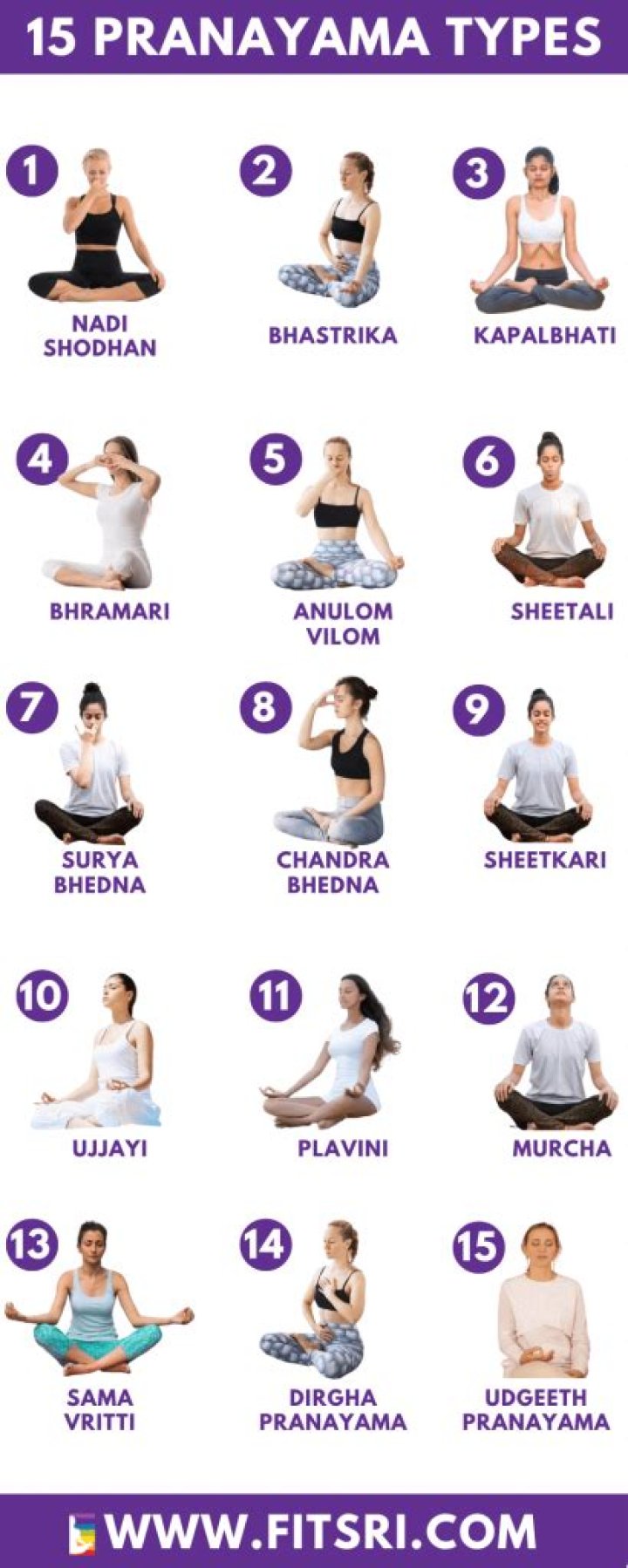
Yogic breathing techniques are easy to do and can be done in the comfort of your home. However, do get in touch with a certified yoga expert before you try any of these. Certain pranayam techniques like Surya Bhedi (right-to-right nostril breathing – heat-generating/fire dominated technique) or Chandra Bhedi Pranayam (left-to-left breathing; cooling/water dominated technique) target specific issues and must be practiced only on being recommended. Kapalbhati is one of the most popular types of pranayam wherein a person takes a long breath and then exhales in short, intermittent bursts. Alternate nostril (Anulom Vilom) breathing is another easy exercise. Breathing retention is another type of pranayam that helps strengthen lung capacity. Inhale a deep breath and hold for as long as you can, this ensures greater oxygen supply and absorption. However, if you suffer from hypertension of heart issue, skip practicing breathing retention.
It is recommended to do Kapalbhati after Jal Neti Kriya
Yogic breathing while getting into postures
Yogic practice is futile and fruitless if you don’t breathe correctly while getting in and out of the posture. Always remember, if you’re in middle of practicing a posture, you must inhale once you get in the center position and exhale when the body moves away from the center position. Exhale while going sideways or bending forward and inhale while bending backward.
Always remember that respiration is closely tied to the heart and the quality of your heart health directly affects the span of your life, therefore take a deep breath.
Long days of work are making you dull and lifeless. Added to that are the constant heat and pollution. Unfortunately, you have absolutely no time to go to a peaceful place and rejuvenate. Then, what do you do to feel your energies, detoxify, and attain balance within the space you have? There is a way, and it is called Kapalbhati Pranayama. Find out all about the process and what it does to you by scrolling down.
What Is Kapalbhati Pranayama?
Long long ago, a set of breathing techniques were devised to help people with their overall well-being. It is called the yogic breath, and it is an important aspect of yoga. Kapalbhati Pranayama is one among them, and it has been keeping people healthy and pure since ages.
‘Kapal’ means forehead, ‘Bhati’ means shining, and ‘Pranayama’ means breathing technique. Kapalbhati Pranayama is a Sanskrit word that means forehead shining breathing technique. It is named so as the regular practice of the method gives you a shining forehead and bright intellect.
Though the method appears to need minimal effort, in reality, it is a very technical kriya and comes with a plethora of benefits. It is a ‘shat’ kriya technique that flushes out toxic air from your body, cleansing it in the process. With cleansing come various mental and physical benefits. Kapalbhati requires you to sit in a yogic posture and breathe. It is more of a breathing exercise than assuming a pose with the help of your limbs. It is part of the Eight Limbs Of Yoga as compiled in Yoga Sutras by Sage Patanjali. Practicing Kapalbhati keeps you healthy in mind, body, and spirit.
Now that we know the unique nature of Kapalbhati, let’s find out how to practice it.
How To Do Kapalbhati
- Sit The Right Way
- Inhale Well
- Exhale Rapidly
- Relax Deeply
1. Sit The Right Way
Sit comfortably in Sukhasana or the Easy Pose. Place your palms on your knees. Ensure they are facing upwards. Direct your focus and awareness to the belly region. It is beneficial if one sits on a folded blanket on a pair of yoga blocks so that the spine remains elevated and alert.
2. Inhale Well
Inhale deeply with both your nostrils, filling both your lungs with air. The breath should be a slow and steady intake of air, concentrating on the airflow and breathing in a calm manner.
3. Exhale Rapidly
Pull your stomach in towards your back. Get your navel closer to the spine as much as you can. Place your right hand on the navel to feel your abdominal muscles contracting. As you relax from the contraction, you exhale air in a short burst followed by an automatic inhalation. During exhalation, there will be a hissing sound. At that point, feel that all the bad in your body is coming out. As you release your abdomen, you can feel the air filling your lungs.
4. Relax Deeply
Inhale and exhale in this manner for about 20 times. That will be one round of Kapalbhati. Rest after you complete one round by sitting silently in Sukhasana with your eyes closed and observe the sensations erupting in your body.
Types Of Kapalbhati Pranayama
There are three types of Kapalbhati Pranayama. They are:
- Vatakrama Kapalbhati – This is the kind we discussed above, where the exhalation is active, and the inhalation is passive.
- Vyutkrama Kapalbhati – This type requires you to sniff in water through your nostrils, let it flow down your mouth, and eventually spit it out through your lips.
- Sheetkrama Kapalbhati – This is the opposite of Vyutkrama Kapalbhati, and it requires you to take in water from the mouth and expel it through your nostrils.
Benefits Of Kapalbhati Pranayama
- Kapalbhati generates heat in your body, dissolving toxins and other waste matter.
- It improves the functioning of the kidneys and liver.
- It removes stress from the eyes and erases dark circles.
- It enhances blood circulation and digestion.
- The method increases your metabolic rate, thus aiding rapid weight loss.
- It stimulates your abdominal organs and is thus helpful for diabetic patients.
- It rejuvenates your brain and energizes your nerves.
- The process calms you and uplifts your mind.
- It gives you a sense of balance and sensibility, making you feel pure and clutter-free.
- It eliminates acidity and gas-related problems if done correctly. It is not recommended for people with gastric issues.
- Kapalbhati strengthens your lungs and increases their capacity.
- Regular practice of Kapalbhati will activate you and make your face glow radiantly.
- It improves memory and concentration power.
- The practice clears and activates the chakras in your body.
- It helps in curing asthma and sinus.
- It keeps depression at bay and fills you with positivity.
Side Effects
- Kapalbhati may lead to hypertension and hernia.
- It can cause dizziness and headaches.
- You might feel a vomiting sensation.
- Your mouth can become dry.
- You might experience excessive perspiration and salivation.
Precautions
- Heart patients should go slow with their exhaling.
- Practice Kapalbhati in the morning on an empty stomach.
- Those with high blood pressure should reduce their rate of Kapalbhati.
- Learn Kapalbhati from a certified yoga teacher after getting a health check-up done.
- It is best to avoid this technique if you are pregnant or menstruating.
- Avoid Kapalbhati if you have a slipped disc or a stent.
- If you have ulcers, be careful while practicing Kapalbhati.
- Kapalbhati is an advanced breathing technique. Attempt it only after becoming proficient in the basic level pranayama.
- Keep in mind your limitations during the practice and work through the process accordingly.
- Be cautious and aware during the breathing exercise if you have respiratory issues like asthma.
Now that we know the workings of the Kapalbhati, let’s find the answers to some of the commonly asked questions regarding it.
Expert’s Answers For Readers’ Questions
Can we practice Kapalbhati Pranayama after a run?
Yes, you can practice Kapalbhati Pranayama either before or after a run. However, it is best to practice it first thing in the morning on an empty stomach so that it rejuvenates and prepares you for the rest of the day.
Can we eat immediately after practicing Kapalbhati Pranayama?
It best to wait for 20 to 30 minutes after a session of Kapalbhati Pranayama to prevent the energy generated from being used to digest food.
Breath is the source of life. Breathing effortlessly and consciously is powerful and has positive effects on your life. When all it takes is to sit in a place and breathe right to gain many benefits, it only makes sense that you begin the Kapalbhati practice immediately. Get going!
Today, more and more people from different walks of life are opting for Yoga. Yoga is more than asanas. It’s a complete lifestyle that promotes holistic health. Prana is the vital component that sustains life. “Pran” mean bio-energy and “ayama” means to control or regulation. There are various types of Pranayama, and their benefits in daily life are unlimited.
Most people go through life without even being aware of how many breaths they take in one minute. Breathing of such people is generally slow and erratic. Daily pranayama trains the lungs and improves the capacity of respiratory system immensely. Pranayama directly works on the nervous system. Daily Pranayama positively affects autonomic nervous system which controls and governs essential functions of the body like the heart rate, respiration and blood pressure etc.
How to do daily Pranayama?
Some valuable pointers to consider for your daily pranayama practices
- Place should be ventilated
- Mornings and evenings are an ideal time for the pranayama practices
- Everyday about 15 minutes of pranayama
- Place should be neat and clean free of dirt, pollutants and pollutants.
- Make it a point to practice every day at same place and time
- Place should be distraction proof
- Daily pranayama practice should be done on an empty stomach (at least 4 hours after any meal/snack consumption)
Recommended daily pranayama’s and benefits
Yogendra Pranayama- IV; diaphragm breathing.
The diaphragm is exercised in this Pranayama. The diaphragm is a musculo-membranous partition, separating the thoracic and abdomen cavities. When relaxed it is convex, but it flattens during inhalation, thereby enlarging the thoracic cavity and allowing for the expansion of the lungs. This Pranayama is done in the supine position, as the position aids optimal movement of the diaphragm.
Recommended Practice -10 rounds/session – to a count as per individual capacity and comfort
Watch the video for details:
Yogendra Pranayama- IV Benefits-
- Digestive organs stay active.
- Reduces fat collected around the stomach.
- Improved breathing – vital capacity and tidal volume improve.
- Leads to quietude and inner harmony.
- Sedative effect on the nervous system – relaxes the entire body.
Yogendra Pranayama-IX; alternate nostril breathing (Anuloma-Viloma).
We normally inhale and exhale for approximately 1 ½ half hours from one nostril and then unconsciously the other nostril takes over for the same period. This pranayama is practised to regulate the natural way of breathing which brings balance between positive and negative effects of breathing on both the body and mind.
Recommended practice – Practice daily, five rounds/ day
(Limitations- Children under 12 years should not practice. Cardiac patients should NOT exceed their time capacity)
Yogendra Pranayama-IX Benefits-
- Favourable pressure changes in lungs for better oxygenation.
- Experience quietude and inner harmony.
- Sedative effect on the nervous system – concentration is improved
- Balances the energies in our system which helps cope with pains and aches.
Yogendra Bhramari; bee breath.
Bhramari comes from the Sanskrit word ‘Bramar’ – a black Indian bee. The resounding echo of the sound made by a humming bee is replicated in the practice of this technique. The humming sound resonates in the head region. The sound helps in bringing forth a sense of unity and concentration.
Method -Bhramari Pranayama
Starting position: Do preliminary conditioning in Sukhasana or any other meditative posture. Sit on a firm chair with an erect backrest, if unable to sit on the floor. Keep the body above the waist straight and the spine erect.
Method: Inhale fully and then exhale slowly, smoothly and continuously in a controlled manner from the nostrils with a little force, making a humming sound like the black bee. Keep the mouth closed throughout the practice. The sound need not be very loud but should create the vibrations.
Recommended practice – Practice 5 rounds/session, with pause in-between rounds. Should Not to be practised lying down.
Bhramari Pranayama Benefits–
- Has a very beneficial effect on the nervous system (ANS)
- Restores the elasticity of lungs and beneficial in Asthmatic conditions.
- Practised daily it induces meditative states and quietens the mind.
- Beneficial in relieving hypertension and stress.
- It relaxes the mind and lowers stress and reduces tension and anxiety.
- It helps to reduce anger and frustrations.
Daily Pranayama slows the ageing process. It makes your skin glow and releases toxins. Provides stillness of mind and provides lightness in your body. Helps in weight reduction and melts excess fats. Breathe easy with daily pranayamas. Daily Pranayama is a holistic wellness practice for mind, body and soul.
Turn back the clock with few simple but very powerful pranayama techniques. Try today.
Those who follow yoga may have heard of the practice of pranayam. The word is derived from ‘Prana‘ which stands for ‘life force’ and ‘Ayama‘ which means ‘to lengthen or to work on it’. Prana, in yogic terms, means the force within the body that is vital for the functioning of the body as well as its vitality. Yogic texts describe Prana as a potent force that runs through various chakras and nadis in the body to keep the body healthy, energized and invigorated. Breathingplays an extremely crucial role in the regulation and maintenance of Prana.
It is believed that when the Prana is not able to move freely in the body – due to blockages in chakras or nadis – a person begins to harbour sickness. The concept of prana and its effect on a person’s well-being has more to do with the mental state, mindfulness and the emotional health of a person. Interestingly, just the way we breathe may affect the way we perceive things as well as our mental health. Therefore, pranayama is a simple practice of many breathing techniques and asanas that promote emotional, mental and physical well-being.
Breathing lies at the center of human existence, therefore it forms the core of any yogic practice. Breathing facilitates oxygen supply to the brain as well as to rest of the body. According to your prakriti, pranayam can have varying effects on your state of mind as well as emotional health.
“Most people breathe incorrectly. They use only the small part of their lung’s capacity,” noted yoga expert Anju Kalhan. Shallow breathing – not using lung’s capacity to the fullest – deprives the body of oxygen and prana, which are essential for good health. Correct breathing is also a great way to detoxify the body.
Pranayam benefits
The benefits of practicing pranayam can be many. Apart from rendering vitality to the body, it also enhances the quality of prana and makes you feel more uplifted, motivated, positive and happier. Yoga is essentially a practice that aims at cleansing, balancing, fixing, strengthening and challenging the body both from within as well as on the outside. While you learn to breathe correctly, you’re setting things right internally, giving various bodily processes a thorough cleanse. Pranayam is a practice that helps in bringing the body, mind and soul in sync. Practicing pranayama has great benefits for people suffering from anxiety disorders, depression and other mental-health issues.
Pranayam helps in calming your mind
Yoga breathing techniques
The typical yogic breathing technique is popularly known as the Ujjayi breathing wherein you take a long breath first filling up your stomach and then the chest. While you inhale, the stomach is the first to go in followed by the chest. This facilitates maximum oxygen retention by the body. Yoga expert Mithilesh Kumar calls Ujjayibreathing a great way to get rid of respiratory issues, heart troubles, digestive disorders, stress and lung-related problems.
Types of pranayam
Yogic breathing techniques are easy to do and can be done in the comfort of your home. However, do get in touch with a certified yoga expert before you try any of these. Certain pranayam techniques like Surya Bhedi (right-to-right nostril breathing – heat-generating/fire dominated technique) or Chandra Bhedi Pranayam (left-to-left breathing; cooling/water dominated technique) target specific issues and must be practiced only on being recommended. Kapalbhati is one of the most popular types of pranayamwherein a person takes a long breath and then exhales in short, intermittent bursts. Alternate nostril (Anulom Vilom) breathing is another easy exercise. Breathing retention is another type of pranayam that helps strengthen lung capacity. Inhale a deep breath and hold for as long as you can, this ensures greater oxygen supply and absorption. However, if you suffer from hypertension of heart issue, skip practicing breathing retention.
It is recommended to do Kapalbhati after Jal Neti Kriya
Yogic breathing while getting into postures
Yogic practice is futile and fruitless if you don’t breathe correctly while getting in and out of the posture. Always remember, if you’re in middle of practicing a posture, you must inhale once you get in the center position and exhale when the body moves away from the center position. Exhale while going sideways or bending forward and inhale while bending backward.
Always remember that respiration is closely tied to the heart and the quality of your heart health directly affects the span of your life, therefore take a deep breath.
Do we need to prove benefits of yoga? Need we say more? Yet to inform those who may have not tried it ever, we give you the first and the most basic practice of yoga that can make oodles of difference to your overall health and wellbeing. This write up is discussing about kapalbhati pranayam and related health benefits.
Yoga is the most effective measure to naturally strengthen the body from within. It deals with a wide array of yoga poses that the body can make along with controlled inhalation and exhalation such that the circulation of blood in the body is regulated to enhance the body functions.
While each Yoga pose is meant for a specific reason, the yoga that has to be practiced depends upon the need and the requirement of the body. Yoga for everyday is different and for treatment of illnesses is different. This is why we need to practice yoga based on our body type and needs.
However, one thing that remains common to all bodies and yoga activists is the regime of KapalBhati (Hatha Yoga). We give you the step wise instruction for this.
How to do KapalBhati?
Straight forward and easy, this practice has to be performed with caution else you may end up hurting the body. There are also some precautions that need to be taken care of while you perform the following steps:
- Sit straight with a relaxed but straight spine and legs in front
- Inhale deeply taking time till your fill your body with air but EXHALE suddenly with a puffing sound. The focus has to be laid on the exhalation and not the inhalation.
- To exhale with force, contract the abdominal muscles inwards and while inhaling expand the abdominal muscles to outside.
- Perform in sets of ten breaths and the best is to complete two sets of the exercise
Benefits of Kapalbhati Yoga
Kapalbhati pranayam is one of the most effective breathing exercises which bring glow on the face and make the whole body relaxed. Daily practice of kapalbhati helps you to cure many health conditions over the period of time.
It is performed by many people to procure different benefits of kapalbhati such as;
- It soothes your body and mind
- Make your physique more flexible and relaxed
- Help you in weight loss
- Cure diseases related to respiratory system
- Improve body tone
- Reduce the risk of getting infections and allergies in respiratory system
- Increase the flexibility of the diaphragm which reduce the risk of hernia
- Improve the blood circulation
Hope above discussed how to do kapalbhati instructions and mentioned health benefits of kapalbhati inspire you to perform this amazing yoga pose at home.
Side Effects to Keep you Safe
While Kapalbhati may be a safe way to cleanse and improve your body, health and mind, it has certain caution that needs to be exerted as well. It is not largely recommended for everyone. Especially not for those who suffer from Cardiac ailments and those with spinal issues. Also, such a technique needs to be avoided in case you are suffering from cold and nasal congestion. It is best recommended that you consult a Yoga Expert or a licensed doctor before you begin this routine.
Kumbhaka pranayama is one of the traditional pranayama’s breathing exercises of Hatha yoga. Kumbhaka (kuhm-BAH-kah) is Sanskrit word that means pot. This is not just any pot but the human torso as seen as a pot with two interiors (one at the throat and the other at the base of the pelvis).
It is practiced in two types: antara and bahya. Antara (ahn-TAH-rah) is Sanskrit for interior while bahya (BAH-yah) is Sanskrit for outer. These two retention techniques are therefore practiced on the inhale and exhale respectively. In this tutorial we focus on Antara (the pause between the in and out breath).
Kumbhaka is practiced at first in a 1-1-2 ratio so whatever you’re inhaling is for, you hold your breath for the same amount and exhale is the double amount. When you become comfortable in stage two the ratio becomes 1-2-2, then 1-3-2 and final step 1-4-2 so if your inhale is for 10 you hold for 40 and exhale for 20.
Step by Step
- Start by sitting in a comfortable meditation posture. You can do the Sukhasana (easy pose) for instance. If you are unable to sit in any of those postures, you can sit on a chair. Ensure that your back is straight with the spine, neck, and head aligned. Place your hands on your knees in jnana mudra. You may also place one hand on your chest and the other on the abdomen. Close your eyes.
- Start by doing simple natural breathing. Breathe naturally through both of your nostrils. This will help you to gain control of your breathing and prepare your body for the practice.
- Antara Kumbhaka – this is internal retention. Start by taking a deep breath to the count of five. Counting should be done in the mind or you can use your fingers or use a metronome as help. After you have filled your lungs with air, tuck your chin into your chest in jalandhara badha, close nose with thumb and ring finger, hold your breath to a count of five.
- Release hand and lift head, exhale normally through both nostrils. Exhalation should be done for double count 10 as in this example of ratio 1-1-2
- Repeat cycle for 10 – 15 minutes
Kumbakha tutorial
Try our 21-day breathing challenge for free
Variations
Bahya Kumbhaka – this is external retention. To practice this, take a deep breath, to the count of five. Now exhale deeply but slowly also to the count of five. Hold your breath when you are done exhaling. You should also hold the breath for the same duration as inhalation and exhalation. Endeavor to make the three steps all be the same duration.
Percussions Kumbakha
- Kumbhaka has to be practiced in a relaxed state of mind to revitalize the nervous system
- Don’t hold your breath by force, don’t go beyond your capacity.
- Don’t practice Antara Kumbhaka before mastering puraka (inhale) and rechaka (exhale), start with ujjayi or other technique
- Don’t practice Bahya Kubakha before mastering Antara Kumbakha
- Always practice sitting or laying down, never standing
- Practice this pranayama on an empty stomach
Possible Benefits
- This pranayama is believed to strengthen the diaphragm as you hold your breathe deeply and hold your breath.
- It is also very good at increasing lung capacity due to the deep inhalation.
- Kumbhaka pranayama cleanses the respiratory system. It cleanses the residual air or dead space air and alveolar air.
- It activates the respiratory center in the brain. This is due to the increase in carbon dioxide during retention which triggers the brain for better oxygen retention and interchange.
- Increases oxygen retention and the amount of oxygen in the blood. This, in turn, improves health and enhances concentration. When your body is yearning to take a breath when in retention, your body focuses on that which improves the concentration
- This pranayama relieves the body and the mind of stress and anxiety. It clears thoughts and enhances memory
- It reduces strain on the circulatory system of the body.
- It is very ideal as pre-meditation pranayama. It settles the body and the mind grounding it and preparing it for meditation.
- It can relieve complications such as blockage, acidity, gastric problems, allergies, asthma, constipation and problems with reproductive organs.
Bandhas
The three major bandhas Mula bandha, Uddiyana bandha, and Jalandhara bandha particularly used here in the Kumbhaka practice when holding the breath. As a beginner practice, only Jalandhara bandha until you master the technique.
Beginners Tips
- For beginners first, focus on mastering Antara kumbhaka and start slowly with holding breath for a few seconds.
- Ensure that you keep your mouth closed throughout the entire pranayama. Opening the mouth messes with intake of air and retention so you do not get the full benefits.
- Watch the rhythm, if it is disturbed by holding your breath you have gone too far. If it is undisturbed the practice is correct.
- This pranayama should not be practiced by children under the age of 12 years. It also should not be performed by people who have serious cardiac and hypertension problems. As you become proficient and master the technique, increase the duration with which you inhale, exhale and hold the breath.
Other breathing exercises
Before attempting Kumbhaka a regular practice of other pranayama exercises is recommended such as:
- Anuloma viloma: alternate nostril breathing
- Bhramari pranayama: humming bee breath
- Ujjayi: Victorious breath
- Bhastrika Pranayama: bellows breath
Updated November 16, 2018.
Breathing is something we do on a daily basis. The body, in a living state, breathes involuntarily whether we are awake, sleeping, or actively exercising. Breathing is living. It is a vital function of life. In yoga, we refer to this as pranayama. Prana is a Sanskrit word that means life force and ayama means extending or stretching. Thus, the word “pranayama” translates to the control of life force. It is also known as the extension of breath. Every cell in our bodies needs oxygen to function properly. So it’s no surprise that research shows that a regular practice of controlled breathing can decrease the effects of stress on the body and increase overall physical and mental health.
Ever notice how soothing a simple sigh can be at the end of a long day? There are a variety of breathing techniques that are known to reduce stress, aid in digestion, improve sleep, and cool you down. Here are instructions on four pranayama exercises worth practicing and the most beneficial times to do them.
1. Nadhi Sodhana aka Anuloma Viloma
Nadhi sodhana, also known as alternative nostril breathing, is a very relaxed, balancing breath that is used to help calm the nervous system and aid in a restful night’s sleep. By increasing the amount of oxygen taken into the body, it’s believed that this breath can also purify the blood, calm the mind, reduce stress, and promote concentration.
How to do it: Nadhi sodhana can be done seated or lying down. To start, empty all the air from your lungs. Using the thumb of your dominant hand, block your right nostril and inhale through your left nostril only. Be sure to inhale into your belly, not your chest. Once you are full of breath, seal your left nostril with the ring finger of the same hand, keeping your right nostril closed, and hold the breath for a moment. Then release your thumb and exhale through your right nostril only. Be sure to exhale all the breath out of the right side and pause before inhaling again through the same side. Seal both nostrils once you’ve inhaled on the right side and exhaled through the left side. A complete cycle of breath includes an inhalation and exhalation through both nostrils. If you’re just starting out, you can do a four-count inhale, holding your breath for four to eight counts, then exhale for four counts. Perform up to ten cycles and notice how your body responds. You may feel more relaxed and calm in both your mind and body.
When to do it: Nadhi sodhana is a calm, soothing breath that can be done any time of day. Try practicing this technique when you are anxious, nervous, or having trouble falling asleep.
2. Kapalabhati Pranayama
Kapalabhati means skull shining breath. It’s a pranayama exercise as well as an internal kriya, or cleansing technique. Practitioners of kapalabhati believe that this breath will help clear mucus in the air passages, relieve congestion, reduce bloating, and improve lung capacity. Kapalabhati is an invigorating breath that can build heat in the body.
How to do it: Start by sitting in a comfortable seat with a tall, straight spine, and exhale completely. Inhale briefly through both nostrils, then sharply exhale (again out of your nose) while pulling your navel in toward your spine. The exhalation is short and quick, but very active, while the inhalation is short and passive. Again, pull your navel in as you exhale and soften it on the inhalation. Do one round of 30 (counting your exhalations) and rest for a minute with some deep breaths in between. Repeat. If this seems strenuous, start with 15 and gradually work your way up.
When to do it: Kapalabhati is great to do in the morning if you’re feeling chilly or sluggish. You may also try it when you’re feeling congested or bloated, but don’t try it on a full stomach. Avoid this technique if you are pregnant, or suffer from blood pressure issues or heart conditions.
3. Ujjayi Pranayama
Ujjayi means victorious breath; it’s also referred to as ocean breath due to the sound it creates. This breath is often used in asana (posture) practice, especially in ashtanga and vinyasa classes. Ujjayi encourages full expansion of the lungs, and, by focusing your attention on your breath, it can assist in calming the mind.
How to do it: Find a place where you can sit comfortably with a straight spine. Take a steady breath in through both nostrils. Inhale until you reach your lung capacity; maintain a tall spine. Hold your breath for a second, then constrict some of the breath at the back of your throat, as if you were about to whisper a secret, and exhale slowly through both nostrils. This exhalation will sound like an ocean wave or gentle rush of air. You should feel the air on the roof of your mouth as you exhale. Repeat up to 20 times.
When to do it: This breath can be practiced for up to 10 minutes at any time of day. Try it with an asana practice as well.
4. Sitali Pranayama
Sitali also means cooling, which explains the effect it can have on your mind and body. This breath encourages clearing heat with coolness. It’s especially helpful during summer and in hot climates.
How to do it: Roll your tongue until the outer edges touch, forming a tube. If you can’t curl your tongue, make an oval shape with your mouth, keeping your tongue flat. Inhale through your mouth, taking in all the air that you can. It may make a hissing sound. After inhaling, bring the tip of your tongue to the roof of your mouth and seal your lips. Feel the coolness of the inhalation in your month then exhale through your nose. Repeat five to ten times or as needed.
When to do it: If you’re feeling overheated, irritable, or find yourself waiting impatiently in hot weather, sitali is a great tool to try to cool off and relax!
Breathing is one of the most natural things we do as humans. It is a gift and a very powerful tool that can enable us to create more ease and balance in our lives. Taking time to focus on the breath allows us to pause from daily stresses, physical symptoms, and emotions that have taken over the mind. It is in that moment where we focus on the breath that we can return to a neutral state of being, gain clarity, feel rejuvenated, and enhance an overall sense of well-being. These are just a few wonderful reasons to invite a pranayama practice into your daily routine.
Introduction- Kapalbhati Pranayam- How to do it, benefits and precautions
Kapalabhati Pranayama is a method (action) of Hetkarma (Hatha yoga). In Sanskrit, Kapal means forehead and Bhati means fast. By doing regular practice of this Pranayama, the innerPrabha (radiance) on the face remains sharp. KapalBhati is a very energetic high abdominal breathing exercise.
The skull means brain and plentifulness. That is, ‘Kapal Bhati’ is the pranayama through which the brain is clean and in this case, the functioning of the brain operates smoothly. By the way, there are other benefits of this pranayama. There are many benefits to liver-kidney etc.
Kapalbhati is considered a part of Pranayama. In this, a rapid exhalation process is done, which can cure various diseases. It would not be wrong to say that Kapalbhati is the way to clean the body from inside. It is said that regularly doing Kapalbhati calms the mind and makes one shine on one’s forehead.
Every action of yoga is effective, but when it comes to Kapalbhati Pranayama, it is called Sanjeevani of life. Kapalbhati Pranayama is considered to be the most effective. Kapalbhati Pranayama is included in Hatha Yoga. It is considered to be the most effective pranayama in yoga.
Many types of complex diseases are overcome by this Pranayama and if a healthy person keeps doing this practice every day, then he remains healthy throughout his life.
Kapalbhati is a special part of Pranayama-yoga. Kapalbhati is said to be very important for the development of meditation and mental power. Kapalbhati has also been called a part of Shatkarma by some knowledgeable Mahatma and Yogis of ancient times.
Kundalini Shakti is also awakened by Kapalbhati. To keep the mind calm and cheerful, Kapalbhati Pranayam should be done daily. Kapalbhati Pranayama cleanses the nerves of the body and makes them perfectly healthy and cures diseases.
Benefits of Kapalbhati Pranayama –
- During Kapalbhati Pranayama, the breath is released in and out due to which blood circulation in the body is good. Many diseases can be avoided by this happening.
Nowadays, everyone’s breathing activity is getting smaller due to busy routine, due to which heart related diseases are increasing. By doing Kapalbhati, breathing activity is prolonged, which can prevent heart-related diseases.
Kapalbhati Pranayam not only improves blood flow but also detoxifies the body.
Those who have or are at risk of diabetes can be benefited from Kapalbhati. Kapalbhati Pranayam helps to Control the blood sugar.
You can reduce your weight by incorporating Kapalbhati Pranayama into your lifestyle. You can also reduce the extra fat from your stomach.
For people who have digestive problems or stomach problems, this pranayama is a blessing. If you do this pranayama continuously for a few days, then these problems can be got rid of.
Kapalbhati is also good for the lungs, it makes the respiratory system healthy.
Nowadays due to pollution and weather, anyone can have respiratory problems like asthma or asthma. This pranayama provides relief in diseases like sinus, bronchitis infection, and rhinitis.
In today’s busy lifestyle, problems like stress are increasing. In such a situation, people have to take anti-depressant medicines. Breathing yoga is a good option in this situation. It calms the mind and reduces stress.
Yoga is also very important for the brain. By doing pranayama, a person’s brain can develop and avoid other brain-related problems. Kapalbhati is also very important for the brain. By doing this, a person’s mind is not only sharp, but the intellectual ability can also be developed.
Kapalbhati also provides relief from problems like acidity and gas.
By doing Kapalbhati, your mind remains calm, due to which the face glows. Your face and your skin look bright and young.
Nowadays hair loss problem is common due to which people spend a lot of money on many types of medicines. As long as the medicines are taken then the problem of hair gets relief and hair starts falling again when the medicine A research has found that Kapalbhati Pranayama reduces the problem of hair loss as it improves blood circulation.
The benefit of this pranayama has also been seen in incurable diseases like cancer. By doing this pranayama for a long time, one can get rid of diseases like cancer.
How to do this Pranayam
To perform Kapalbhati Pranayama, sit in, Padmasana, and perform exhalation of breath. It is to push the stomach inward while exhaling or throwing out breaths. Keep in mind that breathing is not done because, in the said action, the breath goes inside itself.
While doing Kapalbhati Pranayama one has to focus on the basic base chakra. This helps in awakening the Kundalini Shakti by awakening the basic base chakra. While doing Kapalbhati Pranayama, it is to think that all the negative elements of our body are going out of the body.
For doing pranayama, sit with the spine upright, and then rapidly exhale through both nostrils as much as possible. Also, make the stomach as narrow as possible. After that, immediately both the nostrils are inhaled and allow the stomach to come out as soon as possible.
You can do this activity by increasing the strength and gradually from 50 times to 500 times as per the requirement, but do not do more than 50 times in a sequence. Increase the order slowly. At least 5 minutes and a maximum of 30 minutes.
Precaution s:
- The patient of back pain should seek medical advice before starting this Pranayam.
Heart Patients should be avoided by Pranayama. The patient of jaundice may also have serious problems if they do this Pranayama.
The stressed person should not do Kapalbhati Pranayama. Only do this Pranayama after calming the mind.
Kapalbhati Pranayama should not be done without clearing the stomach. Kapalbhati Pranayama can cause body damage even after a meal.
A person with high blood pressure disease should not do this exercise at high speed.
In the complaints of heart diseases, high blood pressure, and gas in the stomach, this Pranayama should be done slowly (60 times a minute).
Do not do this Pranayama in a dust-smoke-deodorant, closed, and hot environment.
Do not do it during the menstrual cycle and during pregnancy.
Do not do this in case of fever, diarrhea, excessive weakness.
Do not do this Pranayama in case of constipation. Clean the stomach by adding lemon in lukewarm water and then do it only after that.
Many people perform this Pranayama several times a day, to reduce the fat from the stomach but this is harmful.
- ← Coronary Artery Disease- Cause, Symptoms and Treatment
- Coronary Shockwave Lithotripsy Treatment →
2 thoughts on “ Kapalbhati Pranayam- how to do it, benefits and Precautions ”
Kapalbhati pranayam is very effective and it helps to cure the disease.
Like!! Thank you for publishing this awesome article.
Those who follow yoga may have heard of the practice of pranayam. The word is derived from ‘Prana‘ which stands for ‘life force’ and ‘Ayama‘ which means ‘to lengthen or to work on it’. Prana, in yogic terms, means the force within the body that is vital for the functioning of the body as well as its vitality. Yogic texts describe Prana as a potent force that runs through various chakras and nadis in the body to keep the body healthy, energized and invigorated. Breathingplays an extremely crucial role in the regulation and maintenance of Prana.
It is believed that when the Prana is not able to move freely in the body – due to blockages in chakras or nadis – a person begins to harbour sickness. The concept of prana and its effect on a person’s well-being has more to do with the mental state, mindfulness and the emotional health of a person. Interestingly, just the way we breathe may affect the way we perceive things as well as our mental health. Therefore, pranayama is a simple practice of many breathing techniques and asanas that promote emotional, mental and physical well-being.
Breathing lies at the center of human existence, therefore it forms the core of any yogic practice. Breathing facilitates oxygen supply to the brain as well as to rest of the body. According to your prakriti, pranayam can have varying effects on your state of mind as well as emotional health.
“Most people breathe incorrectly. They use only the small part of their lung’s capacity,” noted yoga expert Anju Kalhan. Shallow breathing – not using lung’s capacity to the fullest – deprives the body of oxygen and prana, which are essential for good health. Correct breathing is also a great way to detoxify the body.
Pranayam benefits
The benefits of practicing pranayam can be many. Apart from rendering vitality to the body, it also enhances the quality of prana and makes you feel more uplifted, motivated, positive and happier. Yoga is essentially a practice that aims at cleansing, balancing, fixing, strengthening and challenging the body both from within as well as on the outside. While you learn to breathe correctly, you’re setting things right internally, giving various bodily processes a thorough cleanse. Pranayam is a practice that helps in bringing the body, mind and soul in sync. Practicing pranayama has great benefits for people suffering from anxiety disorders, depression and other mental-health issues.
Pranayam helps in calming your mind
Yoga breathing techniques
The typical yogic breathing technique is popularly known as the Ujjayi breathing wherein you take a long breath first filling up your stomach and then the chest. While you inhale, the stomach is the first to go in followed by the chest. This facilitates maximum oxygen retention by the body. Yoga expert Mithilesh Kumar calls Ujjayibreathing a great way to get rid of respiratory issues, heart troubles, digestive disorders, stress and lung-related problems.
Types of pranayam
Yogic breathing techniques are easy to do and can be done in the comfort of your home. However, do get in touch with a certified yoga expert before you try any of these. Certain pranayam techniques like Surya Bhedi (right-to-right nostril breathing – heat-generating/fire dominated technique) or Chandra Bhedi Pranayam (left-to-left breathing; cooling/water dominated technique) target specific issues and must be practiced only on being recommended. Kapalbhati is one of the most popular types of pranayamwherein a person takes a long breath and then exhales in short, intermittent bursts. Alternate nostril (Anulom Vilom) breathing is another easy exercise. Breathing retention is another type of pranayam that helps strengthen lung capacity. Inhale a deep breath and hold for as long as you can, this ensures greater oxygen supply and absorption. However, if you suffer from hypertension of heart issue, skip practicing breathing retention.
It is recommended to do Kapalbhati after Jal Neti Kriya
Yogic breathing while getting into postures
Yogic practice is futile and fruitless if you don’t breathe correctly while getting in and out of the posture. Always remember, if you’re in middle of practicing a posture, you must inhale once you get in the center position and exhale when the body moves away from the center position. Exhale while going sideways or bending forward and inhale while bending backward.
Always remember that respiration is closely tied to the heart and the quality of your heart health directly affects the span of your life, therefore take a deep breath.
Anulom-Vilom is a kind of pranayam that people choose to go for in their schedule so as to have a perfect health. Even the yoga experts like Baba Ramdev are found promoting these kinds of aayams daily so as to have a proper balance of health in your schedule. In it we have an alternate nostril breathing exercise that makes our breathing system better and thus we stay active during the day. Regarding the perfect way to do this pranayam, the steps that we are mentioned here can be followed by you.
Anulom Vilom Pranayama and Its Benefits
1. The Basic Sitting Position:-
In order to do Anulom-Vilom, first of all you will be required to sit in the basic position for it. Simply have a mattress laid on the floor, sit on it with your legs folded over each other like you do while in most of the yoga postures and then make yourself comfortable with your eyes closed.
2. The Way to Breathe:-
There is a perfect way to breathe that you are to follow after you are in the perfect posture to do anulom-Vilom. Simply use only one of your nostrils for the purpose of breathing which is alternated. The other nostril stays closed during this procedure what you can do with help of your finger and thumb. The thumb can be bought in use to close the right nostril and the middle finger can be bought in use to close the left nostril.
3. The Duration of Inhalation and Exhalation:-
There is a perfect duration for opening and closing the nostrils as well. The duration of inhalation and exhalation depends basically on your individual capacity. You may begin with whatever you are comfortable to do and then you may bring about an increase in the span.
4. Watch Out the Practice Videos for A Better Approach:-
There are also some videos of various pranayam gurus uploaded over internet on various websites and pages like YouTube or some facebook pages dealing with the same where you can reach and downloaded the videos depicting these gurus doing the Anulom-Vilom pranayam in a perfect way seeing which you would be able to adopt the approach in a favorable way.
5. Remember These While Doing Anulom-Vilom:-
The basic need of adopting pranayama in your schedule is to control the breathing mechanism. Breathing mechanism in human body is an involuntary process and it is controlled by the nervous system. The more you stay regular in this approach, the better your breathing gets and when you do this pranayam early in the morning’s fresh air, the breathing gets even better than before.
6. Meet Some Yoga Expert:-
You may even find some ashram or dedicated place for pranayam practice in your area where the yoga gurus are there to teach you these pranayams and reaching some sessions of these gurus, you would be able to learn a flawless and perfect way of doing pranayams. Simply practice more and more and increase the duration of exhaling and inhaling dependent on the practice only.
by Shilpa Dubey | August 18, 2020, 16:46 IST
Kapal Bhati Pranayam
Image: Grand master Akshar; Reproduced with permission
Formation
Sit in any comfortable pose, such as sukhasan, ardhapadmasan or padmasan. Straighten your back and close your eyes. Place your palms on your knees facing up in prapthi mudra. Prapthi mudra is done by cupping your palm, bringing your fingers closer to form a bowl-like shape with your palm. Inhale normally and focus on exhaling with a short, rhythmic and forceful breath. You can use your stomach to forcefully expel all the air from the diaphragm and lungs by compressing it. Inhalation should happen automatically while you decompress your stomach.
In the practice of kapal bhati, the posture is very crucial, it is the foundation as it prepares your stomach and abdomen to move in the right way to correctly and effectively practice this technique. This is because, in this training, the exhalation is done forcefully while the inhalation is a natural process.
Image: Prapti Mudra/Grand Master Akshar; Reproduced With Permission
Speed
When you are a beginner in this technique, it is most advisable to practice in shaant gati (soft and slow) and gradually build your practice level, move towards madyam (medium level) and then finally, tivra gami (at a fast pace). By practicing in tivra gami, you will gain expertise on that level but it does not mean that shant gati is not for an advanced practitioner as all these three levels have a positive impact on the body and mind.
Image: Sukhasana/1 23RF
Steps
1. Sit in any comfortable pose, preferably cross-legged, such as sukhasan, ardhapadmasan or padmasan.
2. Straighten your back and close your eyes.
3. Place your palms on your knees facing up in prapthi mudra.
4. Inhale normally and focus on exhaling with a short, rhythmic and forceful breath.
5. Exhale through the nostrils with some force and sound, as though you are trying to clear your nostrils and then inhale but without too much effort or force.
6. As you exhale, contract your belly muscles and pull your naval inward toward the spine. Put some effort into contracting and pulling the belly in. Then release the contraction as you inhale. Inhalation doesn’t require much effort.
7. Practice at a slow speed first.
8. Take a few more such breaths in a rhythmical fashion at a comfortable pace, relax.
9. Repeat 2-3 times.
Direction And Duration
Face east while practicing this pranayam. Beginner’s practice time should last around 10 minutes and you can gradually increase this timing to 20-30 minutes.
Want to know health benefits of kapal bhati pranayam? Click here
Bhastrika Pranayam
Image: Grand master Akshar; Reproduced with permission
Formation
To practice this pranayam, sukhasan, ardha padmasan or padmasan are the three asanas which you can hold. Prapti mudra is the best mudra for bhastrika pranayam. It is done in three levels: shaant, madyam, tivra.
Speed
When you are a beginner in this technique, it is most advisable to practice in shaant gati and slowly, build your practice level, move towards madyam and then finally, tivra gami. By practicing in tivra gami, you will gain expertise on that level but it does not mean that shant gati is not for an advanced practitioner as all these three levels have a positive impact on the body and mind.
Image: Ardha padmasana / 123RF
Steps
1. Sit in any comfortable pose, preferably cross-legged such as sukhasan, ardhapadmasan or padmasan.
2. Straighten your back and close your eyes.
3. Place your palms on your knees facing up in prapthi mudra.
4. Take a deep breath and fill your lungs with air.
5. Inhale and fill your lungs with air.
6. Exhale completely.
7. Inhalation and exhalation should be done in a 1:1 ratio. For example, if you breathe in for 6 counts, you must take 6 counts to exhale.
8. Now begin practicing the technique by inhaling and exhaling with force
9. To begin with, practice at least 21 times (one round of inhalation and exhalation will count as one time).
10. As you flow with your practice, you will observe that it expands your lung, your chest broadens, your nostrils are clearer and the flow of air is smooth and free.
11. With the practice of bhastrika, from chest, you can proceed to inhale and exhale with your stomach.
12. Observe your breath where your lungs and stomach are engaged and keep strengthening your practice.
Direction And Duration
Face east while practicing this pranayam. Beginner’s practice time should last around 10 minutes and you can gradually increase this timing to 20-30 minutes.
In techchadda.com you can get all information about yoga , there benifits , how to do it. We will give our best to make you healthy , fit always .
Subscribe to this blog
Follow by Email
Kapal Bhati – Maximum time for Kapalbhati Pranayama-Pranayam
- Get link
- Other Apps
Maximum Time For Kapalbhati
Pranayama
The man who does yoga , pranayam daily will stay fit always . The chances of becoming ill for the man will decrease one hundred times . But there is limit of doing something . So to do pranayam time management is also a very noticeable factor .
Now we will discuss that how you manage your time while doing Kapalbhati pranayam :-
Before doing Kapalbhati Pranayam :-
- Take bath because after taking bath you can feel fresh .
- Do not wear tight clothes and wear loose clothes .
- Go to place where natural beauty is good and greenary is available all around .
- Sit straight and look all around to natural beauty to feel good .
- keeping the neck and head perfectly straight .
- Body should be stable and spine should be straight .
Earlier we discuss about Kapalbhati more correctly Vatakrama Kapalbhati . If you want to know that What is Kapalbhati and steps to do Kapalbhati Pranayam ? then click on previous given Kapalbhati .
Duration Of KapalBhati Pranayam :-
Important Things to note down while doing Kapalbhati Pranayam :-
- People who have artificial pacemaker or stent need to avoid this kapalbhati Pranayam
- People who have problem of hernia need to avoid this Kapalbhati Pranayam .
- People who have problem of epilepsy , backache due to slippery , recently undergone abdominal surgery need to avoid this Kapalbhati Pranayam .
- Women during shortly after pregnancy as well as during menstruation need to avoid this Kapalbhati Pranayam .
- People who have heart problem and hypertension do this yoga in the guidence pf yoga experts only .
- In case of any medical condition , practice yoga only after consulting your doctor .
- Get link
- Other Apps
Comments
Post a Comment
Popular Posts
Kapalbhati Calories Burned
Kapalbhati For Burn CaloriesKapalbhati Pranayamais very popular yoga among the population across world wide . Moreover Kapalbhati is one of the best exercise or yoga to do weight loss . To do weight loss only Kapalbhati is not a single soultion but we can say it is one of many solutions . Only Kapalbhatiis not enough to do weight loss you can also do many combinations of exercises like jogging , swimming . You have also need of doing some changes in lifestyle like eat only healthy food , do not eat junk food , eat fruits etc .
Kapalbhati with a combination of sports like cricket , badminton , dancing , kissing , boxing , baseball , walking , jogging , running cycling etc .
Also Read :-Kapalbhati For Weight LossNow I can explain you that how Kapalbhati With other sports can be benificial for weight loss :-Sports like cricket , badminton , dancing , kissing , boxing , baseball , walking , jogging , running cycling etc . make a human being healthy , wealthy and fit . If a person can …
Kapalbhati Benifits – Pranayama Benifits
Kapalbhati Pranayam Kapalbhati Pranayamis a gift of nature to human beings . Kapalbhati Pranayam Is a breathing technique which helps the human being to refresh their mind .Kapalbhati Pranayamis one of the best yoga which gives birth to a new charming refreshing life . Even Our forefathers also uses Kapalbhati Yoga to stay fit and healthy . Kapalbhati yoga oxyginates the whole body of human being . Man who practice Kapalbhati Pranayam daily can lead to shining forehead , glowing skin .
Many years ago , people were believed that breathing exercises are help people in their daily lives , making overall well healthy man , it is also believed that in present time that breathing exercises are help in overall development of Human body . Kapalbhati Pranayam is not only just a yoga but it is a natural method of purification and detoxification of human body . Our brain wants healthy environment to wok properly . This can be achieved by the strength and power of yoga .
Those who follow yoga may have heard of the practice of pranayam. The word is derived from ‘Prana‘ which stands for ‘life force’ and ‘Ayama‘ which means ‘to lengthen or to work on it’. Prana, in yogic terms, means the force within the body that is vital for the functioning of the body as well as its vitality. Yogic texts describe Prana as a potent force that runs through various chakras and nadis in the body to keep the body healthy, energized and invigorated. Breathingplays an extremely crucial role in the regulation and maintenance of Prana.
It is believed that when the Prana is not able to move freely in the body – due to blockages in chakras or nadis – a person begins to harbour sickness. The concept of prana and its effect on a person’s well-being has more to do with the mental state, mindfulness and the emotional health of a person. Interestingly, just the way we breathe may affect the way we perceive things as well as our mental health. Therefore, pranayama is a simple practice of many breathing techniques and asanas that promote emotional, mental and physical well-being.
Breathing lies at the center of human existence, therefore it forms the core of any yogic practice. Breathing facilitates oxygen supply to the brain as well as to rest of the body. According to your prakriti, pranayam can have varying effects on your state of mind as well as emotional health.
“Most people breathe incorrectly. They use only the small part of their lung’s capacity,” noted yoga expert Anju Kalhan. Shallow breathing – not using lung’s capacity to the fullest – deprives the body of oxygen and prana, which are essential for good health. Correct breathing is also a great way to detoxify the body.
Pranayam benefits
The benefits of practicing pranayam can be many. Apart from rendering vitality to the body, it also enhances the quality of prana and makes you feel more uplifted, motivated, positive and happier. Yoga is essentially a practice that aims at cleansing, balancing, fixing, strengthening and challenging the body both from within as well as on the outside. While you learn to breathe correctly, you’re setting things right internally, giving various bodily processes a thorough cleanse. Pranayam is a practice that helps in bringing the body, mind and soul in sync. Practicing pranayama has great benefits for people suffering from anxiety disorders, depression and other mental-health issues.
Pranayam helps in calming your mind
Yoga breathing techniques
The typical yogic breathing technique is popularly known as the Ujjayi breathing wherein you take a long breath first filling up your stomach and then the chest. While you inhale, the stomach is the first to go in followed by the chest. This facilitates maximum oxygen retention by the body. Yoga expert Mithilesh Kumar calls Ujjayibreathing a great way to get rid of respiratory issues, heart troubles, digestive disorders, stress and lung-related problems.
Types of pranayam
Yogic breathing techniques are easy to do and can be done in the comfort of your home. However, do get in touch with a certified yoga expert before you try any of these. Certain pranayam techniques like Surya Bhedi (right-to-right nostril breathing – heat-generating/fire dominated technique) or Chandra Bhedi Pranayam (left-to-left breathing; cooling/water dominated technique) target specific issues and must be practiced only on being recommended. Kapalbhati is one of the most popular types of pranayamwherein a person takes a long breath and then exhales in short, intermittent bursts. Alternate nostril (Anulom Vilom) breathing is another easy exercise. Breathing retention is another type of pranayam that helps strengthen lung capacity. Inhale a deep breath and hold for as long as you can, this ensures greater oxygen supply and absorption. However, if you suffer from hypertension of heart issue, skip practicing breathing retention.
It is recommended to do Kapalbhati after Jal Neti Kriya
Yogic breathing while getting into postures
Yogic practice is futile and fruitless if you don’t breathe correctly while getting in and out of the posture. Always remember, if you’re in middle of practicing a posture, you must inhale once you get in the center position and exhale when the body moves away from the center position. Exhale while going sideways or bending forward and inhale while bending backward.
Always remember that respiration is closely tied to the heart and the quality of your heart health directly affects the span of your life, therefore take a deep breath.
Kapalbhati pranayam yoga! I think most of us are familiar with this. Kapalbhati Pranayama is a kind of breathing exercise which facilitates you to get rid of different ailments above a period of time. Finally, Kapalbhati pranayam must bring concerning a shine on the face of the practitioner. Of the many wonderful pranayamas that yoga gives us, Kapalbhati pranayam is one of the best breathing exercises. Read on to know the Kapalbhati Pranayama Steps and Benefits:
In recent times its reputation has been increased by the job of baba Ramdev Swami. Kapalbhati is element of Ramdev Swamiji’s set of six pranayamas moreover the practice of this set has widened like wildfire crosswise India and the rest of the world.
How Does Kapalbhati Work?
Kapalbhati is one of the most beneficial pranayama yoga. It is a practice of breathing where you inhale air through the nose normally, but forcefully exhale air through the nose. The key is to ensure that the exhale count is less than inhale count. It is suggested that the exhale count should ideally be maintained at 90-120 counts per minute.
This practice of forceful exhalation ensures that the toxins are released from the body in the form of breath. Regular practice of Kapalbhati detoxifies all the organs in the body.
Kapalabhati Pranayam Yoga Steps, Benefits And Precautions.
This article will guide how to do kapalbhati pranayam steps and its benefits along with some important precautions that have to taken while you are doing this exercise.
Instructions For Kapalbhati Pranayama Yoga or Kapalbhati Breathing Exercise:
To do this breathing exercise sit up in a relaxed position, cross legged is most excellent.
Steps:
1. Lengthen your spine upwards, extend your neck and subtly carry your chin back and in like a fighter at notice. This will line up the spine by the backside of your head.
2. Close your eyes.
3. Cover your hands in Gyan Mudra. In Gyan Mudra enclose your thumb tips also index finger assembly, by the wrists inactive softly on the knees plus the palms twisted somewhat upwards.
4. Rest your stomach muscles.
5. Currently drive out the air as vigorously as you are relaxed with throughout the nose. This must cause the abdominal muscles to contract sharply plus must draw the abdomen inwards to the spine. Afterward let the breathing to happen totally passively devoid of any extra effort.
6. To recur, the breath is done using conscious sharp power, whereas the breathing is just a retreat action carrying the air back into the lungs. The entire breathing takes place throughout the nose. Correctly following the passive inhalation, breathe out again vigorously and carry on at a fixed rhythm.
7. Perform a round of 10 repetitions.
8. Work your mode up to doing 5 rounds, whereas taking a break among each round.
See More: Uttanasana
Best Benefits Of Kapalbhati Pranayam Yoga:
- Performed over time, Kapalbhati Pranayama moreover helps to decrease abdominal fat, battle obesity; tenor abdominal muscles moreover give core abdominal strength plus power.
- As of a body position Kapalbhati Pranayam must be utilized to expel any illnesses, ailment, and weakness from the body therefore permit it grow in health, energy and strength.
- Several people do kapalbhati pranayama yoga for weight loss as fine as it works up the respiratory system plus the abdominal muscles, serving you tone out your musculature and recover body tone.
- kapalbhati pranayama also benefit to recover blood circulation, specially to the lower half of the body, it help to recover the working of the whole body.
- Certainly, the technique also helps increase the lung ability and develop respiratory competence, building extra oxygen obtainable to the body. Because more oxygen flow into the body, it becomes extra efficient.
- Additionally, you can also feel better mental acuity, enhanced concentration moreover sharp senses.
- Make heat in the system to assist soften toxins moreover waste matter. Include luster and loveliness to your face.
- Works on the Heart Center (Anahata Chakra) plus connected organs.
- By the powerful breaths of kapalbhati pranayam, the allergens plus the transmittable materials in the lungs plus the respiratory passages are blown away and detached from the body.
- The work out technique moreover helps to get better the suppleness of the diaphragm. Because the diaphragm turns out to be stronger and extra flexible, the danger of increasing hernias also decreases considerably.
- It supports to recover digestion plus elimination. Cures disease also inequality linked by this region for example gas, indigestion, diabetes, etc. To help achieve this level of healing you must practice kapalbhati pranayam on a daily basis.
Precautions Of Kapalbhati Pranayam Yoga:
- Try not to do any yoga poses exactly after eating as yoga is specifically done on an empty stomach for maximum results. An empty stomach allows you to properly adjust your body in complex to semi-complex positions without hassle.
- Try and maintain a constant breathing pattern to help adjust your body blood flow so that you help achieve the maximum results of kapalbhati.
- Try not to over strain yourself by using a position that is too complex, it is always better to start with something simple and then move onto something harder as your body slowly gets used to the strain.
- The best time for Kapalabhati Pranayama is during morning hours.
- You can drink liquids before an hour, but strictly no solids should be consumed before the yoga.
Side effects Of Kapalbhati:
There are certain side effects of performing KApalbhati pranayama, especially for beginners and for people who do not do it right:
One may experience:
- Headache
- Dizziness
- Vertigo
- Lethargy
- Lack of stability in eyes
- Uneasiness
- Indigestion
- High blood pressure
- Dryness of mouth
- Perspiration
- Diarrhea
- Blurred Vision
- Body aches
Kapalbhati pranayama yoga is truly a cup above the rest as it provides for full body revival via comfort and peace. With different varieties of yoga available in the market there are a number of people who opt for various types but to truly choose something that is worth the time then kapalbhati yoga is truly the best. With its ideal variety of yoga poses to choose from many people are sometimes spoilt for choice as to where to start from. For beginners there are a number of less complex poses that allow them to further enhance their ability so that later on after practice complex poses can be used easily for a better impact.
how to do kapalbhati correctly Kapalbhati Pranayam
how to do kapalbhati correctly Kapalbhati Pranayam Learning yogic breath control activities is really most significant pieces of building up our yoga practice. Called “pranayama” in Sanskrit, these breathing activities can carry equalization and profundity to your general prosperity. As indicated by the old content, the Yoga Sutras, incorporated by the sage Patanjali in 150 BCE.
pranayama is one of the old style Eight Limbs of Yoga. Pranayama purges, balance, and cleanse your basic life power (called “prana” in Sanskrit). Adding pranayama to your yoga and contemplation practice can enable you to remain solid as a main priority, body, and soul.
Kapalabhati (likewise Kapalbhati) Pranayama — (kah-pah-luh-BAH-tee prah-nah-YAH-mah) — is a middle of the road tp-progressed pranayama that comprises of short, incredible breathes out and uninvolved breathes in. This activity is a customary inside decontamination practice, or kriya, that tones and rinses the respiratory framework by empowering the arrival of poisons and waste issue. It goes about as a tonic for the framework, reviving and restoring the body and psyche.
Benefits of Kapalabhati Pranayama
Kapalabhati is animating and warming. It washes down the lungs, sinuses, and respiratory framework, which can forestall ailment and hypersensitivities. Normal practice fortifies the stomach and muscular strength. This activity additionally builds your body’s oxygen supply, which invigorates and empowers the mind while setting it up for reflection and work that requires high core interest.
Warnings
Kapalabhati Pranayama is a propelled breathing strategy. Try not to endeavor it on the off chance that you are not capable with essential pranayamas, for example, Three-Part Breath (Dirga Pranayama) and Ocean Breath (Ujjayi Pranayama). Likewise abstain from rehearsing Kapalabhati on the off chance that you as of now have hypertension, coronary illness, or a hernia. Ladies who are pregnant ought to abstain from rehearsing this activity, also. Similarly as with every breathing activity, consistently approach the training with alert, particularly in the event that you have a respiratory condition, for example, asthma.
how to do kapalbhati correctly Kapalbhati Pranayam
- Sit serenely with your spine erect. Spot your hands on the knees with palms open to the sky. Kapalbhati Pranayama
- Take a full breath in.
- As you breathe out, pull your stomach. push your back towards the spine. Do as much as you easily can. You may keep your correct hand on the stomach to feel the muscular strength contract.
- As you loosen up the navel and mid-region, the breath streams into your lungs consequently.
- Lay your hands on your knees, palms looking down.
- Carry your attention to your lower stomach. To uplift your mindfulness, you can put your hands, one over the other, on your lower stomach as opposed to on your knees.
- Breathe in through the two nostrils profoundly.
- Agreement your low tummy or utilize your hands to tenderly push on this region, constraining out the breath in a short burst.
- As you rapidly discharge the constriction, your inward breath ought to be programmed and latent — your emphasis ought to be on breathing out.
- Start gradually, going for 65-70 compressions for each moment. Step by step revive the pace, going for 95-105 exhalation/inward breath cycles every moment. Continuously go at your own pace and stop on the off chance that you feel swoon or discombobulated.
- Following one moment of the activity, breathe in profoundly through the nostrils, and afterward breathe out gradually through your mouth. Contingent upon your experience level, you may rehash the activity.
- Subsequent to finishing the round, unwind with your eyes shut and watch the sensations in your body.
- Do two additional rounds of Kapal Bhati Pranayama.
Breathe in Brightness
Rehearsing Kapalabhati Pranayama can carry equalization and immaculateness to your life on numerous levels, including physical, mental, enthusiastic, and otherworldly. Make sure to take it gradually from the outset, and expand on your experience as you acquire control. Breathing deliberately, yet easily, can separate obstructions that you didn’t know existed! The advantages of standard pranayama practice will appear in all parts of your life, both on and off the tangle.
More Benefits of Kapalbhati
- Builds the metabolic rate and helps in weight reduction
- Clears the nadis (unpretentious vitality channels)
- Animates stomach organs and along these lines is very helpful to those with diabetes
- Improves blood dissemination and adds brilliance to the face
- Improves stomach related tract working, retention, and digestion of supplements
- Results in a rigid and cut down midsection
- Invigorates the sensory system and revives synapses
- Quiets and inspires the brain
Yoga and reflection spreads practice wherever all through the world since restorative science understood that various diseases may reestablish and stayed away from by doing yoga and consideration. On account of involved and computerized lifestyle the metabolic diseases have done damages and an enormous bit of passings happen as a result of metabolic issue like Obesity, Lipids, Cholesterol, glucose level, beat, etc. Another liable gathering for these ailments is refined sustenance. Yoga ace requests normal sustenance and they emphases on light supper. Our existence requires change and by far most of current and made countries are accepting yoga and reflection.