Steven Gans, MD is board-certified in psychiatry and is an active supervisor, teacher, and mentor at Massachusetts General Hospital.
Teraphobia (fear of monsters) is extremely common in pre-school-age children. It generally lessens during the early elementary years and is highly uncommon by the time a child reaches middle school. In teens and adults, the fear of monsters is a rare but potentially life-limiting phobia.
Young Children
Fears are a normal, healthy part of childhood development. They help children learn to make sense of the world around them and develop coping skills to last a lifetime. For this reason, phobias are generally not diagnosed in kids under the age of 18 unless they last for more than six months.
Triggers
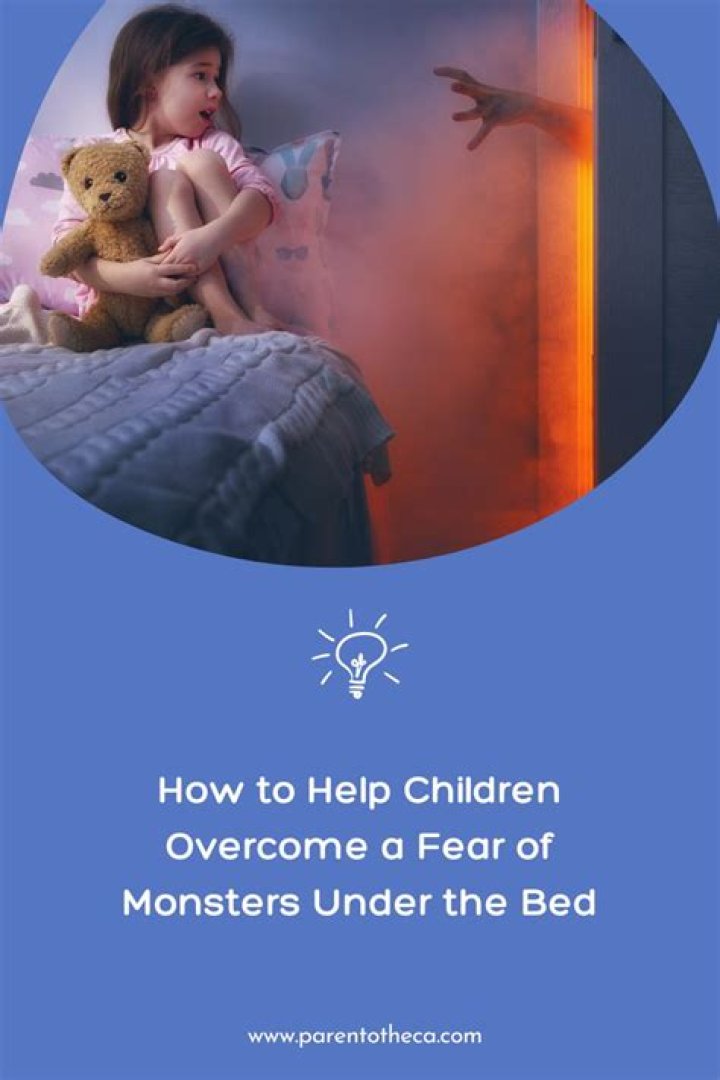
In children, the fear of monsters often takes a nonspecific form. Rather than fearing Frankenstein, Dracula or Godzilla, the child is afraid that “a monster” lives under their bed or in their closet. Nonetheless, asking the child to draw a picture of the monster may provide clues to an environmental trigger. Some drawings could resemble a TV cartoon character, a kidnapper who appeared on the evening news or even a neighbor whom the kids in the neighborhood refer to as “creepy.” In these cases, limiting the child’s exposure may help lessen the fear.
Treatment in Children
- Some parents use “monster spray” to help their kids battle this fear. Consider using a spray bottle — empty, partially filled with colored water or an aromatherapy spray — in a nightly ritual. Spray the closet, under the bed and anywhere else that your child thinks the monster might be hiding. Be sure not to use anything that might be harmful to the child or damage to fabrics or paint.
- Encourage soothing bedtime routines to calm the child’s nerves. A warm bath, a glass of water, and a bedtime story promote relaxation and a soothing sleeping environment. If the child is afraid of the dark, consider providing a nightlight. Sleeping with a family pet might also provide a feeling of protection.
- Reward “brave” behavior. Some kids thrive on the attention their fears draw, so refocus your attention. Provide a brief “monster check” (and spray ritual, if desired) and then leave the room. Use stickers or other markers to track the nights that the child stays in bed all night without calling you into her room. When a week’s worth of stickers has been collected, allow the child to trade them in for a favorite treat, such as a trip to the park or a batch of cookies.
- Never laugh at the child’s fear, use fear as a threat to deter bad behavior or belittle them for having the fear. Show respect and sensitivity for their feelings while reassuring them that everything will be fine.
Teens and Adults
In older kids and adults, the fear of monsters usually takes a more specific form. Horror movies are responsible for many short-lived fears, especially if watched right before going to bed. These fears generally persist for only a few nights and are often eased by sleeping with a light on and pursuing mild distractions, such as watching light, comedic television. If the fear lasts for more than a few nights, it may be an early sign of a true phobia.
A more persistent monster phobia may be rooted in religious or cultural fears. The fear may be generalized or it may be of a specific type of creature, such as vampires, zombies, or ghosts. The fear of witchcraft is sometimes related to the fear of monsters. These phobias are often based on a blend of superstitions, urban legends, and religious teachings.
For many people, knowledge is power. Studying ancient and modern myths about the feared monsters, particularly the science behind the legends, is often enough to curb milder fears. For more intense phobias, professional assistance may be required.
An untreated monster phobia could worsen over time. Social isolation is a possibility, particularly for teens, whose friends may see the fear as babyish or ridiculous. Many teens thrive on legend trips, in which they go out in a group to face down nearby urban legends; horror movie marathons are a staple of teen nightlife. Kids who are afraid to participate are at risk of being mocked and shunned.
Treatment for Adults and Teens
Fortunately, like all phobias, monster phobia responds well to a variety of treatments. Because they are often based on other fears, it is important to decide on your primary goals of therapy. Do you believe that you may be harmed by a monster? Are you concerned about evil entities? Do you simply want to be able to enjoy scary movies and Halloween events with your friends? Are you concerned that your child might pick up your fears?
The answers to these and other questions will help direct your choice of treatment. For example, if your fear of monsters is rooted in your religious or spiritual beliefs, your therapist might suggest spiritual counseling with your religious leader instead of, or in addition to, traditional therapeutic techniques.
Decoding the thoughts and emotions of children isn’t rocket science…but it certainly feels like it. That’s why we were thrilled to hear from Aliza Pressman, Ph.D., on a recent episode of the hit family podcast Mom Brain, hosted by Daphne Oz and Hilaria Baldwin. Pressman is a developmental psychologist, podcast host (check out Raising Good Humans) and the cofounding director of the Mount Sinai Parenting Center. Here, she talks about the biggest fear lurking in your child’s closet—and how to troubleshoot the emotional hurdles children face every day.
1. Always validate their feelings, even when it invites mom guilt.
Aliza Pressman: When those things happen, try to reframe the moment to just acknowledge how they’re feeling without apologizing for having to work or having to go to the bathroom or not be present 24/7. Instead, just say, “You really feel like I hold your brothers’ hands tighter. That must hurt your feelings.”
Baldwin: But then do you let her live in a reality that’s not true?
Pressman: It’s about opening the door for her to say more. If she doesn’t and she’s just like, “Yeah, I feel that way,” then you can say, “I can think of examples where I imagine I just want to be held so tight and it feels like other people are getting held tighter. But you know I love you all the same and when I’m holding you, that’s how I hold you. It’s not about tight or not tight—but thank you for telling me how you’re feeling.”
Remember, it’s not a rational feeling for them. But they need you to have authentic, true empathy, not a “too bad for you, I’m sorry you’re feeling that way.”
Baldwin: My parents once or twice said to me, “I know you think you feel that way.”
Pressman: That would drive me crazy. I always say to my kids, “All feelings are welcome; all behaviors are not.” Don’t tell somebody they think they feel something. They can feel upset that Mommy’s on the phone, but that doesn’t mean you shouldn’t be on the phone.
2. Never tell them monsters aren’t real.
Pressman: You can’t, because it’s like telling a child who’s afraid of something, “You don’t need to be afraid of that. Monsters aren’t real.”
Daphne Oz: It’s not a rational fear.
Pressman: Right. First of all, it doesn’t work. I don’t know if you guys have ever been anxious about something irrational, but I certainly have been—
Oz: “Don’t worry about your presentation. Just don’t think about it.” It’s like, “Thanks for that!” I will be sure to never come to you again when I’m feeling anxious about something.
Pressman: And that’s the message to your kids when you say, “You think that’s a big deal? Wait until you get to X. Then you’ll really be scared.” It’s the same thing as when you say to new moms, “Oh, I miss the baby time. It was so easy.” Not a cool thing to say. So the message to your kids when you say “You didn’t see that monster” is “Note to self: Don’t tell Mom.”
Oz: We had a “magic spray” that we used to get rid of monsters. But at the same time, it’s confusing—because if it’s not real, then why do I need to protect them?
Pressman: This one’s tricky and here’s why: There are different ages where your brain develops and allows you to believe certain things in different ways. And we give mixed messages. Like, you have a tooth fairy and Santa Claus. And if good people can creep into your house, why can’t bad people? So when they’re younger, it’s OK to validate their fears: “You’re so scared. It’s OK! I don’t allow monsters in the house. We have a no-monster policy.”You can use the spray.
But as kids get older, you can say, “Tell me about this monster,” and then I think you can add, “When they’re scared of monsters, I also get scared—and for me a monster means something different, because I know there aren’t real monsters.
Other tactics to try: You can put a “no monsters allowed” sign on the door. You can ask her to draw it for you. You can see if she can make silly faces on the monster in order to make him less scary. Then, sometime when she’s not flooded with stress, you explain that while monsters aren’t real, [they are a good way to express creativity]. Open up one of her books and say, “Well, that person thought about monsters so much, they made a children’s book out of it! And look at all these beautiful illustrations! Maybe we can make a book about monsters and put your monster in the book.” You can build on their fantasy and let them have these fantastic thoughts, but the point is to acknowledge their fear.
For many kids, summer is all about fun at the pool or the beach. For others, however, water-related activities are terrifying. It’s important for parents to learn how to help their children overcome fears about water and swimming. Working through these fears makes it possible for kids to enjoy a popular summer activity with their friends, and also makes it less likely that they will fall victim to accidental drowning. (The CDC reports that in the United States, accidental drownings account for about 10 deaths per day, and 1 in 5 people who drown are under the age of 14.)
Respect your child’s fear
It can be tempting to try to dismiss or minimize your child’s fear in an attempt to get him into the water more quickly. This strategy will likely backfire, and you’ll end up making him even more resistant to the idea of swimming. Your child’s fear is real. By acknowledging the fear and asking him to tell you more about it, you’ll get to the root of your child’s fear more quickly.
Identify the specific source of the fear
As you listen to your child and observe her behavior around water, you’ll begin to hone in on the source of her fears. In some cases, the fear of swimming isn’t actually a fear of water.
Does your child fear swimming in swimming pools as well as in natural bodies of water like lakes and rivers? If she only exhibits fear around swimming pools, she may be remembering a swimming experience where her eyes were irritated by chlorine. Salt water can also be irritating to the eyes, so if your child likes lakes and rivers but not the ocean, eye irritation could be to blame.
Sometimes the fear of swimming is less about the water and more about what may or may not be under the water. Children who fear monsters under the bed or in the closet may have similar fears about unknown creatures beneath the water’s surface.
Pay attention to the temperature of both the air and the water. If you’re asking your child to swim in cold water or on a cold day, his fear may just be a desire to stay warm.
Does your child act more fearful at group swimming lessons? Some children thrive in a group learning environment and find the courage to overcome their fears more easily with the help of their peers. Others, however, experience additional stress when trying to overcome a fear in a group environment. If you notice that your child’s fear is more evident in a group lesson setting, she could be experiencing some social anxiety in addition to her water-related fears.
Build trust
Thank your child for helping you understand his fears. Tell him that you will keep him safe. Whatever you do, do not throw your child into the water or trick him into going in before he’s ready. You need your child to trust you if you’re going to help him conquer his fear of water.
Help your child take slow steps to overcome the fear
Once you’ve identified some specifics about the source of your child’s fear, you can begin taking steps to help your child become more comfortable around water. The following steps are geared towards children who are fearful of pools, but you can modify these steps to fit your child’s individual needs.
- Non-swimming visits: Visit the pool together with your child, and let her know in advance that she won’t have to go in the water. Don’t even bring bathing suits or towels – this should truly be just a “reconnaissance mission”. Walk around the pool with your child and let her watch the other swimmers, but stay far enough away from the edge to make sure you both remain dry. Keep the visit short. Make a few more of these visits to the pool, until your child feels comfortable with this level of proximity to the water.
- Pool edge visits: Return to the pool and invite your child to sit beside you on the edge of the shallow end. Put your legs into the water, and tell your child that he can put his legs in, too. Tell him it’s also fine to keep his legs dry and out of the water if he’d prefer. Continue making this kind of visit to the pool, until your child voluntarily puts his legs into the water. Remember, don’t force him.
- Bathing suit visits: Once your child is comfortable putting her legs in the water while sitting on the edge of the pool, begin visiting the pool and putting on bathing suits. Reinforce to your child that wearing a bathing suit doesn’t mean that she has to get in the water. Sit on the edge of the pool and let her practice putting her legs in the water again. Tell her that you’re going to get in the pool for a few minutes, and then do so, being careful not to splash your child in the process. It’s fine to tell your child how good the water feels, but don’t try to convince her to get in. Have a few water toys with you, and ask your child to throw them to you one at a time from the edge of the pool. If she enjoys this, bring them back to her and ask her to do it again.
- Invitation to enter the water: Invite your child to come into the pool with you, and tell him that you will hold him the whole time and make sure he’s safe. If he agrees, hold him firmly on your hip and take him into the water with you, making sure his head stays far above the surface. If he doesn’t agree, don’t force him. Instead, spend some more time letting him throw water toys to you from the edge of the pool.
- Bubble-blowing: Once your child is used to entering the water in your arms, you can begin teaching her to blow bubbles in the water. Begin by showing her how to blow on the surface of the water while keeping her face a few inches away. Let her try it. Then show her how to begin blowing above the surface of the water, dip her lips into the water while still blowing to create a few bubbles, and then bring her face out of the water while still blowing. Practice this until she does it easily.
- Standing alone: Put a life jacket or other approved floatation device on your child, and invite him to stand on his own in the shallow end of the pool. If he is resistant to this, return to holding him in your arms. Continue practicing the bubble blowing exercise, encouraging your child to put more and more of his face into the water each time.
It’s likely that once your child is comfortable standing on her own in the shallow end, she’ll feel confident enough to begin to explore the water on her own. Congratulations! You’ve helped your child conquer her fear of the water. Keep the floatation device on her for now. Once she begins venturing into deeper water, it’s important to begin teaching her how to stay afloat without the help of a life jacket, so that she doesn’t become dependent upon floatation devices. Your child should now be comfortable enough in the water to take swimming lessons, either in a group or with a private teacher. Pay attention to any issues you identified earlier (eye irritation from chlorine, tendency to feel cold, etc.) and make sure you provide tools for dealing with these (goggles to protect the eyes, thick towels for warmth, etc.)
Things that seem harmless to adults may be scary for children. With insight, understanding, and patience, adults can help children deal with their fears.
At 2 to 3 years of age, children may fear things that make a loud noise that they can’t understand. They may also become fearful when things are not quite right, if furniture has been moved, a plate is cracked, or adults are angry or upset.
Kids aged 3 to 5 years often fear imaginary dangers, because they have difficulty separating real from pretend situations. Other common fears are fear of the dark or a mask covering a familiar face.
Generally, fears of school-aged children are more reality-based, such as storms, fires or injury. But their fear may be out of proportion to the likelihood of these things happening. As their understanding matures, these fears generally go away. Children often worry about their parents’ marriage or health, and can easily exaggerate mild arguments or complaints that they hear.
Children can also have their own special fears, either because of their own experience or because they are imitating someone else’s fear. They might, for example, be afraid of dogs, spiders or snakes.
What parents and caregivers can do
Parents should identify their children’s fears, and acknowledge that they are real for the children. It is important to be calm, empathetic and, above all, to never force children into fearful situations. For example, a child who is afraid of a dog should not be forced to pet one.
Encourage children to take slow, deep breaths to reduce the physical reaction to fear. Holding their hand or giving them a hug will make them feel more secure.
Discuss, talk, read about or draw out a fear. Drawing a monster can help a child express fears and learn to distinguish the fear from the reality.
Use dramatic play to help give your child control over the situation. You might give her teddy bear an injection before an immunization visit.
Desensitize your child. Using a toy fire engine may help to reduce the fear of the real one.
Confront the fear. For example, look at the real face behind the frightening mask.
Deal with underlying factors. Work on the basic conflicts that give rise to fear. Show your child that the doll with the missing arm can be fixed.
Avoid reinforcing the fear by reacting in an adult way. Always be affectionate, not just when your child is afraid.
Find other ways to help your child cope and increase his sense of control. By telling him what to expect at a doctor’s visit, he can really work on reducing the fear.
Footnotes
This information should not be used as a substitute for the medical care and advice of your physician. There may be variations in treatment that your physician may recommend based on individual facts and circumstances.
May be reproduced without permission and shared with patients and their families. Also available on the Internet at
Canadian Paediatric Society, 2204 Walkley Road, Suite 100, Ottawa, Ontario K1G 4G8 telephone 613-526-9397, fax 613-526-3332
The nights are drawing nearer each day as we approach winter, which means we see darkness a lot earlier. For many kids, the darkness is something to be scared of as it houses the unknown (like monsters under the bed!). This can be problematic at bedtime for parents who are trying to get their kids down for the night. If you’re one of those parents, read on to find a few tips that can help children overcome their fear of the dark.
Acknowledge the Fear
Some parents are quick to dismiss their children’s fear of the dark, thinking it is a phase that most kids go through. While it is a very common thing for kids to experience, being afraid of the dark is a very real emotion that should be acknowledged. Psychologists have said this tends to come with the development of imagination, as kids imagine what could be lurking in the darkness, such as monsters. A lot of this can come from television and books.
Ask your child why they are afraid of the dark – what is it that they think is going to happen? You will be in a better position to help them when you understand why. It may be something that you never even thought of before, like animals that may be portrayed as “scary” such as wolves or bats in some stories or TV shows.
Stay Calm
As much as the fear can seem totally ridiculous and unfounded to you, again, to a young child, this is very real. Try to stay calm without showing frustration. Your tone and actions when addressing your child will make all the difference, so help them feel safe. Also, let them know that it’s okay to be afraid of the dark and that it’s perfectly normal. Never make them feel bad for how they feel.
Don’t Play on the Fear
You may want to do a check for “monsters” as part of the nighttime routine to help reassure your child that there are no monsters lurking about, but this is telling your child that there could be monsters after all. Stay away from television shows bedtime stories featuring monsters, ghosts, and the like for the younger ones as it gives them something to let their imagination run wild with. Children who are a bit older and able to rationalize a bit more.
Make Lights Accessible
There should be some form of light that your child can easily turn on if needed. Nightlights are perfect, as they are not overly bright but still let your child see the room. Battery-operated push lights are also ideal, ad they’re a soft glow and can be placed nearly anywhere. You could also have a hall light on with the bedroom door open just a bit to allow light in. this also gives your child the power to control the darkness, which can help them overcome it. When they know that with a flip of a switch or touch of a button, they can add light, it helps dissipate the fear.
Add Distractions
Giving your child a distraction will make sure they can’t even think about their fear. Glow in the dark stars or light projections on the ceiling are useful, as well as soft music. There are some great sleep aids out there like this Bable stuffed penguin that offers both a light and soothing music and even white noise, sure to be the distraction and friend your child needs in the night.
Don’t Give In
These tips may help, but it isn’t something that will work right away. Helping your child overcome their fear will take time and plenty of reassurance.
Try, if you can, to not let your child climb into bed with you or a sibling if they are having a hard time dealing with the dark. This does not help solve the issue and will only lead to other habits that are hard to break. You also do not want the sibling to feel like they have to take care of the problem either.
Stick to it! You got this!
How Do You Help?
What sort of tips or tricks do you have for parents who are looking to help their kids in their fear of the dark? What have you tried? What works and what doesn’t? Let us know in the comments or pop over to our Instagram to let us know and say hello!
It’s now 20 minutes past bedtime and your child is still giving you a laundry list of reasons about why they can’t go to sleep.
“There are monsters in my room.”
“I’m scared of bad guys.”
“There are too many shadows in here.”
“I’m afraid and I don’t want to be alone.”
As a parent, your natural reaction is to reassure your child, but in many cases, and for many kids, reassurance is not enough, and it simply doesn’t work. When fears and worries affect a child’s sleep, it may present as trouble falling asleep at night, staying asleep, night time wakings or even early morning wakings.
Are you ready for your child to sleep better? Find out more about our tween and teen one-on-one program to help your family sleep better.
If you have an anxious child or a child that has a hard time sleeping due to worrying, you’re going to need a few more tools in your sleep toolbox in order to help them unpack all the issues that make it hard for them to get a good night’s sleep.
Start By Creating A Plan
So, what does work?
Thankfully, there are many things you can do to help your child manage their fears and worries at bedtime. However, understand that it’s not a quick fix, and as a parent, you need to be able to dedicate some time to helping them restructure the way they feel about the things that keep them up at night. Additionally, before we get into specifics, know that they best time to start the process of building a smoother, worry-less bedtime, is not at bedtime at all. When your child has been struggling with sleep, chances are that both of you already start to feel heightened anxiety and stress as bedtime approaches, making it a less than ideal time for a calm conversation.
During the day, and preferably at a time when you have few constraints, start a positive discussion about bedtime. When you’re dealing with kids aged five and up, you can collaborate with them and build a realistic sleep plan that they feel some ownership towards. And then when things start to unravel at bedtime, you can go back to the plan you worked on together instead of trying to come up with something in the moment.
Tools To Overcome Fears and Worries At Bedtime
Whether it seems like your child is simply stalling or being difficult at bedtime, it’s most likely their fears and worries taking over. As kids get older, they understand and recognize that sleep helps them feel good and that they feel better when they’re rested. As such, it becomes that much more frustrating for them too when they can’t seem to break the cycle that makes them feel tired, irritable and sluggish.
Here are some of the ideas and tools you can include in your plan to help create a smoother and more peaceful bedtime.
Name Your Worry Monster
It can really help to personify worry for younger kids. Ask them to draw what they think their worry looks like and make it into a character with a name. That way, you can talk about what worry is telling them, and separate it from their actual self, which can help them feel a better sense of control over their worry. This tool works for young kids, right through to teenagers.
Give That Monster A Makeover
Because kids response well to visual cues and images, turning their monster or the thing they’re afraid of into something silly can do a lot to diffuse fears. If they’re worried about a monster in the closet or under the bed, ask them to draw the monster and then give that monster a makeover! Start by asking them something like “what if we gave monster a funny hat?” or “let’s add a ballerina tutu to your monster”. By turning something scary into something really silly, the fear is taken out of the monster.
Teach Them How To Fact Check
This exercise is common in cognitive behavior therapy (CBT) for both adults and children. Ask your child what their biggest worry is and then spend some time taking it apart and fact checking what’s actually true about that worry. So, for example, if they are worried about monsters under the bed, talk with them about if they’ve actually ever seen a monster in their room, and about how we know that monsters are make believe and are made up in someone’s imagination. As kids get older, you can use their cognitive reasoning skills to help them figure out what’s really true about what worry is trying to tell them.
Choose A Better Story
One of the things that often happens when kids with busy minds try and go to sleep is that they can’t quiet their brains and then the fears and worries start to come in. Before bedtime, help your child choose a better story to occupy their mind as they try and drift off to sleep. You can make a small deck of cards that has ideas on what to think about such as:
- What do you want your next birthday cake to look like?
- Where would you like to go on vacation?
- What funny things do you think the dog/cat gets up to when we’re not home?
- What are all your favourite foods you’d bring on a picnic?
- Think of all the words you can that start with the letter M.
Have your child choose one or two cards when needed and then ask them to tell you about what they came up with in the morning. It’s a simple way to move their minds away from worrying thoughts that can disrupt falling asleep.
Don’t Slam On The Bedtime Brakes
For some kids, sudden changes and transitions can trigger stress and anxiety. If they’re playing, watching TV or even reading, coming to tell them that it’s time for bed RIGHT NOW can exacerbate their anxieties. There are many kids (and adults) that need that wind down time – in fact, it can play a critical role in helping them fall and stay asleep. A consistent and calm bedtime routine that includes connection with your child and preferably includes no screens for at least 30 minutes prior to bedtime, can make a world of difference.
Help Them Learn How To Have A Better Bedtime
Learning to sleep is a skill and like any other skill, it can take some individuals a lot of work and a lot of practice to master. We know that it can be really frustrating to have a child who doesn’t sleep well, as it often ends up affecting the whole family and leaving everyone feeling exhausted. But know that with some hard work from you and your child, combined with consistency and patience, you can help them manage their bedtime fears and worries.
Your child may be battling fears, but that doesn’t mean you should be worrying too. Here’s how to help tackle what’s scaring them.
Do you have a child who’s scared of the dark? Has an irrational fear of water? Totally loses it when a dog comes within 10 metres? Believes there are monsters under the bed? Screams at the sight of a bug on the footpath?
Before you start to worry that these mystifying fears indicate there’s something ‘wrong’ with your child, rest assured childhood fears such as these are a completely normal part of their development. Ultimately, learning to deal with fear is an important life lesson.
More often than not, our kids’ fears aren’t entirely rational but what they’re feeling, along with their physiological reaction to it, is very real indeed.
Take comfort in the fact your child will grow out of these fears. In the meantime, here are nine things you can do to make the transition just that little bit easier for your little person:
1. Be patient
Don’t force your child to confront their fears before they’re ready. Remember, while the fear may be totally mystifying to you, it’s still very real to them. Instead, be patient, empathetic and let them confront their own fears at their own pace.
That said, you also don’t want to overindulge the fear, which may work to validate it into something more concrete. Instead, talk them through the emotion they’re feeling in a calm and comforting manner.
2. Introduce role models
Childhood fears are common and for this reason there are a plethora of resources out there to assist you in teaching your child how to deal with them. Seek out age-relevant children’s books, toys and movies with characters and storylines that deal with overcoming fears and being brave.
This Christmas, Disney Pixar is releasing a heart-warming and emotional movie called The Good Dinosaur that stars a fearful young dinosaur called Arlo. When he is separated from his family in a storm, his worst fears are realised and he must find his way back home. With the help of his new friend, Spot, Arlo learns the power of confronting his fears and discovers what he is truly capable of.
3. Lead by example
Do you have a fear of your own? Perhaps you’re afraid of heights or don’t like being stuck in crowds . Sometimes the best way to teach your child how to overcome their fear is to ‘show’ them how it’s done.
Lead by example and put yourself in situations where your child can witness how you navigate your way through your fears calmly and confidently . If Mum or Dad can do it, so can they!
4. Give them control
Fear can be a direct response to feeling physically threatened and helpless. Kids who are scared of the toilet, for example, are concerned they will be flushed down the loo; children who are afraid of dogs are worried they’re going to get bitten; little ones who are terrified of the monster under the bed are feeling vulnerable on their own in the dark .
Giving your child an element of control in the management of their fear will go a long way towards making them feel safe. For example, if they are afraid of intruders in the night, make shutting and locking their bedroom window one of their night-time responsibilities.
5. Encourage and praise
Dismissing your child’s fears or teasing them will achieve absolutely nothing positive. Belittling or ignoring your child may force them to internalise their fear rather than deal with it and also break their trust in you.
Instead, talk to your child about their fears, reassure them that you are there for them and encourage them to deal with their fears in their own way – and in their own time. It’s also important to praise their efforts – even mock up a ‘certificate’ to give them when they do something out of their comfort zone. It will go a long way towards building their confidence and overcoming their fears.
6. Answer their questions
Although childhood fears are usually based on imaginary or exaggerated perceptions, that doesn’t mean they aren’t very real to your child. Talk with them about their fears and try and understand where they’re coming from.
Encourage your child to ask you any questions they like and do your best to answer them in gentle, age-appropriate ways. If you don’t know all the answers, research them together at the library or online.
Below is a remarkable example of a child asking his dad questions about the recent Paris attacks – his father’s responses are beautiful and reassuring:
Your kid’s busy mind may be coming up with new reasons to be afraid. Try these tips to defuse scary situations.
Three year-old Julian Siegel had always loved splashing in the tub, but he suddenly started insisting on taking showers. “He told us that he was scared of the bubble bath,” says his mom, Sarah, of New York City. “When Julian couldn’t see the bottom of the tub, he worried that it might be very deep or full of monsters.”
At this age, a mile-a-minute mind can quickly kick kids’ fears into overdrive. “A preschooler’s imagination is really blossoming, and he can often concoct some scary explanations for things that he’s not sure about,” explains Tamar Chansky, Ph.D., author of Freeing Your Child From Anxiety. Experts share some of the common things that can make children anxious — and offer ways to calm the fretting.
Recognize Worries
A preschooler’s ever-expanding world is full of fascinating things to discover — but also rife with unfamiliar scenarios. Your child might be afraid of the dark because he can’t see what’s around him, so he assumes something menacing is lurking nearby. “Mysterious” mechanisms can be scary too. “Fear is what happens in the gap between being exposed to something new and understanding how it works,” says Dr. Chansky. That’s why your child’s anxieties might center on surprising, sudden noises, like the loud flush of a public toilet, or confusing contraptions such as drains and fans.
Because kids ages 3 and 4 may have difficulty distinguishing fantasy from reality, a book about dragons might lead to a worry that fire-breathing monsters are behind the closet door. Your child is also starting to understand symbols, so a spider might give him the creeps just because he knows that pictures of the bug are considered spooky at Halloween. He may have trouble understanding that scary things he sees or hears about won’t necessarily happen to him or someone he loves, explains clinical psychologist Tracy Moran, Ph.D., professor at the Erikson Institute, in Chicago.
Spot the Signs
While some kids might say, “That scares me” or “I don’t want to do that,” others are less likely to possess the language skills to express their fears. Instead, their anxiety might appear as restlessness, moodiness, and irritability, says Ira Glovinsky, Ph.D., a child psychologist in West Bloomfield, Michigan. Sometimes uneasiness also takes the form of headaches or stomach pains. If your child complains of discomfort, it’s a good idea to have her pediatrician evaluate her to rule out a physical reason. If the aches happen at the same time each day or in connection with a specific event, anxiety could be the culprit, says Dr. Moran.
Take It Step By Step
It’s tempting to avoid your child’s terror triggers, but doing so can make them seem even bigger. Instead, help your child get used to a scary situation in increments. For example, if your son is freaked out by grown-ups in costumes, let him eye the Easter Bunny from a comfortable distance, suggests Dawn Huebner, Ph.D., author of What to Do When You Worry Too Much. Likewise, if your child shrieks at the sight of your neighbor’s dog, maybe he can watch him from a window before saying hello from a safe perch on Dad’s shoulders. You can also “preview” a potentially surprising situation by talking about it (“When we push the handle, the toilet sucks the water with a loud ‘swoosh’ and then fills again”).
Focus on Fun
Playful approaches can go a long way toward reducing anxieties. If your child is afraid of the dark, read bedtime stories by flashlight, or buy glow-in-the-dark toys and devise a scavenger hunt. If she’s worried about a monster under her bed, ask her to give him a makeover: Drawing the creature making a silly face could help her feel less afraid. Dr. Chansky also recommends staging a paper-bag puppet show together, in which your child can defeat her fears by driving that monster out of town.
Help Him Relax
By age 4, kids have the patience and body awareness to practice deep-breathing exercises. “I teach kids to lie on their back, squeeze their eyes, lift their shoulders to their ears, and then relax and exhale,” says Dr. Glovinsky. Help your child practice this “body-scan” technique from head to toe a few minutes a day. Once he’s mastered it, he may be able to soothe himself before his fears spiral.
Helping your child overcome being afraid of the dark can be as simple as these 5 steps, plus don’t forget to make monster spray to help scare away the monsters!
How to Help Your Child Overcome Being Afraid of the Dark
We are a participant in the Amazon Services LLC Associates Program. As an Amazon Associate, I earn from qualifying purchases.
We have all been there… It’s bedtime, your kids are exhausted, you are exhausted, you tuck in your kids and as soon as you leave the room you start hearing, “MOOOOOOOM!”
You go back to their room and they start asking for more hugs and kisses and then start asking you a million and a half questions, including what’s for dinner the next day!”
After you answer all their questions and you are leaving the room again, they say, “Mom, it’s dark in here followed by are their monsters under the bed?”
Now you have two choices…. Pull up a pillow and fall asleep next to them or help your child overcome their fear of monsters under the bed and being afraid of the dark!
So we are sharing 5 ways to help your kids not be afraid of the dark and how to scare the silly monsters away!
5 Ways to Help your Kid’s Overcome being Afraid of the Dark
Be Understanding
The first thing we need to do to help our kids overcome being afraid of the dark is to be understanding.
As a parent we tend to find ourselves telling our kids to stop crying, or to not do something because it isn’t polite or the right choices.
Sometimes we need to actually listen to our kids when they express a fear and learn to understand why they are feeling uneasy about it and allow them to talk about it.
As we understand their fear we are more capable of helping them overcome it.
Try talking to them about why they are scared of the dark. It actually may surprise you what they have to say and you might be able to fix their problem really quickly.
Age Appropriate Shows
Fears can come from things seen during the day from everything from commercials on TV, a friend at school or their favorite YoutTube star being afraid of something.
Making sure your kids are watching shows that are age appropriate is important because underdeveloped brains can’t separate what is real and what is not.
Also keep in mind even though you think they may not be listening or watching what you are, think again, even the tiniest glimpse of a clip of a movie can really spark concern in their minds.
Establish a BedTime Routine
Another great way to help your child overcome their fear of the dark is to establish a bedtime routine.
When you do things repeatedly it becomes routine for children.
As kids establish routines they become less anxious since they know what is coming. approaching for your child and help them be less anxious about drifting off to sleep.
Also, reading books that are fun and filled with great illustrations can help their minds create their own happy dreams.
Invest In A Night Light
Sometimes in order for your kids to overcome their fear of the dark is to grab a night light or two. Sometimes just a little light is all that they need.
My daughter has one in her room and we leave the light on the stairs on for a bit for her to get all settled before she falls asleep.
Spray Away their Fear
Now that we have talked about the important things about helping your child overcome their fear of the dark, let’s talk about those monsters.
Sometimes are kids imaginations are bigger than we think, so to them monsters are under the bed and hiding in the closets.
When this happens, have no fear Monster Spray is here!
Make monster spray with your child!
How to Make Monster Spray
What you need to Make Monster Spray
Monster Label- Free Download below
Instructions for Making Monster Spray
First, you will want to get a spray bottle for your monster spray. I love this one because it is not too big or too small and it is the perfect size for my kid’s to be able to spray.
Once you have your bottle, fill it up with water. Then you will want to put about 10 drops of your monster deterrent (Lavender Essential oils) in your bottle as well. This deterrent, not only helps scare those monsters away, but helps your kids sleep better too!
Then you will want to shake up the mixture.
After it is shaken, let your child pick which monster label they want for their spray. Apply the label with glue or tape. I am lazy, so we tape it on!
Download your Free Monster Spray Labels Here
We even add a ribbon sometimes!
Then when it is bedtime, my kids take their Monster Spray and spray their bed, in the closets, under the bed.
It is that simple to get rid of monsters! The kids love it and they really do think that the monsters are gone!
There you have it! 5 ways to help your child overcome their fear of the dark!
How do you help your kids overcome their fear of the dark? Share in the comments!
Share with others how to make monster spray on Pinterest!
Michele is a Family Life Educator with her degree in marriage and family studies. She is a mom to 5 kids and loves helping others strengthen their families! When she is not blogging she is spending time with her family and running around drinking Diet Coke trying to get everything done!
Child Safety and Abuse Prevention Programs
Sponsored by Global Children’s Fund, a Non-Profit Group
This is a non-profit site.
All advertising revenues go toward furthering our
charitable causes.
Learn more
Child Development
by Age
Area Under Construction
Fear of Death
( This link takes you to our death & bereavement book.
Coming Soon )
Fear of Bees & Wasps in Children
Whenever a child fears bees and wasps but not other types of flying insects, it typically has something to do with fears over being stung. Here are some ideas to help calm their phobia:
For children who are allergic
If your child is allergic, then these fears aren’t entirely irrational. They should have a certain degree of anxiety. You just need to help them manage the situation without panicking. Often excessive fears arise because of a traumatic memory from the first time they were stung. So remind them that their epipen is close by to help them breathe should they get stung again. Talk about how you now know how to respond, so it won’t be the same experience as it was before. You might also give them this knowledge: sometimes people outgrow allergies to stinging insects, so it’s even possible they won’t have any reaction at all the next time. Talking about these things is often enough to turn down the fear dial to a level they are able to manage.
Helping kids overcome a fear of stinging insects
1. Kids tend to obsess over certain pains disproportionately (shots, bee stings, etc.), and end up psyching themselves out, exaggerating how bad it will actually be. So help a child put the pain in perspective. Yes, getting stung would hurt, but so does falling down and scraping a knee. Yet this doesn’t keep you from walking, running, or riding your bike. all activities where injuries typically happen a lot more often than bee stings do. Thus, even if her worst fears come true and she gets stung, it probably won’t be nearly as bad as she thinks it will be.
2. Help kids understand that bees and wasps aren’t out to sting them. They use their stingers as a defense, and bumblebees even die after having stung someone. So bees and wasps have no desire to sting you unless they feel threatened. They’re too busy going about their business.
3. Arm them with information. Talk about why bees might sting, and discuss how they can lower the odds of being stung: Standing still when one buzzes around or lands on them, avoiding areas where bees congregate (like around trash cans), and knowing how to spot a wasp’s nest. (See our child safety book for more information on sting prevention.) Such knowledge helps a child feel empowered, and the more control they feel, the less afraid they’ll be.
4. Once again, watch your own reactions. Children who see you dance around hysterically whenever a bee strolls by will internalize fears of their own, and any little bit of anxiety you show may be amplified tenfold by them. So as hard as it might be, try to keep from squirming at the sight of stinging insects yourself.
I’ll never forget the time a much beloved uncle brought my 3-year-old son a present — a battery operated 2 foot tall robot with flashing red eyes that lurched across the room making beep-beep noises. Uncle thought he’d brought a perfect present for a little boy. But my son would have none of it. He howled and fled the room.
Uncle wisely put the offending robot in a corner and gathered my son into his lap for a gentle talk. He suggested that, with his help, just maybe my son could make friends with the robot. After a reassuring hug, my son was willing to touch the thing. He then wrapped it in a blanket to carry around like a baby, making something he feared into something to care for. Uncle was happy. I was relieved. My son took another step in learning how to manage something he feared.
Parents often ask me how to handle children’s fears. Some studies show that up to 90 percent of children between the ages of 2-14 develop at least one specific fear, with fear of animals, the dark, or imaginary monsters or ghosts being among the top issues. Most of these fears diminish over time. But some are persistent. Some limit a child’s development and opportunities.
We can’t shield our children from everything that may inspire fear. But how a parent reacts to a fear can determine whether a child becomes overly anxious or develops the tools to cope with whatever is making them fearful.
Dos and Don’ts for dealing with children’s fears
1. Don’t pretend you are not afraid of things you fear . Children have radar for when the adults are lying — which makes them all the more fearful. Better to tell a child you have a silly fear and you are working on it.
Do deal with your own fears. An overly fearful parent will create an overly fearful child. If you are terrified of dogs, heights, ghosts, etc., chances are very good your child will be, too. If you know you have an irrational fear that is limiting you, you owe it to yourself as well as to your child to work on cutting it down to size. A mental health counselor can offer you important support and guidance for doing so.
2. Don’t try to talk your child out of an irrational fear . Kids (adults too) can’t be reasoned out of things that aren’t reasonable to begin with — at least not at first. Once the panic response sets in, you won’t get through with a reasonable argument.
Do recognize that your child’s fear is real, even if you think it is irrational. Validate your child’s feelings by acknowledging the fear. This lets him know that you are in his corner and that you are going to help him. That alone will bring his anxiety down a notch.
3. Do not ever belittle a child for being scared. Putting a child down only adds shame to the original problem. It’s important that parents view fears as an important opportunity for teaching, not as a character flaw.
Do emphasize your child’s strengths. Remind her of other things that she used to be afraid of but that she managed. Let her know you think she is strong enough to handle it.
4. Don’t distance from the child. Punishing a child for being afraid by walking away or isolating him in his room will increase his panic.
Do provide reassuring touch . When a small child’s fears are activated, words alone probably won’t be enough to calm her. Gently pull her close or take his hand. Physical contact lets the child know that you are offering protection. Your calm presence communicates that whatever is frightening is manageable.
5. Don’t rush to reassure if you are sure that the child won’t be harmed. An over-response on your part will have two unintended but unfortunate consequences: If you panic, the child will believe he has something to panic about. If you react with lots of hugs, words and fuss, she’ll learn that a sure-fire way to get your attention is to act afraid.
Do be supportive without going overboard. A child can only learn to master fears if they are supported in facing them.
6. Don’t avoid people, places and things that make your child anxious. “Protecting” your child in this way signals to him that there is something to be anxious about and that you don’t think he can handle the situation.
Do gradually reintroduce the feared issue. Expose the child to whatever she fears in small steps to teach her she can handle it. If she’s afraid of a big dog, for example: Read storybooks together about dogs. Play with a toy dog. Introduce her to a friend’s small, calm dog. Work up to petting a large dog.
7. Don’t ignore this important part of your child’s education . Learning to cope with unusual, unpredictable or frightening things is essential if our children are to feel empowered to take care of themselves. It’s our job to give our children the tools they need to assess risks, to approach a new situation with confidence and to cope with frightening things they cannot change.
Do purposefully work on helping your child be a resilient person. Read books together about kids who master fear. Teach relaxation skills. Encourage her whenever she draws on courage to do things. Help him distinguish between when being afraid tells us to be cautious and when it is just getting in the way of doing something new and exciting.
Related Articles
Marie Hartwell-Walker, Ed.D.
Dr. Marie Hartwell-Walker is licensed as both a psychologist and marriage and family counselor. She specializes in couples and family therapy and parent education. She writes regularly for Psych Central as well as Psych Central’s Ask the Therapist feature. She is author of the insightful parenting e-book, Tending the Family Heart. Check out her book, Unlocking the Secrets of Self-Esteem.
Fear of Monsters
The Tale of the Brave Boy/Girl and the Monster has been developed for 2-5 year old children who are scared of monsters.
Click here to personalize and purchase this story
Fear of the Dark
The Tale of the Brave Boy/Girl and the Dark Shadows is for children up to the age of 10 who are afraid of the dark.
Click here to personalize and purchase this story
Personalized printable stories and parent guides to help your child’s fear of the dark or fear of monsters
Little Children Big Dreams offers two great stories for children who have a fear of the dark or who have a fear of monsters.
1. The Tale of the Brave Boy/Girl and the Dark Shadows
This 8 page story is perfect for young children up to the age of 10 who have a fear of the dark. While it has been thoughtfully developed by a Child Psychiatrist based on cognitive-behavioural, narrative and art therapy principles, you and your child will delight in the story’s simplicity and playfulness. Just by adding a few details about your child (including first name, gender, town/suburb) you can print this personalized story in which they’re the star. The accompanying parent guide will then explain how to encourage your child to illustrate each page for added therapeutic benefit and faster results. Such a simple yet effective tool to help children who are afraid of the dark to overcome their fear!
Priced at only $14.99 (AUD), or pay just $9.99 when both stories are purchased together, this story can be downloaded as a PDF file and printed immediately along with your parent guide and child’s certificate, ready to use straight away. A copy of your documents will also be created by Dr Kaylene Henderson and emailed directly to you within 24 hours for safe-keeping.
To purchase this personalized story for your child, along with the accompanying parent guide and certificate for your child, simply click on the link below and follow the prompts.
2. The Tale of the Brave Boy/Girl and the Monster
This 6 page story is ideal for younger children, aged 2-5 who experience monster dreams and/or a fear of monsters. It has also been developed based on cognitive-behavioural, narrative and art therapeutic principles by an experienced Child Psychiatrist but your little one will simply marvel at this fun tale of bravery starring themselves! Once they’ve added their own illustrations, your child will want to read and re-read this wonderful story as they learn to conquer their fear of monsters.
Priced at only $14.99 (AUD), or pay just $9.99 when both stories are purchased together, this story can be downloaded as a PDF file and printed immediately along with your parent guide and child’s certificate, ready to use straight away. A copy of your documents will also be created by Dr Kaylene Henderson and emailed directly to you within 24 hours for safe-keeping.
To purchase this personalized story for your child, along with the accompanying parent guide and certificate for your child, simply click on the link below and follow the prompts.
To find out more about these great parent resources from Little Children Big Dreams for kids afraid of monsters or scared of the dark, read our Frequently Asked Questions. Then when you’re ready, follow these 7 simple steps:
1. Click the ‘purchase this story’ link for the story of your choice.
2. Follow the prompts as you add your child’s details to personalize their story.
3. Complete the secure payment process using your credit card, debit card or PayPal account.
4. Following payment, you will be presented with the download links for your PDF documents. You can choose to open, save and print your personalized story, parent guide and child certificate at this point. You will also receive an emailed copy of your documents within 24 hours which will allow you to save and print your files at any time in the future.
5. Read through your parent guide which will advise you on the most helpful approach to use with your child’s story.
6. Read the story with your child and encourage them to draw their own illustrations.
7. Read it again. and again. and again! That’s all it takes for you and your child to fight their fears together.
At a Glance
Kids who learn and think differently may have more fears than other kids.
Kids’ fears often relate directly to what they struggle with.
Talking together about fears can help your child overcome them.
Fears are a normal part of childhood—and so is learning to get over them. But kids who learn and think differently may have more fears and anxieties than other kids. They often worry about “failing” at school or not fitting in with other kids. They may be anxious about what the future holds for them.
Often, kids’ fears relate directly to their own struggles. In other words, kids who have trouble reading might be terrified to read aloud. Kids with sensory challenges might fear field trips that leave them vulnerable to unexpected sounds and sights.
Kids who learn and think differently often need extra support to manage and get over fears. The good news? As a parent or caregiver, there’s a lot you can do to help your child face and tackle fear. Here are ways to do it.
Be a good listener.
When you sense that your child is stressed or afraid, start a conversation. Ask what triggered the fear. It may take some nudging on your part, but stick with it. Be patient. Once kids can put their emotions into words—and open up more—fears often start to feel more manageable. And simply talking about what’s going on can help a child feel more in control.
Take the fear seriously.
Saying “That’s silly” or “You’ll get over it” won’t make your child feel or think that whatever’s upsetting is going to magically go away. Make sure your child knows you take these fears seriously. You want your child to open up to you about them. The more open and receptive you are to hearing about the fears, the better.
Stay informed
Avoid COVID Slide with tips and tools designed to help your child return to the classroom.
Try not to avoid fears.
Avoiding fears and their triggers can make the fear bigger, badder, and scarier. It’s stressful to watch your child be so afraid. It can make you feel like you’re not doing enough. Sometimes it feels easier to ignore or avoid what triggers your child’s fears. But hiding from a fear, and helping your child avoid it, reinforces the scary thought or worry. And it suggests to kids that they can’t get over it.
Try a mantra.
If you find yourself feeling like you’d rather just avoid anything that scares your child, try using a mantra. It could be something like, “You will get over this. I believe in you. I know you can do this.”
By sending the message that your child can and will get over this fear, you’re already making progress. If you have a hard time with mantras, start smaller. If your child feels like avoiding a fear, you can say, “It’s OK to be afraid. But you’ll get through this and I will help.”
Ask your child what might help.
Brainstorm together. Kids are the best experts on their own fears. For example, maybe your child is afraid to go to a party. Would it help to put together a group of friends your child can go with? If there’s a field trip coming up, would it help to have an exit strategy if your child needs a break for a few minutes?
You can even write down all the ideas you brainstormed. Write out the specific fear and then the steps you and your child come up with to face it.
Help your child take small steps.
Try some baby steps toward reaching the goal of conquering a fear. This can be something like practicing for a sleepover by spending a night in a sibling’s room or in the living room. If your child is worried about going to a new school, it might mean meeting people from the school, having a few playdates with potential buddies, and visiting the school ahead of time.
Make back-up plans.
Go over your child’s “worst-case scenario.” Sometimes it helps to actually write these mega-fears out and list them with your child. What’s the fear? What’s the first line of defense? How will your child cope if the fear comes up when you’re not around? You can even role-play the most common situations that trigger the fear.
If the fear is getting lost on a class trip, your child could write, “If I get lost on the trip, I’ll text my travel buddy. Or I’ll find a museum guard.” Another example: “If I feel sick on the bus ride, I’ll tell my seat partner or ask the teacher for help.”
Cheer on your child.
Whenever your child faces—and copes with—a fear, sing it from the rooftops. Let your child know how proud you are. Kids who feel supported to face their fears even one time gain confidence that they can handle other fears, too. Positive words from you go a long way in helping your child thrive.
Key Takeaways
There are lots of things you can do to help your child overcome fear, but avoidance isn’t one of them.
Brainstorm plans for when the fear kicks in.
Talking together about a specific fear can help your child face it.
Share
About the Author
About the Author
has been writing and editing for more than 20 years, with a focus on parenting.
Reviewed by
Reviewed by
Molly Algermissen, PhD
is an associate professor of medical psychology at Columbia University Medical Center and clinical director of PROMISE.
Did you find this helpful?
Recommended for you
Stay informed
Sign up for weekly emails containing helpful resources for you and your family.
By signing up, you acknowledge that you reside in the United States and are at least 13 years old, and agree that you’ve read the Terms and Conditions. Understood.org does not market to or offer services to individuals in the European Union.
Copyright © 2014–2020 Understood For All Inc. All rights reserved. “Understood” and related logos are trademarks of Understood For All Inc. and are used with permission. This website provides information of a general nature and is designed for information and educational purposes only and does not constitute medical or legal advice. Understood is a nonprofit initiative. Understood does not and will not take money from pharmaceutical companies. We do not market to or offer services to individuals in the European Union. For more information, please review the Terms and Conditions.
“Understood” as used above includes Understood For All Inc., and their officers, affiliates, parents, and related entities, and their respective employees, contractors, or other personnel.
Share How to Help Your Child Overcome a Fear
All children have fears; it’s a normal and healthy part of development. Things that seem harmless to adults may be scary for children. With understanding, patience, and reassurance you can help your child deal with her fears.
What a child fears usually depends on his age. Not all children are the same but it can help to understand some of these basic age differences:
Babies (8 to 12 months old)
- At this age, babies begin to know the difference between situations they know and don’t know. Separation anxiety, the feeling of panic or anxiety that your baby gets when you leave the room, usually peaks around 8 or 9 months. Strangers may cause your baby distress on and off throughout her first two years.
- Older babies are often frightened by everyday situations that didn’t bother them when they were younger. They may become afraid of people they don’t know or new situations.
Toddlers and preschoolers (2 to 4 years old)
- Young children have vivid imaginations. They may find it hard to understand the difference between reality and fantasy.
- By 3 years old, your child should be able to separate from you with little clinging or crying. Even the most fearful 3 year old should adapt to a new situation within a few weeks. If not, mention it to her doctor.
- A toddler will think up imaginary dangers out of shadows in a dark room or a mask covering a familiar face. Everyday situations may frighten him, such as bedtime, or going to the doctor. He may fear things that make a loud noise he can’t understand, like a vacuum cleaner or flushing toilet. To an adult, toddlers’ fears may be rational or irrational. Either way, it’s important to take your child’s fears seriously. Never make fun of her for being afraid.
- At this age, children are concrete thinkers (they believe what you say in a literal way). They can become frightened by remarks or jokes from adults. Be mindful what you say in front of your child.
- Your child may have nightmares that wake him. If this happens, he’ll need your reassurance that the things he saw in his dream are not real. Talk to him and stay close until he falls asleep.
- Night terrors are not the same as nightmares. Children who experience a night terror may wake up screaming and thrashing, but they are only partially awake and won’t necessarily be aware of your presence. They will not respond to you, and will usually fall back asleep without completely waking up. They won’t remember it the next day.
School-aged children (5 years and up)
- Fears at this age tend to be more reality-based, such as storms, fires or injury. But the fear may be out of proportion to the likelihood of anything bad happening. As children learn and begin to better understand what is really a danger and what is not, these fears generally go away.
- Older children often worry about their parents’ marriage or health, and can easily exaggerate mild arguments or complaints that they hear. It’s best to have these kind of conversations in private, away from your children.
- Being exposed to media can also cause fear in young children. Images from movies, video games, music videos, websites, and even television news stories can be scary.
- Older children may express their fears in ways other than crying. They may bite their nails, tremble, or suck their thumb, or “act out”. They won’t necessarily tell you they are afraid, so watch for signs.
What parents can do
- Never force your child to confront a fear before she’s ready. Introduce her to a fearful situations in a slow, careful manner. Be sure to give lots of praise when she does something she used to be afraid of.
- Always ask your child questions so you understand the situation and can be sure your child is safe.
- Respect that the fear is real for your child. Don’t belittle your child or make fun of him.
- Anticipate things that might be scary to your child and help her prepare. For example, let her know when you’ll be visiting a home with a big dog, or let her know when you’ll be leaving to go out.
- You can help your child work through fears by reading books, making up stories, or acting out situations that deal with his fear. Drawing a monster can help him express his fears and understand that they aren’t real.
- Try to desensitize your child to the fearful object or situation. Using a toy fire engine may help to reduce the fear of a real one.
- Help your child feel physically secure by hugging her, holding her hand, and being close. You can also teach her to take long, deep breaths to reduce her anxiety.
- Encourage your child to share her fears with a doll or stuffed animal.
- Try not to reinforce the fear by being scared yourself. Any sign that you may be worried about a situation can send a fearful child into a panic.
- Limit your child’s exposure to media that may create fears or make them worse including TV, movies, video games, websites, and even printed materials. You can also teach children good media habits, which will help them know the difference between what’s real and what’s not.
What are phobias?
Phobias go beyond the normal, manageable fears most children have, and they can prevent your child from following her daily routine. Toddlers can develop phobias if they have been through a traumatic event, such as choking or near-drowning. If your child is consistently afraid of the same thing and inconsolable, often even at the thought of her fear, she may have a phobia and should see a doctor.
If you or your partner has a family history of phobias, your child may be more likely to have one. Be sure to talk to your child’s doctor about the emotional health of your family.
When to call the doctor:
See your child’s doctor if:
- Your child’s fears are starting to interfere with his normal daily activities.
- Your child seems very anxious a lot of the time.
More information from the CPS:
Reviewed by the following CPS committees:
- Public Education Advisory Committee
Last Updated: November 2016
All parents obviously know there are no such things as imaginary monsters lurking under the bed or dwelling in the bedroom closet, there is no amount of begging or conversation that can convince a scared child that scary creatures do not exist. While a fear of imaginary creatures may seem trivial to mature adults, it can bring real stress for a kid and disturb his or her sleep and well-being during the school day. Amid the numerous sleeping issues young children and parents work through together at night is an irrational fear of scary creatures.
Young children between the ages of 4 to 7 are attentive enough to know there are things in the world that are distressing, but their capability to discern which are completely genuine and which are fabricated has not yet completely developed. There are 2 schools of thought when it comes to interacting with young children and their fear of imaginary creatures. One school of thought states that parents should not give in to a kid’s imagination and should instead work to reassure the child that monsters do not exist. While this approach may work for older children who have some experience with cognitive reasoning, it will be much more difficult for less mature youngsters to understand.
Believing in made-up creatures and animals is an essential part of play and many children enjoy using their creativity in this way. If you minimize your child’s worries then you are essentially saying their feelings don’t matter. Continuously suggesting to a child that his or her anxieties are unfounded can really undercut your kid’s self-confidence.
The majority of child psychology professionals recommend that you should instead indulge your child in the belief of imaginary monsters within boundaries. Assure your son or daughter that you won’t permit any scary monsters to reside in your home or hurt your little one in any way. One technique that has proved helpful for numerous parents is making use of some type of imaginary tool to scare away the fictional creatures. Some parents use monster aerosol, other use imaginary secret words and even others have employed night lights that are developed to frighten away those scary critters. Whatever method you employ, it is essential that treat your little one’s fear seriously and not just laugh it off. If your child is especially skeptical you may want to try a more high-tech solution for your iPhone or iPod Touch with a cheap app designed to chase away monsters.
However you work with your child to overcome his or her irrational fear of unreal creatures, don’t forget that even though it seems silly to you it is a very genuine problem for your little one. Kids who are all of a sudden scared of fictional things may be spending too much time watching inappropriate TV, playing video games that are too mature for them or they may have a worrying situation at home or with a family member. It is essential for mothers and fathers and guardians to work with their kids to try to understand the problem. Unexpected behavioral problems, mood swings and short tempers could all be the symptoms of a lack of sleep caused by stress and dread. It’s your job as a parent or guardian to help your child to overcome those fears and get a good night’s rest.
Looking for a way to make sure your kids behave this Christmas season? Instead of putting a stuffed elf on a shelf why not try a Naughty or Nice Meter app for your iPhone or iPod Touch? It’s a easy and cheap way to remind them that Santa is watching!
It’s an oddly universal fear—and it likely has its roots deep in human evolution.
Your children are afraid of the dark, and they are certain that monsters live under their beds. It’s not because of horror films. It’s not because their friends have told them tales of ghouls and ghosts; not because one particular society pushes a certain brand of fear. It’s because the dark is scary, and monsters do exist.
“It’s no surprise that infants have some fear of the dark. Throughout our evolutionary history, the dark was dangerous,” Peter Gray, a psychology professor at Boston College who has written about children’s innate fears, told Fatherly . Humans rely on vision above all other senses, Gray explains, and the dark placed us in acute danger for thousands of years. It follows that a healthy fear of the dark, and the monsters that prowl at night, is deeply ingrained in the human psyche.
“Monsters represent represent predators. Lions and tigers, and the sort of slimy monsters like snakes—to me, it’s not surprising that we would have a natural fear of these kinds of things.”
Humans are born with a handful of innate fears, all evolutionary boons. From birth, we’re afraid of falling from great heights and afraid of loud noises; shortly thereafter we acquire fear of snakes and spiders. Among our earliest learned fears (and, perhaps, our innate fears) is fear of the dark. “Is it present right away from birth? I’m not sure,” Gray says. “But it’s certainly present by a few months. Fear of being left alone in the dark is adaptive, right from the beginning.”
At nightfall, Gray says, we instinctively want to be tucked away in a cave or bedroom, surrounded by other people who might help us fend off an attack when our senses are at their worst. This is probably why small children cry when they’re left alone in a dark room. “Over the course of natural selection, infants who expressed fear of being left alone and manifested that fear by crying out and calling their caretakers to them were more likely to survive,” he says.
Which accounts for fear of the dark, and explains why your child only becomes truly afraid of the dark once you leave the room. If a lion is going to attack, it’ll be then. But why are children specifically afraid of monsters hiding under their beds or in their closets? Gray is unsure, but suggests a simple explanation. “My guess would be that the monster could be any place where you can’t see,” he says. “You go into your bedroom, look around, and there are no monsters in sight. You turn off the light—and you kind of realize there are a few places you didn’t check.”
But it’s not all evolution—there is some nurture mixed in with the nature. Gray suspects the specific types of monsters that children fear, for instance, are less a product of our history and more a product of our popular culture. “I would imagine the basic fear is innate, but the specific forms of the fear would probably be influenced by experience,” he says. “The kinds of monsters you’ve read about in stories or seen on television may predominate in the child’s imagination.”
Here’s the problem. Children are afraid of monsters under the bed—and that’s, essentially a good thing. It’s adaptive; an evolutionary boon. How is a parent to cope?
Gray personally advocates co-sleeping with scared children. While he acknowledges that pediatricians warn against co-sleeping, which has been linked to sudden infant death syndrome due to smothering, Gray maintains that healthy parents sleeping alongside healthy children are at minimal risk. “In almost every case, the parent was intoxicated,” Gray says. “If you are drunk or drugged, it’s not a good idea to sleep with your child.” Otherwise, Gray argues, it makes little sense to force children to overcome their adaptive fear of the dark. “I am personally persuaded by the evidence that the best solution is co-sleeping with your child,” he says.
“If your child is afraid of going to bed alone at night—don’t put your child to bed alone at night.”
by Sophie Gavin
A fear of the dark can be difficult for little ones to overcome on their own.
If you were afraid of the dark growing up, you’ll know just how difficult it can be to overcome. What appears to be completely irrational to us as adults is very different from what our kids perceive to be true, especially when it comes to fear.
Read Next
5 Books For A Positive Bedtime For Your Little One
Seeing as getting enough sleep is incredibly important for both kids and adults, it can be difficult when your kids struggle with bedtime each night.
Hey FFHQ readers! Just letting you know that some of our articles contain affiliate links! If you buy something through one of these links, you won’t pay a cent more, but we’ll get a small commission, which helps us to keep providing you with great content. Thanks!
Here are three books for kids who are afraid of the dark that you can read at bedtime.
I’M NOT (VERY) AFRAID OF THE DARK written by ANNA MILBOURNE illustrated by DANIEL RIELEY
This stunning picturebook tells the story of a little boy and his fear of the dark. The dark can be scary, but it can also be very beautiful and full of twinkling stars and magical things, depending on what way you look at it.
YOU’RE SAFE WITH ME written by CHITRA SOUNDAR illustrated by POONAM MISTRY
This is a lovely, soothing book to read to children who may feel a bit anxious at bedtime. When a storm hits during the night, none of the baby animals in the Indian Forest can sleep. Only Mama Elephant can soothe them with her words, “you’re safe with me”.
THE KING WHO BANNED THE DARK written by EMILY HAWORTH-BOOTH
This is a fun, exciting read for all children, especially those who don’t like the dark. When a young prince who is afraid of the dark becomes king, he decides to ban the dark completely. At first, everyone in his kingdom loves the constant daylight but soon people can’t sleep and begin to revolt. This is a great read that reminds children why the dark is necessary and not really scary at all.
Will you be trying out any of these books?
Kids develop all sorts of fears as they grow. The good news is that they will eventually be able to overcome those fears, as long as they get the support and reassurance they need.
In particular, The Everymom says that for toddlers, who have a growing need for control and independence, their fears may be triggered by things they can’t control, like barking dogs or thunder. Older toddlers and preschoolers whose imagination is rich may become fearful of the dark or monsters lurking in their closet or under their bed.
According to the American Academy of Pediatrics (AAP), fears are common among children and are often “a response to a real or at least perceived threat in the child’s environment.”
How to help your toddler with her fears
Acknowledge her fears
Your child’s fears may be irrational to you, but they’re very real to your child. Belittling or even ridiculing those fears won’t help, and neither will convincing her that there’s no reason to be afraid. Instead, reassure and comfort her, and listen when she talks about her fears. BabyCenter says doing so will let your child know that it’s okay to have fears and she can find ways to deal with them.
“Try to depersonalize the fear by getting your child to talk about it or label what’s making her scared,” behavioral pediatrician William Coleman tells BabyCenter. “Fears won’t go away if you ignore them.”
Expose her to that fear
The AAP says that while it will take time for a child to confront and overcome his fears, it can help to encourage (not force) him to progressively face those fears head-on. For example, if she’s afraid of monsters under her bed, you can invite her to look under the bed together. “With you there to support her, let your child see for herself there’s nothing to fear,” Kids Health advises.
Help her feel more in control
BabyCenter says that another thing you can do to help your child get over her fears is to help her “find ways to increase her sense of power and control over things that worry her.” For example, if she’s afraid of the dark, add a nightlight in her room. If she’s afraid of monsters, give her some “monster spray” (water in a spray bottle) and come up with a magic phrase to ward off the monsters.
You can also try educating her about the thing she’s afraid of. If she’s scared of thunder, read a book about what causes thunder and recall that information the next time there’s a storm. Again, don’t expect her to overcome her fears right away.
Give her a comfort object
Comfort objects, also known as “loveys,” can make your child feel safe and reassured and remind her that you will always be there to help her, says Parents. BabyCenter adds that items like an old blanket or teddy bear can also help some kids manage scary situations, like meeting new people or visiting the doctor.
Teach kids to cope with their fear of ghost, monsters, the dark and real life fears created from media and current events. End your child’s fears and give them peace of mind.
Many kids face fears at one time or another and most commonly at night. Today our focus is to empower our kids by teaching them how to cope with the fear of ghost, monsters and the dark. It may be the bogeyman, monsters under the bed or wild animal attacks. Our world is filled with media news flashes that have kids overwhelmed with fear at one time or another. As parents it’s important for us to realize these fears are normal. The most crucial reaction from you the parent is how you react to these fears.
How to Help Kids Face Fears
The way parents do or do not react determines if the fear goes away or not. Children have an intense need to be heard and a keen ability to sense when they are not. So first and foremost set down relax, be quiet and just listen till they get it all out.
Real Life Childhood Fears
The best way to help children over come their fears is to deal with it head on and differently than when you were a child.
We can tell our children over and over again there’s no such thing as the ghost and monsters they fear and yet well into the elementary year’s kids have the capacity to believe other wise.
Mrs. Doubtfire – A Helpful Tool
Children’s Fears
Let’s face it our kids are exposed to much more information than we were as kids. The scope of their fear is far reaching than that of ours as a child. The playing ground is completely different and more complicated. Kids today are exposed to so many frightening images on television, it can happen so fast leaving you with the question, how to erase those fears?
Helpful Tip to Quiet Fears
If your child sees something scary on TV set down with them and watch Mrs. Doubtfire, this movie proves to a child how TV can transform real people into something they are not! This proves your theory that it’s only make believe!
Facing Kids Fear Head On
Give kids the tools they need to address their fears and overcome them all while empowering the child.
Older kids are frightened and troubled by stories and events they hear on TV. The mass media is overwhelming to adults and extremely so to our children. We can however make it better, calm their fears and help stop kids fear of ghost monsters and things that go bump in the night.
Help For Children’s Fears
Help build strong imaginations that over power fears troubling them.
- Encourage your child to talk out loud about what they fear and imagine it happening right now. Story telling can help you to help them change the outcome.
- Next help them to visualize themselves approaching what they fear and without anything bad happening but something good instead.
- Help them to make up situations that are positive such as them defeating the bad thoughts, dreams or villains. Your child can and will learn to be their own super hero and be empowered by their own abilities.
- If your child is afraid of bugs, spiders or snakes read about them. There’s nothing better than the truth. Reading about animals and their real life is knowledge that stamps out fears.
Animals are small, hungry, sleepy and curious just like your child building a relationship of common traits helps reduce fear. This tactic works with anything, storms, water and characters.
Note: Reading about facts desensitizes kids and brings fears back to reality which makes sense and calms fears. This practice allows your child to come to terms with the fact that these things are not scary or don’t exist on their own terms.
Fear Busting Tools
Kids Flashlight and White Noise Sound Machine
Overcoming Childhood Fears
Talk is cheap when it comes to erasing a child’s fear, offer them real life tools to end fears once and for all.
Truly overcoming fear of monsters, ghost and the dark is a simple case of seeing is believing. A child will come to believe it when they have the tools needed to prove it. Kids won’t take a quick response claiming it’s not real.
Fear is real and overwhelming and must be dealt with accordingly. Give them power to control their fears by arming them with a flashlight. Regardless of what we discuss and learn nighttime is the time to really reinforce the truth and knowledge with a little magic of our own.
Helpful Tools to Eliminate a Child’s Fear
- A flash light gives kids a sense of control over the truth allowing them the tool to prove to themselves nothings there and everything is okay.
- White noise sound machines also calm the room and block out sudden squeaks and sounds heard in the house at nighttime.
Filtering out the normal things that go bump in the night is a major factor in delivering a calm and restful sleep.
Fitful sleep can make a child feel tension and stress while preparing for bedtime. This is harmful to their otherwise healthy development. Sleeping peacefully and without fearful waking repeatedly will enable your child to wake rested and over joyed with the breaking day. Childhood fears are perfectly normal and can easily be eliminated with a little attention to detail and a good listening ear. Sweet Dreams!
Should Parents Address Kids Fears?
Yes we should give them tools to overcome fears and talk about their fears in depth.
Your information and the accompanying product line are most helpful. Talking through the fears is a role model for children to think any confusing, new, scary, troubling situation through, from childhood through maturity into — ;-D — old age.
SELECT FORMAT:
Regular price $11.99 $9.99 Sale
Regular price $11.99 $9.99 Sale
DESCRIPTION
I Made My Fear Disappear: Help Kids Overcome a Fear of Monsters Under the Bed, Bedtimes Story Fiction Children’s Picture Book Ages 3 5, Emotions
ISBN: 167865843X
EAN: 9781678658434
Written By: Melissa Winn
Illustrated By: Yana Vasilkova
Published By: Independently Published
Binding: Paperback
Pages: 40
PRODUCT DETAILS
ISBN: 167865843X
EAN: 9781678658434
Written By: Melissa Winn
Illustrated By: Yana Vasilkova
Published By: Independently Published
Binding: Paperback
Pages: 40
What are people saying?
Written By: Melissa Winn
Illustrated By: Yana Vasilkova
Published By: Independently Published
Binding: Paperback
Pages: 40
Puppy Dogs and Ice Cream is a small, independent children’s book publisher based in sunny San Diego, California.
CONTACT
Puppy Dogs & Ice Cream
37 Inverness Drive East, Suite 100,
Englewood, CO 80112
CONNECT
Information
Copyright All Rights Reserved © 2019 Puppy Dogs & Ice Cream | Terms & Conditions | Privacy Policy
The many benefits of reading to children and exposing them to books at a young age need no reiteration. It is a known fact, that being read to at a young age cultivates an interest in reading as the child grows up. Reading to children also helps build a deeper bond between the child and the parent or guardian. The designated reading hour ensures that the child receives the full attention of the guardian for that period. Reading helps improve and increase vocabulary, help cultivate imagination, help increase attention span and also help them overcome fears. Take, for instance, monsters. The very word tends to instill fear in the mind of those who hear it. However, some monster books for children, are specifically designed to teach children how to overcome fear of monsters.
Overcoming the fear of monsters
The fear of darkness is one of the biggest fears kids experience. The fear of monsters is not to be brushed aside as a child’s fantasy. It is important for guardians to understand how to overcome fear of monsters , especially in their little ones. Child psychologists advise five simple steps to do this. First, affirm their feeling, do not dismiss them as silly. Second, listen to their fears. Third, encourage them to draw the monsters as silly monsters. This will ensure that the child sees through fear and learns to embrace the idea of monsters as fictional. This is where monster books for children play a pivotal role. They paint monsters as silly creatures that are not to be afraid of.
Monster books are the way to go
While most parents tend to shy away from getting monster books for children, it has been proven that children who are familiar with monster books are less scared by the idea of monsters. The first image that runs to their minds when they hear the word ‘monster’ is the silly image painted across the pages of their monster book. Parents wondering how to overcome fear of monsters that their children experience should familiarize them with monster books for children. The initial fear that they might experience will soon be dispelled.
Monster books are not as scary as they sound
If the question is “how to overcome fear of monsters”, the answer most definitely is monster books for children. These books bring monsters alive, not as creepy beings hiding under your bed or in your closet, but as brightly colored goofy beings trying to go about their lives. This depiction of monsters is on purpose. The bright loud colors are intentionally in contrast to the dark that monsters are typically feared in. The animated features and goofy expressions are totally contrary to a ‘dangerous’ image. These dispel fear of monsters in a child’s subconscious. Monster stories are simply stories where the lead character is a monster. They are set in everyday situations, the kind any child goes through. This helps the child relate to the character and works towards destroying the negative image of monsters that might have been created in the child’s mind.
About a month ago we got two foster children, ages 9 and 7. The younger one often has nightmares, and in the daytime has many fears. She won’t take a bath by herself and she is afraid of mirrors. We learned this week that these behaviors are all a result of her fear of “ghosts”.
We tried reassuring her that ghosts don’t exist, but apparently her mother had taught her that they are real and dangerous.
Any suggestions on how to ease her mind and convince her that she has nothing to fear from ghosts?
– Doc Jun 4 ’14 at 19:59
9 Answers 9
It is important to recognize that even though we, as adults, know that there are no such things as ghosts, to the child they are real. And no amount of logic will convince them otherwise. You have to accept, for a while, that what they think is real, is actually real, and then you can deal with making it not scary.
So rather than trying to reverse their thinking, try to control it and direct it. My son (5 years old at the time) was sure there were ghosts. So we talked about “How do they get in the house?” Apparently they can come in the windows. What he didn’t know, and I did, was that it you put a piece of tape in the corner of the window it blocks the ghosts.
He was also afraid of vampires (did I mention I hate Halloween). He was afraid they would get in his room. What he didn’t know was that vampire are afraid of blue carpet. oh did I mention his room has blue carpet in it.
I couldn’t convince him that neither one was real, but I could divert and redirect his concerns until he was more rational and we could talk about make-believe and reality.
I hear that if you put a piece of tape over the corner of a mirror it blocks out ghosts just as good as it does on windows.
Hope this idea works.
If you are religious, you can tell her that God is stronger than any ghost, and he will protect her. This is from the point of view of a Christian, but might work for other religions too. Tell her that she can pray for God to protect her, and he will, and the ghosts can’t get to her. This allows her to believe what her mother told her, but also gives her a way to deal with that evil.
(I’d use the tape on the mirror idea or anti-ghost spray from @Chris M in addition.)
I used to be afraid of a boogey man in my closet as a kid, and even sort of into my teens. When I figured out that ‘the boogey man’ was my mind assigning something tangible to an intangible fear, the fear of the boogey man went away. The ‘boogey man’ in my closet was actually the deep seated fear in my subconscious of my father, who was prone to enraged outbursts and making the family feel fearful.
When my 7 year old daughter surprised me one night about a ghost in her room, I didn’t try to trick her with ghost spray and putting tape on the window. I didn’t delve into the spirit world and get all mystical on her. I stopped what I was doing (working late at my computer), and told her that number one, fear is something that is part of being human, and to some degree, it’s an important thing to have if you want to survive. I told her that if there wasn’t something that made her fearful every day until the day she passes on, then I’d be really concerned.
Fear is part of the package when it comes to being human. It helps you look both ways before you cross the street. We evolved and survived because fear kept us alive. Then, I told her that ‘a ghost’ is just her mind trying to put a picture on something that’s bothering her that she can’t quite explain. So what was bothering her? I let her talk. Turns out her older brother was changing and didn’t want to play with her anymore. Turns out he’s taken to yelling at her a lot when I’m not looking. Turns out that she’s having trouble making friends, and she’s scared that one day I might leave her (full disclosure: I had had a big argument with my wife a few weeks earlier where I gave the “that’s it! I’m leaving” speech). After letting my daughter talk, and letting her shed a tear or two, she felt better and went to bed. The ghost was gone. If a ghost is bothering your child, don’t try to trick them into chasing ghosts away. Take five minutes out of your busy schedule (yeah, you’ll have to turn off the tv) to simply ask. “so what’s REALLY bothering you?”
Edit: I understand that some kids won’t talk as easily as my daughter does. Trying to get a word out of my son about his feelings is close to impossible. But when your kid tells you that something is scaring them, that’s probably a good time to have a chat. Try to think about anything that happened in their environment in the last week or so that upset them. You’ll probably find the tip of the iceberg there. If you get nothing but silence, default to the “fear is a necessary human emotion that helps us survive” speech. That’s always worked for me. If anything it will probably bore them to sleep. 🙂
What Parents Should Know About Thanatophobia
Steven Gans, MD is board-certified in psychiatry and is an active supervisor, teacher, and mentor at Massachusetts General Hospital.
There is help for thanatophobia, the fear of death. This phobia cuts across religious, social, and cultural boundaries, affecting people of all ages and backgrounds. But it can be disturbing for adults when the fear of death surfaces in children.
We generally expect kids to be happy-go-lucky and fearless, and any phobia can be difficult for parents to address. When the fear is of death, it can be particularly challenging to cope.
Why Fear of Death Is Primal Fear
The fear of death is common for children around the ages of 6 or 7. Researchers believe that children view death without all the trappings, religious beliefs, or defense mechanisms that adults have. Instead, children see death as a terrifying state of nothingness, and they don’t necessarily understand what causes it. Your child may view death as a fulfillment of their own subconscious wishes and desires.
Younger kids also lack certain cognitive capacities, making it difficult to grasp the idea that someone can go away and then come back. When mommy is gone, as far as the young child is concerned, she may not continue to exist. This leads to separation anxiety, common in children between 8 and 14 months, and other fears that involve being alone.
The Role of Magical Thinking
In an adult, magical thinking is a possible symptom of a mental disorder. But magical thinking in children is a normal developmental process.
Kids lack the cognitive capacities, experience, and knowledge needed to always perceive the world rationally. Instead, most children go through a phase of believing that their thoughts and wishes are all-powerful. This may be an effort to gain some control over the world around them, but this fantasy is a double-edged sword.
If the child thinks about someone dying, in his mind that alone could lead to the death of that person. So sometimes kids develop rituals and superstitions designed to protect themselves from those wishes becoming a reality.
Helping a Child With Thanatophobia
In most children, the fear of death will not become pathological. Most childhood fears are soon outgrown as kids gain maturity and begin to shift their focus to the here and now. However, your child may receive a thanatophobia diagnosis if her symptoms present are persistent, excessive present for six months or more, and significantly impact their functioning.
Your reaction as a parent or teacher can partially influence how long-lasting and severe the child’s fear of death is. Many adults assume that kids have no real concept of death, so they avoid talking about it with their children. But kids tend to ask for information when they are ready for it.
Healthy, child-led dialogue can help kids put death in perspective and minimize problematic thoughts and feelings about death.
Seeking Therapy for Thanatophobia
If your child displays a severe, life-limiting fear of death, or if the fear lasts for more than 6 months, seek professional guidance. Counseling is also recommended for children who experience a significant loss such as the death of a parent or close friend or witness a traumatic event such as a school shooting.
Placing your child in therapy can trigger your insecurities or make you wonder if you somehow failed as a parent. In reality, phobias can develop for a seemingly endless number of reasons. Early intervention gives your child the best chances to fully combat the phobia and move on with his life.
Your child can’t walk down the block because there’s a cat staring out the neighbor’s window and is so scared of dogs that he runs out of the room when a show about puppies comes on the television. Kids of all ages can be afraid of animals, even common animals that most of us encounter on a daily basis. In some cases, kids become more comfortable with animals with time. In other cases, though, a child’s fear of animals can paralyze him, leaving him unable to function. Dr. Thomas Ollendick, Director of the Child Study Center and Professor of Clinical Psychology at Virginia Tech, gives steps that parents can take to help their child overcome a fear of animals.
- Recognize that it’s normal. Fear is “a very appropriate emotion to have” when it comes to kids interacting with animals, says Ollendick. Young children are hardwired to be afraid of unfamiliar or unpredictable things. As a child grows, she gains knowledge of how animals “work” as well as self-confidence in being able to deal with their unpredictable nature. Handling her fear with this attitude will give you a calmer, more understanding angle to approach the issue from.
- Decide whether to intervene. Although it’s normal for young children to be afraid of animals, Ollendick explains that there are three main factors to take into account when deciding whether to give your child assistance in overcoming that fear: frequency, intensity, and duration. I f he just gets a little nervous walking through the zoo, then there’s a good chance he’ll grow out of his discomfort naturally, without any extra help. However, i f your child’s fear seriously affects his life in any way—his ability to go to school, to go outside and play, or to visit a friend or relative’s house—it’s important to intervene.
- Hear him out. Decided it’s time to help your child tackle her fears? Ollendick recommends that you listen to your child before embark on the journey to conquering her fear. Encourage her to articulate why animals make her so scared. Ask open-ended questions like “I see that you seem to be afraid of the neighbor’s dog. Can you tell me about it? What are you afraid the dog will do? Has something happened to make you afraid?” If she can express what she’s afraid of in a more specific way, it will give you clues as to how you can best help her confront her fear.
- Validate his fears. Yes, you’re trying to help your child overcome his fear of animals, but he has to feel that you understand where he’s coming from. Let him know that you understand that he’s afraid, and that there’s nothing wrong or shameful about his fear. It’s a fine line, however—Ollendick cautions parents not to reinforce the fear by encouraging the child to avoid the animal he fears. Respond with something like, “I know that dogs can make you feel scared because they’re big and like to be close to you. But, dogs do that because they like you, and we’ll work together to help you feel better around them.”
- Empower your child. Kids often think that if they’re scared of animals, there’s nothing they can do to feel differently. Teach your child that even when you’re really afraid of something, you can overcome your fear by teaching yourself to face it. Admit that it’s tough, but tell him that if he can be brave, he can make his fear go away. Point to examples from his own past when he’s overcome something that made him nervous or scared, like riding his bike solo for the first time, to remind him that he’s able to face these challenges.
- Break it down. If your child is afraid of dogs, letting Fido come up and lick him right off the bat is probably going to end in tears. Instead, set up a step-by-step process that helps your child get more and more comfortable with dogs. First show him pictures of dogs, then read books together about dogs, and then get him a stuffed dog to play with. When you see that your child is able to talk about dogs without showing fear symptoms, let him see a dog behind a fence so that he feels completely safe. Take it slowly, progressing to being in the same room as a dog, sitting next to a dog, and when he’s ready, petting a dog.
- Reinforce success. Work out a motivation and reward system to help your child to face her fears, whether it’s as simple as a sticker on a chart, earning “fun time” with a parent, or a tangible reward. When you recognize her success, you’re letting her know that you understand what she’s going through, says Ollendick. Rewarding your kid will show her that you both are in it together, and that you’re confident that she can succeed.
- Make it exciting. You don’t want your child to view this process as a chore, or as something you’re forcing her to do. Get her pumped up by giving her high fives or telling her how brave she’s getting when she sits next to a dog without running away. One way to inspire a kid to confront her fears is to teach her to use that avid imagination to give her more courage instead of making her more scared. Help her identify with her favorite superhero, and let her wear a cape when she’s around animals to boost her confidence.
- Consider professional help. If you share the same fear as your child, or if you’ve tried to help him work through his fears and haven’t succeeded, it could be time get a professional involved. According to Ollendick, this is especially important if the fear really impairs the ability to function normally and causes distress. A child psychologist will be able to give both you and your child direction on how to proceed.
Helping your child to overcome her fear can be a slow process, so don’t expect it to happen overnight. With some patience and encouragement, your child will gain self-confidence from the experience that will make the journey entirely worthwhile.
Author
Young Children see, understand and explore the world in their own different ways. They like storytelling, watching movies which contain imaginary characters such as a greedy fox, fire-breathing dragons, hungry tigers, etc. Most kids especially at the aged between 3 and 4 may have difficulty distinguishing between reality and fantasy. For example, listening to the story about dragons might cause them to worry that fire-breathing monsters would be lurking behind the closet door.
Some fears children have may be meaningless to adults and therefore we often taken their fears quite lightly and sometimes scare children more through playful teasing. Some experts have said that fear at a young age can lead to a lifetime of anxiety if it was not handled carefully and knowingly by the parents. According to the recommendations of Child Psychology Experts, the following tips are useful methods to handle a child’s fear in a proper manner:
Try to understand your child’s fear
Every child will have different kinds of fear, as their fear depends on the things they have encountered in their individual lives. As soon as you detect that your child as acquired a fear, it’s advisable to talk with your child about his/her fear as soon as you notice it. It’s not a good to ignore your child’s fear or make light of it just because you think it’s ridiculous, as this fear can be the beginnings of the development of insecure feelings and emotions in his/her mind.
Don’t force your child to do the thing he/she’s afraid of
Imagine that somebody forcing you to hold a snake when you are afraid of snakes. Forcing the children to do the thing he/she’s afraid of is likely to worsen his/her fear. Instead of forcing your child, it’s better to support him/her with all the love and care to adjust and overcome fears on his/her own.
Use fun ways to reduce the fear
Talk with your child about his/her scary monsters. Then you can make up a story in which this monster is so funny. For example, “the monster slipped into the dirty pond and was all upset that he got dirty with mud. The monster started crying and asked the little boy if he could bath in the child’s bathroom. The little boy was afraid at first, but decided to let the monster use his bathtub. As the monster bathed, they talk happily with each other sharing fun getting dirty stories. It wasn’t long before they became good friends”. This is one way of changing your child’s feelings towards the imaginary monster and will feel less scared (by turning the monster into his/her friend).
Keep your child away from fearful things/ character
Children can get scared of the imaginary characters from the movies they watch. The good news is that most children are likely to forget it when they don’t see that character for a long time. So if your child says he/she’s afraid of the scary monster or scary person in the movie, turn off the movie would be the wise thing to do for your child. Then you can talk with the child, investigating the reasons for their fear and try to explain that the movie is just an imaginary story. Helping your child distinguish the imaginary character from reality is also a good way to reduce fear.
Explore further detail here. Keeping this in consideration, what causes fear in a child?
Common fears include fear of the dark, burglary, war, death, separation or divorce of their parents, and supernatural beings (such as ghosts and monsters). Suggestions for helping your child include: Let your child know that you take their fears seriously.
Also Know, how do I talk to my child about fear? How to help
- Help your child talk about what’s frightening him. Kids may know what they’re scared of, but they don’t always have the words to explain.
- Validate, then move on. Once you know what the fear is, let your child know you’re taking it, and him, seriously.
- Make a plan.
- Offer encouragement, and be patient.
Likewise, people ask, how do you get rid of stage fear in children?
Here are some ways to do just that:
- Get Her in The Right State of Mind. Acknowledge your child’s anxiety, and let her know that it’s perfectly normal.
- Talk Strategy. You shouldn’t be doing the assignment (let alone the presentation) for her, but you may help your child plan it out.
- Let’s Talk About Practice.
- Help Her Relax.
What causes fear?
Fear is an emotion induced by perceived danger or threat, which causes physiological changes and ultimately behavioral changes, such as fleeing, hiding, or freezing from perceived traumatic events.