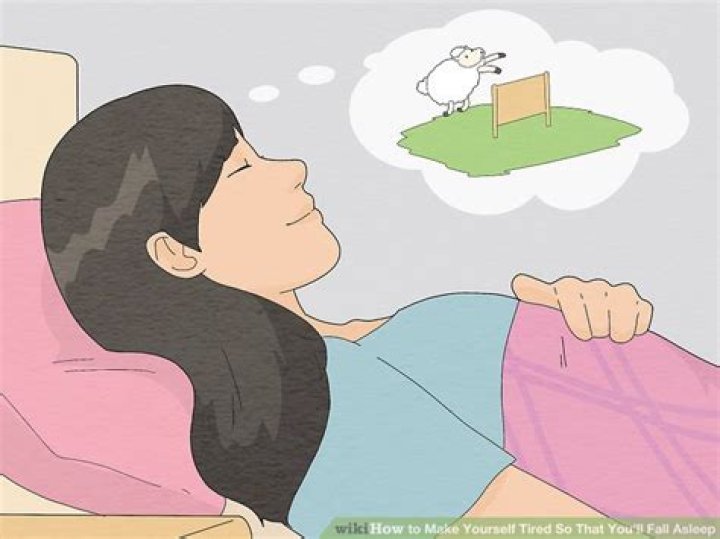
If you have ever suffered from a night of tossing and turning, counting sheep, and every home remedy you come across to make yourself tired, you know how frustrating not being able to fall asleep can be. Getting enough sleep every night is vital to how productive the following day is going to be, but sometimes you just can’t seem to drift off. If you have restlessly wondered how to make yourself tired to sleep, you’ll want to read on for some effective ways that will help you fall asleep at night.
12 Methods to Make Yourself More Tired for Sleeping Quickly
Have a pre-bedtime routine
Having a consistent sleep schedule can help you fall asleep faster each evening. A bedtime routine will allow you to give your body the proper amount of time to slow down and relax. Begin by making your surroundings darker and adjust your room temperature to something that is comfortable and won’t have you waking up in the middle of the night too hot or too cold.
Turn off the electronics
It is best not to have a television in your room as the light from the TV will only distract you and keep you more awake. Even if you find yourself restless and wanting to mindless stroll the internet, avoid doing so. The light from electronics will keep the brain alert and awake, try to stop using any electronics at least 30 minutes prior to your bedtime routine.
Instead of watching another TV show, open up a book. Reading can help you relax more and shift your thoughts, which is especially beneficial when you have had a stressful day. Choose a simple book that will allow you to simply distract your thoughts and keep your body and mind in a relaxed and calm state.
Meditate
If reading doesn’t help keep your stressful thoughts at bay, how to make yourself tired can be done through meditation. Meditating can help quieting your troubled mind and there are a number of techniques you can use to make this more effective to put you in a sleepy state of mind.
Be comfortable
Your bed should be made with soft comfortable blankets. Your PJ’s should also be comfortable and loose. Never wear any tight clothing to bed, which includes socks, hair bands and bras . The more comfortable you are, the faster you’ll be able to fall asleep.
Pay attention to how you sleep
If you have ever tossed and turned through the night, you want to pay attention to your sleep position. Try to sleep with your back straight and your neck at a comfortable height, not too high or too low. Consider using a body pillow to help you maintain your comfortable posture and sleep position throughout the night.
Put on some ambient noise
Relaxing background noise can help you fall asleep by keeping you calm. The type of noise you can fall asleep varies for each person, so experiment with different sounds. Whether it’s a natural sound like waves crash or birds chirping or the sound of a fan blowing, the right noise can help lull you to sleep.
Skip the nightcap and caffeine
Alcohol can keep the body in a tense and awake mode, so you will want to avoid drinking any types of liquor before you go to bed. Caffeine also should be avoided as this obviously sends signals to the brain to wake up for most people. Then how to make yourself tired to fall asleep? Drink a warm calming beverage like chamomile tea.
Use relaxation techniques
One way you can help put the body into a sleep state is by using relaxation techniques. One such technique requires you to slowly tense all the muscle groups in your body. Start with tensing the toes and move up through all the leg muscles, your core, shoulders, arms, hands, neck, face, and head. Then slowly release all the muscles, starting from the head and working all the way back down to the toes. You will feel completely relaxed and ready for sleep.
Exercise
While you don’t want to exercise just before you try to go to bed, getting in a work out 3 hours prior to your bedtime can help you fall asleep faster in the evening. Exercising can help deplete your energy levels for later, so try to get in a run or gym session regularly to sleep better at night.
Eat a healthy dinner
You don’t want to eat a large meal just before you try to get some sleep. Instead, aim to eat a healthy small meal about 3 hours prior to your bedtime. The meal should include a healthy lean protein and vegetables.
Don’t fight your sleeplessness
Trying to force yourself to fall asleep can only make it more difficult to fall asleep. If you find that you have still not falling asleep after twenty minutes, then get up and try to do something else. How to make yourself tired for sleeping may mean changing up where you sleep, changing what you wear, reading a little more or getting something quick and easy done from your to-do list. It is better not to fight with your insomnia and instead refocus your mind. This can help you stop stressing about not being able to sleep and can actually cause you to become more tired.
the past few nights ive been having trouble falling asleep. i would be up at 3:30 am not even tired. it hasnt really worried me much but tomorow i have to wake up at 7 and then go be in my towns 4th of july parade which is a lot of exercise especially since ill be dancing and running. if i continue with my pattern ill have to do that on 4 hours of sleep and i dont think that i can. what can i do to make it so i fall asleep quicker or get tired earlier. please no medicine or drugs im only 14
8 Answers
Looks like you need to fix that sleeping pattern! Have you tried going to bed earlier at night so you can wake up earlier in the morning? Do you avoid taking naps during the day? Going to bed at around 10:00 PM is pretty good. Try to limit the hours you sleep to 8 – 10 hours. Try to be up by 9 or 10 in the morning! If you keep doing this, your sleeping patterns will normalize after around 2 – 3 days. Also, if you’re aiming to avoid sleeping pills or the usual cold medicine, try drinking a glass of warm milk before going to bed. I read on Yahoo that it, among other foods, helps make you feel sleepy. :]
How much do you exercise per day? Try going for a walk or a run about 4 and a half hours before you go to bed, it should help you sleep better. Also, do relaxation exercises such as tensing your muscles for 5 seconds and relaxing (one muscle at a time)
Exercise. A lot. You’ll be exhausted when you hit your bed at night, and you’ll sleep like a baby.
edit: Of course, depending on your timezone, it could already be evening, in which case that’s a bit too late.
Take a cool shower. Your body cools down when you go to sleep, so if you start the process a bit, you’ll find it easier to fall asleep.
That’s why it’s so hard to sleep during the summer when it’s hot.
The struggle is real when you’re lying awake at night unable to get back to sleep. Whether it’s due to jet lag, bad sleeping patterns, or too much caffeine. Lying awake at night unable to get to sleep is pretty much the worst feeling in the world. Especially when you know you’ve got an alarm set for the early morning.
The only thing you want to do is fall asleep, but the more you try, the more your brain resists, and the more awake you find yourself. With summer creeping up on us, hot nights threatening your blissful sleep, it’s time to get ahead of your body and mind and learn what to do when you just can’t seem to fall asleep.
1. BEAT THE HEAT
It’s getting hotter, and since heat rises your bedroom will probably be one of the hottest rooms in the house. To combat this, turn the lights off and open the windows as soon as you get home from work.
If you aren’t able to get a fan or air conditioning unit, let the air circulate around your house. You might be, like me, unable to open every window thanks to the fact that you have house cats or another animal/child that loves to jump out of the windows with no concern for hitting the ground, if that’s the case, I’ve found that putting all your windows on the latch will allow the air to circulate, or just sitting outside with said animal/child for an hour or two giving the house time to breathe before you go back inside and shut all the windows is a solid option.
If you’re still unbearably hot, my tried and tested trick is to have a hot shower or bath. You know how you feel when you get out of a hot bath (cold as hell!) well, this can help you get to bed and feel chilly even when it’s pretty sweltering. Lowering your body temperature sends signals to your brain to go to sleep.
2. GET YOUR BREATHING RIGHT
Use the “4-7-8” method to get yourself to sleep. This simple but powerful breathing method promotes calm and allows you to relax when you feel anxious or stressed.
There are a few steps to it, however. First, you need to place the tip of your tongue behind your upper front teeth. Close your mouth and inhale through your nose while mentally counting to four. Hold your breath and count to seven. Then exhale, making a whoosh sound and counting to eight. Repeat three times and you’ll be relaxed and ready to go to sleep.
It’s easy, as long as you commit the steps to memory you can use this whenever you feel tired.
3. STRUCTURE YOUR EVENING ROUTINE
It’s tempting to get home from work, flop down on the couch and do nothing. Instead, give yourself a schedule. Your body has a circadian rhythm which determines when you’re tired and when you need to go to sleep. Keeping your body to a schedule will allow you to adjust to its internal rhythm and make sleeping through the night a lot easier.
Decide first what you want to accomplish in the evening and structure your evening routine. Whether you workout in the evening every other day, spend some days meal prepping and organizing or work on your personal goals. Once you do that, you can start winding down, banishing technology and taking an hour to get ready for bed.
4. FLOWERS CAN HELP YOU FALL ASLEEP
The absolute best evening ritual for getting a nice night sleep involves lavender and a nice mug of chamomile tea. I’m lucky enough to have lavender growing in my garden, I love spending spring and summer nights in the garden cultivating everything we have growing there. Cutting a little bit of fresh lavender and bringing it inside is the perfect way to make you feel sleepy. Put it next to your pillow and brew yourself a strong cup of chamomile tea.
The Making It Happen mug is the perfect companion to your daily (or nightly) cup, you can brew something strong during the day and then get yourself a lovely hot mug of chamomile tea to help you fall asleep at night.
5. GET ENOUGH LIGHT
Light influences your body’s internal clock, which regulates sleep and wakefulness. Irregular light exposure disrupts those circadian rhythms, which makes it harder to fall asleep and wake up.
You might like to use a wake-up light like a Lumi. I personally use a black silk eye mask in the evening, which stops any light from getting to me in the morning, it isn’t so good for waking up. I’d suggest using a light eye mask which still allows light through so on a sunny morning you can wake up naturally.
However, you can use the light (or darkness) in your garden or around your place to get sleepy. Now the evenings are a bit warmer, step outside with a mug of tea in the evening and let your eyes adjust to the darkness. I love sitting outside on warm summer evenings with a drink and watching the stars. It always makes me super tired.
6. WORK THROUGH THE DAY
Journalling can help you work through and process your day, helping you fall asleep worry free. The 365 Days of Gratitude Journal can help you work through your day and think about things in a more positive way. Gratitude is proven to make you more productive and positive, and help you think like a go-getter. When you rewire your brain to look for positives, it’s easier for you to fall asleep with a well-rested, positive mind.
Reflect on the day you’ve had and try to think of positive things to focus on.
If you have spent useless hours trying to sleep, it is likely that you are part of the 30% of the population that suffers from secondary insomnia. The good news is that next time you can fix it in seconds.
This type of insomnia is usually the effect of anxiety that keeps you thinking about things that worry you and make it difficult for you to relax and sleep. As long as you can relax, you can fall asleep in no time.
We put together a list of the fastest methods you can use to relax and fall asleep, so that next time, falling asleep will be the least of your worries.
How To Fall Asleep In 1 Minute
10 Seconds: With This Military Technique, You’ll Treasure The Last 10 Seconds Of Your Day
Unless hypnotized by a psychologist or magician, it is impossible to lie in bed and fall asleep that quickly, but we promise you that the last 10 seconds of this proven military method is all we need to do the trick.
Try it constantly and with practice you’ll be convinced:
- Close your eyes, let your eyes rest into your sockets, and relax your entire face while breathing deeply and slowly.
- Relax and drop one shoulder and one arm at your side. Start on the dominant side, if you are left-handed, start with the left shoulder. Then do the same with the opposite shoulder and arm.
- Relax your chest by taking deep breaths and exhaling.
- Relax your legs, thighs, and feet. Start with your dominant side.
- Keep your mind clean and calm for 10 seconds,
- No luck? Try repeating “don’t think” for 10 seconds.
- Within 10 seconds, you should be out… zzz…
The full exercise usually takes no more than 120 seconds, but the last 10 seconds are said to be the key to falling asleep.
60 Seconds: The 4-7-8 Technique
This technique is a breathing exercise developed by Dr. Andrew Weil. This method was developed according to ancient yogic pranayama (breathing technique), which helps people control their breathing and reactions.
Doing this exercise every day will help you relax quickly, making it easier for you to fall asleep, even in just 60 seconds. Here’s how to do it:
- First, separate your lips and breathe out completely through your mouth.
- Then close your lips and inhale silently through your nose. As you do this, count to 4.
- Hold your breath for 7 seconds and relax.
- Then exhale completely, making a whooshing sound for 8 seconds.
60 Seconds: Progressive Muscle Relaxation
Some people also call it deep muscle relaxation, but the benefits are the same – you fall asleep quickly. It consists of tensing and relaxing the muscles repeatedly.
The technique was developed by Edmund Jacobson in the 1930s. He believed that physical relaxation leads to a calm mind. Let us guide you.
- Tense your arms for 5 seconds. Then relax for 10 seconds.
- Tense your forehead. relax.
- Tense your eyes and cheeks. relax.
- Tense your mouth and chin. relax.
- Tense your neck. relax.
Repeat this stretching and relaxation technique with the rest of your body until your toes are relaxed, that is if you are not asleep yet!
120 Seconds: Try To Stay Awake
It’s called Paradoxical Intention for Insomnia, in plain language, reverse psychology for the exhausted who can’t sleep. This method advises you to think continuously and order yourself to stay awake.
This reduces the anxiety caused by insomnia and the frustration of staying awake, helping you fall asleep faster.
120 Seconds: Picture A Calm Place
A common reason for difficulty sleeping is anxiety. According to research, imagining a peaceful and happy environment can distract you from your thoughts and worries, helping you relax and fall asleep in just a few minutes.
120 Seconds: Try Cooling It Down
Melatonin slightly lowers your body temperature when you are falling asleep.
During the summer or even winter, if your body is not cold enough, it can be difficult to fall asleep.
Try opening a window, putting on lighter pajamas, and drinking half a glass of cold water.
Lack of sleep can lead to several problems, such as the risk of developing diabetes, high blood pressure, and even coronary heart disease, in which the arteries retain fat and restrict blood circulation.
This is why sleeping well and well is a good habit. Here are some tips to help you fall asleep faster and better:
- Stay away from screens for at least half an hour before bed.
- Bathing at night will help you relax and fall asleep faster.
- Keep your bedroom cool, your body needs to lower the temperature so that you can sleep well.
- Read before you go to bed, as this will help you feel tired.
If you wake up in the middle of the night and have trouble getting back to sleep, don’t stay in bed. Get up, go to another room, and read a little. You will soon miss your bed.
Which one will you try tonight? Share with us in the comments below!
Here are 7 tips to help you go back to sleep
1. Don’t look at the clock When you get tired of staring at the ceiling or switching sleep positions, it’s tempting to take a peek at the time. Resist the urge to check the clock! Sleep experts agree that watching the minutes pass sets off a worry cycle, keeping your brain more alert and stressing you out. It makes getting back to sleep that much harder. If you’ve got a clock on your night table, turn it around (your phone shouldn’t be anywhere nearby).
2. Try a relaxation exercise There are several different types to choose from. Harneet Walia, MD, a physician at the Cleveland Clinic’s Sleep Disorders Center, suggests progressive muscle relaxation, a meditation-based technique. Starting with your toes and working up to your forehead, tightly tense each of your muscles for five seconds, and then slowly let them relax. Do one leg and one arm at a time, and pay special attention to areas of your body that hold tension, like your jaw and neck.
Integrative health specialist Dr. Andrew Weil recommends a 4-7-8 breathing exercise, which he says serves as a “natural tranquilizer” for the nervous system, helping to ease you back to sleep. The goal is to slow down your breathing, which forces the rhythm of your heart to slow as well, relaxing the body and mind. To start, place the tip of your tongue against the ridge of tissue behind your upper front teeth for the exercise. Then:
- Completely exhale through your mouth, making a whoosh sound
- Keeping your mouth closed, inhale through your nose for 4 counts
- Hold your breath for a count of 7
- Exhale completely through your mouth for a count of 8
- Repeat this process 3 more times for a total count of 4 breath cycles
If the counting and holding are too complicated, any type of deep, slow breathing can have a calming effect and help you fall back asleep. One simple way to do this is to lie in your bed on your back, legs extended, and arms at your side. Imagine your lungs are balloons, and take the deepest breath you can, filling the balloons, then exhale completely, deflating the balloons. Repeat this as many times as needed/as is comfortable.
3. Distract your busy mind with a Headspace sleepcast, or another visualization technique The more you try to make yourself fall back to sleep, the more elusive sleep will be. So, think about something else. Whether you’re counting livestock or picturing yourself on a beautiful island beach, the idea is the same, according to Eric J. Olson, MD, sleep medicine specialist at the Mayo Clinic. “You’re getting your mind off of ‘I can’t sleep; I can’t sleep; I can’t sleep,’ and onto something else.” Any type of visualization or repetition — counting your breaths, even reciting poems you remember from childhood — can lull your brain into relaxation, and help you go back to sleep.
Sleepcasts from Sleep by Headspace are designed for the same purpose, only a narrator does the work of creating the imagery for you. To help you drift off, soothing voices guide you through one of 12 dreamy environments. Scenes include things like Desert Campfire, Downriver, Night Town, and Beachcomber, among others. They’re remixed each time you listen to create a visualization experience that is different each time — so you can’t memorize how far along you are — but it is still familiar. Get started using the Headspace app.
4. Put your worries on paper Often, sleeplessness stems from worry, and at 2 am, without any daytime distractions, our minds can easily shift into overdrive. Many sleep experts recommend keeping a pen and pad on your night table or by your bed, so you can commit your worries to paper. No matter what you’re obsessing over, rather than ruminating, write it down. This takes the commotion out of your head so you can let it go, clearing your mind. Just make sure to keep the lights dim (or use a flashlight or nightlight) when jotting down notes, as bright light can disrupt your body clock.
5. Listen to music You don’t need scientific studies to tell you that listening to music can quiet your mind and help you relax, but here it is anyway. Research shows that music can have a direct effect on the parasympathetic nervous system, encouraging your body to relax and prepare for sleep. It can slow your heart rate and breathing, lower your blood pressure, and even relax muscles — the biological changes you experience when you’re falling asleep.
So which type is best? Music, of course, is a personal preference, and you’re most likely to relax listening to something you know and enjoy. Findings suggest that music with 60 to 80 beats per minute (60 BPM being the low end of a healthy resting heart rate) does the trick, and classical music is ideal. Jazz and folk songs are also good.
Sleep music from Sleep by Headspace is designed specifically to be a soundtrack for falling asleep. Headspace’s sleep music helps establish a soothing baseline of sound without too much variation, to help you fall asleep — and keep you asleep. One generalized 2017 study (that did not use Headspace) found that “natural sounds” help promote relaxation by positively affecting the autonomic nervous system. The great news is that recorded sounds and music can have just the same effect.
Once you integrate music into your bedtime routine, stick with it. The positive sleep effects can build over time, as listening to your relaxing sleep soundtrack becomes a habit that cues your body to prepare for zzzzzs.
6. Meditate to help fall back asleep Meditation helps to increase the prospect of getting you back to sleep by igniting the parasympathetic nervous system, lowering the heart rate, and encouraging slow breathing. Just putting aside 10 minutes to do a simple breathing meditation before bed can help you get off to sleep quicker because it creates a buffer between your waking life and your bedtime.
If you’re having trouble falling back to sleep, try meditating in bed, lying flat on your back with your head on the pillow. Or start a Headspace wind-down exercise for sleep, and take a few deep breaths, relax your body, and close your eyes.
When we try meditation or a wind-down exercise with sleep in mind, it’s important to relax and take some deep breaths to release any tension. And then, as you exhale, feel the weight of your body sinking down into the mattress, feeling the contact between your body and the bed — from the heels of your feet to the back of your head. Allow the mind to drift off in its own time, letting thoughts go, and maintaining a relaxed focus on the natural rhythm of the breath. Anytime a thought pops into your head, simply return to the breath to anchor you in the land of Nod.
7. Try getting out of bed Many sleep specialists recommend getting out of bed after about 15 or 20 sleepless minutes (your best guesstimate, since you’re not looking at the clock, remember?). The more you lie in bed feeling frustrated, the more your brain associates the bedroom with not sleeping well, and the more you’ll come to anticipate sleeplessness the next time you’re there. Go to another room and try something relaxing, like listening to music or reading. A warm bath or shower may also help, as the change in body temperature before going back to a cool room should help get you drowsy.
Lifestyle,beauty, restaurant, food, fitness, jobs, shopping, Ideas and news, travel, photography,news,daily updates,celebrities lifestyle,latest trends.
We’ve all been there: The moment you let yourself believe that if you just close your eyes for five minutes, you’ll wake up feeling refreshed and ready to tackle your assignments. Chances are, though, that once you let yourself “rest your eyes,” they’re going to stay that way for much longer than five minutes. Something about reading academic textbooks, journal articles, and other written material can be infuriatingly dull, especially if you’re not interested in the material in the first place. And even if you are, textbooks sometimes feel like they’re written specifically to be boring. So how do you stay awake while reading textbooks?
Read the text out loud. While this is especially important if you’re an auditory learner and you can benefit from hearing the material, reading aloud also makes you more conscious of what you’re reading. Not to mention that it’s hard to fall asleep when you’re in the middle of a sentence. If you have a study buddy, read together; have your partner read one section aloud while you listen, then switch. You can discuss the material once you’ve finished the reading to make sure you’ve understood all the main points.
Wake yourself up with something cold. Whether you decide to splash water on your face, take a cool shower, or drink ice water, a little bit of cold can be refreshing and help keep you awake. A cold beverage might be easiest (that way you don’t have to wash your face twelve times in one afternoon). Sip on it regularly and you may start to feel a little more awake, especially if it’s a caffeinated beverage. Plus, if you keep taking in fluids, you’ll have to keep getting rid of them too. It’s hard to fall asleep when you really need to use the bathroom.
Make yourself a little bit uncomfortable. In particular, don’t study in your bed. Your brain and body both consciously and unconsciously associate your bed with sleeping. Even if you’re awake when you start an assigned reading, you’re not going to feel that way for long. Your bed is warm, cozy, and sitting in it will make you long for a nap. Instead of holing up in your bedroom, find a place to study where you have to sit up straight or can’t get quite as comfortable as you’d like. It may not keep you as alert as you’d like to be, but it’ll definitely prevent you from spontaneously falling asleep.
Go out in public. It’s much less socially acceptable to fall asleep in a coffee shop than it is to fall asleep in your dorm. Put yourself in a situation where you’d be embarrassed to be caught sleeping and you’re much more likely to actually focus on your reading.
Pay attention to the time. You know your body best, and you know when you’re most productive. It wouldn’t be helpful for me to say that you should try to get your hardest work done between 3:00 pm and 5:00 pm, because while that works for me, it might not work for you. Some people are incredibly productive at 8:00 am or 10:00 pm. Pay attention to your body and when you feel awake, stop whatever else you’re doing and focus on your most intensive work. Once you know when you’re most productive, you can plan your days and your studying around that chunk of time.
Get your eight hours. It may not be exactly eight hours, but getting a full night of sleep every night is going to help your health and productivity in the long run. Yes, there will be some nights when you only manage to get five solid hours of sleep (the next morning will not be fun), but if you can help it, choose sleep. Your grades will thank you.
Don’t expect to do it all in one go. You can’t sit down and read an entire textbook without getting bored, missing out on important material, or falling asleep. Don’t be too hard on yourself when your body and brain just won’t cooperate. Instead, take breaks. Set yourself small goals (read a chapter, read for 15 minutes) and then reward yourself with a five-minute break, a snack, or extra Netflix time after you finish your assignment. Breaking down the material into chunks will help prevent you from getting too tired (since you’ll be moving about between chunks) and it’ll ultimately feel like the reading goes faster.
Read actively. Take notes, highlight important text, or underline main ideas while you’re reading. This will keep your brain more active (rather than just reading word after word and not taking anything in). You’ll retain more information if you’re jotting down the important ideas or scanning each paragraph for the main idea after reading through the section. Again, it’s harder to fall asleep when you’re doing something a little more involved than staring at words on a page.
Drink something. Whether it’s the cold water trick mentioned above or you go for the heavily caffeinated beverages, keeping your body physically busy can help keep you alert. Do be wary about drinking too many caffeinated beverages or drinking them in the evening or at night; you could end up hurting your sleep schedule.
Actively try not to be bored. Yes, I’m fully advocating for “fake it ‘til you make it.” I have actually read a book called Dirt: The Ecstatic Skin of the Universe. Despite being a geology major, I’m not actually super interested in dirt. You can imagine how hard it must’ve been for the nonmajors in the class. When faced with what seems like an insurmountable reading assignment, pretend that you’re interested. Tell yourself that the subject is fun and useful, and that it’ll be good to know down the line in other classes. You may still not end up liking dirt, but it might trick your brain into staying alert and at least vaguely interested for the duration of the reading.
Check your environment. If you’re trying to study in a room that’s filled with the sounds of a babbling brook and is dimly lit, you’re probably going to fall asleep. Make sure your lights are on, window shades are open (natural light does wonders), and music isn’t too calming.
Get moving. If you can walk and read at the same time, bring your textbook or reading assignment to the gym and hop on the treadmill. Don’t plan on getting an intense workout in while you’re reading, but stay moving throughout and you may find your focus improved. Plus, it’s probably next to impossible to fall asleep on the treadmill. If you don’t want to haul yourself over to the gym, break up your reading with some physical activity. After every section do 25 jumping jacks or 10 push ups. An elevated heart rate will wake you up too.
About Annabel Anita
Anna is obsessed with books, basketball, and video games. She has lived in two different states in Nigeria and has made excellent grades since her academic career at School For The Gifted And Talented. During her leisure time, you will find Anna sitting on the couch, playing games,planning future adventures,deciding new posts to blog and listening to songs. She currently lives in Nigeria. Anna loves to meet and interact with new friends and people. Anna loves to help individuals who are less privileged. Communicate with Anna by leaving a comment on her blog.
If you are a mom struggling with postpartum insomnia, try out these 11 natural ways to fall asleep. These tips can help you get the sleep that you need to function at your very best!
Postpartum insomnia can take even the most prepared moms by surprise. A main symptom of postpartum insomnia is when you can’t sleep, even when your baby is sleeping. You may feel SO TIRED, and wonder how it is even possible that you can still be awake. Some women struggle to fall asleep, others struggle to stay asleep. For some women they struggle with this every night, and for others it’s once in a while.
Either way, postpartum insomnia can feel like torture to a new mom who desperately needs a good night of sleep. The research shows us that sleep deprivation can impact a mother’s ability to bond with her baby, adjust to motherhood, and can be a major risk factor for mental health struggles in the postpartum period.
1. Create a Bedtime Routine.
Just like we create a bedtime routine for our babies (ie. bath, books, bottle, bed), we need to do the same for ourselves! Create a solid routine that you can complete every night before you go to bed. This will help both your body and your mind know that it is time for sleep. Make sure that this routine is calming, and that your exposure to light slowly decreases as the routine goes on.
For example, you may want to read something, wash your face with a warm cloth, moisturize, brush your teeth, put on your pajamas, and then get into bed.
2. Stay Off Your Electronics!
Remember when you were younger and your parents would try to get you off the family computer before you went to bed? It turns out that they were right all along! Being on your phone or computer before bed activates your brain, and make it hard to settle down before you go to sleep. To help yourself fall asleep more easily, try to stay off your phone for at least 30 minutes (ideally an hour) before bed.
3. Your Bed is For Sleep and Sex.
Are you someone who eats in bed, works in bed, watches tv in bed, and plays on their phone in bed? If you answered yes to any of these questions, this may be where a good portion of your struggle is. Your brain pairs items together. For example: kitchen table and food; couch and tv; gym and workout. If you are always doing things outside of sleep in your bed, your brain may start to pair your bed with other things like work, tv, or food.
Try and reserve your bed as a place only for sleep and for sex! This will help your brain know that when you go to bed at night, it is time to sleep.
4. Create an Ideal Sleep Environment.
Just like a bedtime routine, we also need to create a sleep environment that is conducive to sleeping! If you go to bed and your room is messy, your bed isn’t made, there are bright lights, and you can hear your neighbour’s dog barking, it may not be the best environment for sleep.
Instead, try to create a dark room, use white noise (like a fan), and make sure that your bed is cozy and ready for you to sleep in! The more comfortable you are in your space, the calmer you’ll be, and the better you will sleep.
5. Set Up Your Feeding Environment for Success.
Being a new mama, it is likely that you are needing to wake up to feed your baby during the night. For moms that struggle with insomnia, night feedings can be incredibly difficult to deal with. It may mean that you have finally fallen asleep, only to wake up to the sound of your baby crying. Many women become extremely anxious over this.
In order to help you fall back asleep after the feeding, try to make sure the feeding process is as simple as possible. If you are formula feeding, try get the bottle ready as much as you can before you go to bed. This way you don’t have to turn on all the lights in the kitchen to get the bottle ready. Try to keep the room dark when you are feeding as well, so that you don’t wake all the way back up.
6. Stay Off Google and Facebook!
One mistake that so many new moms make is going on their phone during those middle of the night feedings. Doing this is an endless cycle of reading what other moms are doing, and can easily make a sleep deprived mom’s mind spin! Instead of doing this in the middle of the night, try focussing on your baby. Listen to the way your baby is breathing, the sounds of them eating, and the feeling of them against your body.
7. Be Careful of What You Are Consuming.
Too much caffeine, alcohol, or sugar can make it very difficult to fall asleep. But, when we can’t sleep and are tired, these are the things our body CRAVES! Do your best to fight these cravings as much as possible, so your body stays nourished and ready for sleep!
8. Put a Journal Beside Your Bed.
Often times, insomnia is a result of or a risk factor for postpartum depression or anxiety. If your mind is racing with things you need to do, worries you have for your new baby, or with feelings of inadequacy, write these down! Keep a little journal beside your bed. When a thought comes up that you can’t seem to shake, write it down. Remind yourself that you can deal with this thought in the morning! This helps you acknowledge your thought, so that you can let it go and get some sleep.
9. Develop a Mindfulness/Meditation Plan.
Meditation has been shown in the research to be extremely helpful for those who struggle with insomnia. You may find that putting on a guided muscle relaxation podcast or a meditation with imagery may help you fall asleep with ease. These resources are created so that, instead of focussing your mind on your racing thoughts, you follow the lead of someone else. Many people have success using these tools to help them fall asleep and stay asleep.
One application that we absolutely love for mindfulness is called Calm. There are many free guided meditations on here that we highly recommend!
10. Relax Using Deep Breathing!
Another tool that has been shown in the research to be very helpful for insomnia is deep breathing. Lay down in a comfortable position, and place one hand on your stomach and the other on your chest. Take deep breaths. Notice the way that the breaths impact the movement of your body. Feel your breaths in your body. Allow yourself to feel calm. Continue doing this until your body is in a state of calm.
One more deep breathing technique that we often recommend is outlined in this post.
11. Get a Mental Health Check-Up.
As we have talked about throughout this post, sleep deprivation is a huge risk factor for postpartum mental health struggles. If you are struggling with insomnia, it may be a sign that something else if going on. Talk to your doctor about how you are feeling. You may benefit from getting help from a counsellor or getting medication. Make sure that you talk to someone about this as soon as possible! You don’t need to struggle in silence, and you can feel better. Here, here, here, and here are some resources for you on postpartum mood and anxiety disorders.
If you are a new mom who can’t seem to fall asleep, even when your baby is sleeping, we hope these tips will help you get the sleep you need to thrive as a new mom.
DISCLOSURE: I am not a mental health professional. If you need help finding a mental health care provider, call 1-800-662-HELP (4357) or visit BetterHelp to call, message, or video chat a certified therapist online for an affordable monthly price. This post contains affiliate links. As an Amazon Associate, I earn from qualifying purchases. I may receive compensation from Better Help or other sources if you purchase products or services through the links provided on this page. You can read my full disclaimer.
If you clicked on this post, you’re probably thinking, “I’m tired but I can’t sleep.”
Well, I write a lot about sleep on this blog.
Mainly because I’ve struggled with my fair share of mild insomnia.
Falling asleep usually takes me more than 30 minutes each night. Sometimes, I’m up until 4 in the morning, tossing and turning.
Sleeping can be a big problem for those with depression or anxiety.
On top of overthinking being a big culprit to my lack of sleep, I’m also a pretty picky sleeper. I need things the way I need them, or I can’t seem to fall asleep.
Throughout my nights of general insomnia, I’ve found these 7 surefire ways to fall asleep when you can’t.
1. TAKE PANTS OFF
First things first. Clothes can feel really restricting.
So just take some of your clothes off.
Plus, your skin will feel amazing next to the sheets. Trust.
2. PUT ON A FAN
It’s usually easier to sleep when you’re not uncomfortably hot.
If your body is too hot, the room starts to feel very heavy and suffocating. If you have a fan where you sleep, try putting it on to see if it helps you.
Plus, the buzz of the fan is white noise. White noise can usually help people fall asleep.
3. MEDITATION MUSIC
Speaking of white noise, I love listening to meditation music as I fall asleep.
There’s so many fantastic videos on YouTube, and I try to listen to a new one every night.
Here’s one of my favorites:
The trick is to listen to it at a low volume and make sure the video has no ads in the middle of it. That might feel like your alarm waking you up!
It’s best to listen to with headphones, but I prefer to not have the distraction and to be able to move freely.
4. REMOVE EVERYONE
If you usually sleep in the same bed as your kids or pets, try removing them for the night.
They toss and turn. They take too much space. And they constantly wake you up and disrupt your sleep.
If you share a bed with your significant other, give yourself plenty of space.
You can start the night close by but eventually move into a position that you’re most comfortable in.
Oh yeah, don’t forget to kiss them goodnight.
5. IMAGINE A SCENE
Usually envisioning a beautiful scenery in my head, like waterfalls or the beach, does nothing to help me fall asleep sleep.
For me, reenacting a scene from my favorite movie or TV show in my head has been way more effective.
I also like to envision video games too. For some reason, if I envision playing RollerCoaster Tycoon, I can almost always fall asleep instantly.
I usually use thinking of video games in dire situations, because I don’t want my mind to get too accustomed to it. Then I might not be able fall asleep!
6. SWITCH SIDES OF BED
Sometimes your body just isn’t physically comfortable.
Maybe your mattress hasn’t been flipped in a while, and your body is used to every characteristic of it.
Try bringing your pillow to the opposite side of the bed where your feet usually go. Other times, I completely remove the pillows from my bed.
I’ve fallen asleep in less than 5 minutes almost every time I do this.
Weird but effective.
7. GO TO A DIFFERENT ROOM
If switching to a different side of the bed doesn’t work, sometimes you need different scenery.
If you usually sleep in the bed in your room, try taking a pillow and blanket out to the couch in the living room.
If for some reason I don’t fall asleep this way, it makes me much more sleepy to the point where I can go back to my bed and fall asleep there right away.
I’m tired but I can’t sleep
Being tired but not being able to sleep is very exhausting and frustrating.
Luckily, I’ve used these 7 hacks to help myself fall asleep when I’ve been struggling with anxiety, depression, and insomnia.
What tips do you have when you think, “I’m tired but I can’t sleep”?
Related posts:
- 5 Breathing Techniques to Help You Fall Asleep Faster Tonight
- 5 Bedtime Essentials for a Better Night’s Sleep
- Ultimate Morning Routine to Fight Your Depression
- 7 Simple Ways to Fight Morning Anxiety
- 7 Super Effective Strategies to Help Fight Nighttime Depression
More Recommendations:
1. ONLINE THERAPY
Better Help is the largest online counseling platform worldwide. It makes professional counseling available anytime, anywhere, through a computer, tablet or smartphone.
2. RESILIENT BIG EBOOK BUNDLE
In the Resilient Big Bundle, you’ll get 6 amazing personal development products, such as 30 Day Negativity Detox and Figure Out Your Life. All of these together would cost over $120 if you purchased them separately, but you’ll get a big discount if you get the whole bundle.
3. BLESSING MANIFESTING DIGITAL PRODUCTS
Blessing Manifesting sells a bunch of digital products focusing on self-love and personal development, like the Self-Love Workbook Planner and Anxiety Workbook. You can either buy them in a digital version or physical copy.
4. DREAMS INTO REALITY
Dreams into Reality eBook covers different topics of personal development to improve your mindset and your life. It will help you overcome anxiety, limiting beliefs, fears, and become a much happier and more positive person.
Nothing feels more defeating than peering at your clock in the dark and realizing you haven’t had a wink — and you need to be up in a few hours. As if the worrisome thoughts keeping you awake weren’t bad enough, now there’s the added stress of being sleep-deprived.
Recent studies on both humans and mice have found that being gently rocked like an infant can help with sleep. But most of us can’t shell out a couple grand for an adult crib.
The good news? There’s a bounty of research-backed methods you can try when counting sheep just isn’t cutting it. Let’s get to it so you can snooze, stat.
The military is known for pushing people to their mental and physical limits, and this technique is no different, albeit in a soothing way.
The technique, revealed in “ Relax and Win: Championship Performance” by Lloyd Bud, enabled soldiers to fall asleep in under 2 minutes. After 6 weeks of practice, almost all the soldiers could do it.
Fortunately, you don’t have to be in a bunker for it to work.
How to do it
- Fully relax all your facial muscles, including your jaw, cheeks, eyes, and forehead.
- Lower your shoulders as far as you can.
- Relax the muscles in your arms, from the top down to your fingertips.
- Breathe out, feeling all the other muscles in your body relax, starting with your chest and then down to your legs.
- Spend 10 seconds envisioning a relaxing scene to clear your mind.
- If that doesn’t work, repeat “Don’t think, don’t think, don’t think” to yourself for another 10 seconds. Quick march to the bedroom!
We’re big fans of the 4-7-8 method because you can use it both to relax when you’re feeling anxious and to fall asleep faster. Developed by Dr. Andrew Weil, it’s based on pranayama, a traditional yogic breathing technique.
The counting element serves as a distraction from the anxieties keeping your mind whirring, and the breathing regulates your oxygen intake. This helps kick your parasympathetic nervous system into gear to chill you out and bring on the calm.
Can you breathe? Check. Can you count to 10? Yup. Then you’ve got this.
How to do it
- Position your tongue behind your front teeth, resting against the roof of your mouth.
- Slowly exhale through your mouth to empty your lungs, and then close your lips together.
- Breathe in through your nose for 4 seconds.
- Hold your breath for 7 seconds.
- Release this breath through your mouth over a count of 8 seconds.
- Repeat this cycle at least four times.
If the counts are a bit too long for you to start with, make them slightly shorter and build up. After all, the aim is to be relaxed, not gasping for air.
It’s midnight, and you’re sitting on the sofa, flicking through Netflix. You should go to bed to be ready for work in the morning, but you’re just. not. tired. Do you a) press play and hope for the best or b) go to bed and lay awake in the dark?
Neither! The answer is c) try progressive muscle relaxation (PMR), a relaxation technique based on tensing specific muscle groups throughout your body.
Dr. Edmund Jacobson developed PMR in the 1920s as a way to help his patients manage anxiety. He theorized that by physically tensing and then relaxing their muscles, people would at the same time relax their minds.
The method is widely used and often paired with other meditation techniques, like breath work and visualization.
How to do it
- Contract the muscles in your feet. Try curling your toes and the soles of your feet.
- Inhale deeply and hold both your tensed muscles and breath for between 5 and 10 seconds.
- Exhale all at once while quickly releasing the muscles. Imagine the tension flowing out.
- Rest for about 20 seconds before moving on to your calves, and so on with each area of muscles up your body.
This isn’t necessarily the quickest option, since it will take up to a half-hour once you’ve worked on a variety of muscles. But research shows it can be especially helpful when you’re all wound up with anxiety and can improve overall sleep quality.
Your mind loves replaying those anxiety-inducing moments from earlier that day just as you’re trying to doze off. With the “imagery distraction” technique, you can show your brain who’s boss by making your mind a positive-vibes-only mini cinema.
The idea here is that if you let your imagination run wild, your brain will be distracted from those pesky doom-and-gloom worries. Indeed, a 2002 study found that imagery distraction helped people with insomnia fall asleep faster and have fewer distressing thoughts as they lay in bed.
How to do it
- Think of a scene or memory that makes you truly happy and calm. Maybe you’re on vacation, exploring Paris.
- Then start to really focus in on it.
- Consider the smells around you — freshly baked bread from the boulangerie — and the sound of car horns as they navigate the Arc de Triomphe. Picture touching the metal at the base of the Eiffel Tower. It feels cool and weathered.
- Imagine what the view looks like from the top. Can you remember what it feels like in your body to be there?
Most of us aren’t used to concentrating in such detail, so if this feels harder than you expected, don’t worry. With enough nights of practice, it will become easier to guide your mind to a place of calm.
We’ve all been there: The moment you let yourself believe that if you just close your eyes for five minutes, you’ll wake up feeling refreshed and ready to tackle your assignments. Chances are, though, that once you let yourself “rest your eyes,” they’re going to stay that way for much longer than five minutes. Something about reading academic textbooks, journal articles, and other written material can be infuriatingly dull, especially if you’re not interested in the material in the first place. And even if you are, textbooks sometimes feel like they’re written specifically to be boring. So how do you stay awake while reading textbooks?
Read the text out loud. While this is especially important if you’re an auditory learner and you can benefit from hearing the material, reading aloud also makes you more conscious of what you’re reading. Not to mention that it’s hard to fall asleep when you’re in the middle of a sentence. If you have a study buddy, read together; have your partner read one section aloud while you listen, then switch. You can discuss the material once you’ve finished the reading to make sure you’ve understood all the main points.
Wake yourself up with something cold. Whether you decide to splash water on your face, take a cool shower, or drink ice water, a little bit of cold can be refreshing and help keep you awake. A cold beverage might be easiest (that way you don’t have to wash your face twelve times in one afternoon). Sip on it regularly and you may start to feel a little more awake, especially if it’s a caffeinated beverage. Plus, if you keep taking in fluids, you’ll have to keep getting rid of them too. It’s hard to fall asleep when you really need to use the bathroom.
Make yourself a little bit uncomfortable. In particular, don’t study in your bed. Your brain and body both consciously and unconsciously associate your bed with sleeping. Even if you’re awake when you start an assigned reading, you’re not going to feel that way for long. Your bed is warm, cozy, and sitting in it will make you long for a nap. Instead of holing up in your bedroom, find a place to study where you have to sit up straight or can’t get quite as comfortable as you’d like. It may not keep you as alert as you’d like to be, but it’ll definitely prevent you from spontaneously falling asleep.
Go out in public. It’s much less socially acceptable to fall asleep in a coffee shop than it is to fall asleep in your dorm. Put yourself in a situation where you’d be embarrassed to be caught sleeping and you’re much more likely to actually focus on your reading.
Pay attention to the time. You know your body best, and you know when you’re most productive. It wouldn’t be helpful for me to say that you should try to get your hardest work done between 3:00 pm and 5:00 pm, because while that works for me, it might not work for you. Some people are incredibly productive at 8:00 am or 10:00 pm. Pay attention to your body and when you feel awake, stop whatever else you’re doing and focus on your most intensive work. Once you know when you’re most productive, you can plan your days and your studying around that chunk of time.
Get your eight hours. It may not be exactly eight hours, but getting a full night of sleep every night is going to help your health and productivity in the long run. Yes, there will be some nights when you only manage to get five solid hours of sleep (the next morning will not be fun), but if you can help it, choose sleep. Your grades will thank you.
Don’t expect to do it all in one go. You can’t sit down and read an entire textbook without getting bored, missing out on important material, or falling asleep. Don’t be too hard on yourself when your body and brain just won’t cooperate. Instead, take breaks. Set yourself small goals (read a chapter, read for 15 minutes) and then reward yourself with a five-minute break, a snack, or extra Netflix time after you finish your assignment. Breaking down the material into chunks will help prevent you from getting too tired (since you’ll be moving about between chunks) and it’ll ultimately feel like the reading goes faster.
Read actively. Take notes, highlight important text, or underline main ideas while you’re reading. This will keep your brain more active (rather than just reading word after word and not taking anything in). You’ll retain more information if you’re jotting down the important ideas or scanning each paragraph for the main idea after reading through the section. Again, it’s harder to fall asleep when you’re doing something a little more involved than staring at words on a page.
Drink something. Whether it’s the cold water trick mentioned above or you go for the heavily caffeinated beverages, keeping your body physically busy can help keep you alert. Do be wary about drinking too many caffeinated beverages or drinking them in the evening or at night; you could end up hurting your sleep schedule.
Actively try not to be bored. Yes, I’m fully advocating for “fake it ‘til you make it.” I have actually read a book called Dirt: The Ecstatic Skin of the Universe. Despite being a geology major, I’m not actually super interested in dirt. You can imagine how hard it must’ve been for the nonmajors in the class. When faced with what seems like an insurmountable reading assignment, pretend that you’re interested. Tell yourself that the subject is fun and useful, and that it’ll be good to know down the line in other classes. You may still not end up liking dirt, but it might trick your brain into staying alert and at least vaguely interested for the duration of the reading.
Check your environment. If you’re trying to study in a room that’s filled with the sounds of a babbling brook and is dimly lit, you’re probably going to fall asleep. Make sure your lights are on, window shades are open (natural light does wonders), and music isn’t too calming.
Get moving. If you can walk and read at the same time, bring your textbook or reading assignment to the gym and hop on the treadmill. Don’t plan on getting an intense workout in while you’re reading, but stay moving throughout and you may find your focus improved. Plus, it’s probably next to impossible to fall asleep on the treadmill. If you don’t want to haul yourself over to the gym, break up your reading with some physical activity. After every section do 25 jumping jacks or 10 push ups. An elevated heart rate will wake you up too.
Munch on a snack. Some energy-boosting foods include fruit, nuts, yogurt, and eggs. If it’s mid-afternoon and you’re feeling peckish, make yourself a parfait, grab an apple, or dig into a jar of pecans. Stay away from the candy and chocolate though. That’s a habit that’ll be hard to break and it certainly isn’t a healthy one.
How do you manage to stay awake and engaged each time you have to do a reading assignment?
If you’ve been working to improve the quality of your sleep , you might be getting better sleep, but are you getting enough of it? Some of us find that our sleep troubles stem from the ability to fall asleep in the first place, even if we’re getting quality sleep when we finally manage to drop off. If you’re waking up still tired or are lying awake for ages listening to your partner snore, here are some top tips to help you fall asleep faster.
- Try pillow sprays. There are lots of pillow sprays, most containing lavender, designed to help you drop off to sleep. Give your pillow a good spritz and breathe deeply. The relaxing aromas and deep breathing will you to quiet your mind and fall asleep more quickly. Other sprays can be useful too. Buy CBD night spray oils online , for example, to help you to relax enough to get to sleep.
- Keep your bedroom dark and cool. Light can keep you awake more than you might think, and there are often many culprits in a bedroom that you might not realise are disturbing you. Even if you’ve already invested in blackout curtains and don’t leave lamps on, the glow from a digital alarm clock, your partner looking at their phone next to you, or even power lights, can disturb you enough to keep you awake. Remove or cover up these light sources. A cooler bedroom is better for sleep too, as most of us find it hard to sleep when we’re too hot. Your body temperature naturally drops when it’s time to sleep, so you can encourage this with a cool room.
- Meditate. Try a guided meditation app at first to learn some meditation routines that can help you to fall asleep. Mediate to still your mind and relax your body, making you primed for restful sleep. Once you’ve learned some routines, you can do them yourself without the apps.
- Release muscle tension. If meditation is a bit ‘woo’ for you, there are some other things that you can try to relax your mind and body. Try progressive muscle relaxation. Lay in bed and breathe slow and deeply. Hold your breath and tense the muscles in your feet. Hold for a few seconds, then release. Repeat, and then do the same with your legs. Work gradually up your body, tensing and releasing different muscle groups. This can help you to feel very relaxed, allowing you to sleep easier.
- Don’t look at the clock. If you’re struggling to sleep, it’s tempting to check the time. This doesn’t help. Knowing how late it is won’t help you, and can instead make the problem worse. Instead of falling asleep, you end up lying awake worrying about the fact that you can’t sleep and working out how many hours sleep you’ll get if you fall asleep now. Ban yourself from checking the clock.
- Get up. It might sound counter-productive, but if you can’t sleep, get up again. There’s no point lying and staring at the ceiling, worrying. Get up, and potter round until you feel tired, and then try again.
This content was created by the National Sleep Foundation
End middle-of-the-night awakenings with these tips for sounder slumber.
In an ideal world, you’d stay fast asleep from the moment your head hits the pillow until the time your alarm goes off. But, if you’re like many people, you instead spend some of that time counting sheep and struggling to get back to sleep. If it’s any comfort, you’re not alone: Midsleep awakening—also called sleep maintenance insomnia—is a common problem that affects twice as many women as men and is more prevalent in middle age.
You can blame the disturbance on many factors, such as the need to use the bathroom in the middle of the night, chronic pain, stress, and hot flashes. If you’re waking up more than three nights a week for 30 minutes or more, it’s a good idea to see a physician about the issue (your doctor might prescribe medication, therapy, or a sleep study, which can help get to the root of the problem). Otherwise, follow these tips for more solid sleep.
- Drink Wisely. To lessen the chance that you’ll be staring at the ceiling come 1:00am, steer clear of caffeinated drinks after 2:00pm and avoid alcohol within two hours of bedtime, since it interferes with deep sleep.
- Work Up a Sweat.Exercise may help you sleep through the night, but aim to schedule your workout for the morning or afternoon, since a late evening sweat session can have the opposite effect and actually keep you up. The exception: Doing some gentle stretches or yoga before you hit the hay may increase the chance that you’ll sleep without waking in the middle of the night.
- Wind Down. If you aren’t tired at bedtime, do something relaxing—like taking a warm bath or reading a book—before you try to fall asleep. Waiting until your body is ready to power down for the night before you go to bed can help relieve sleep maintenance insomnia.
If you do wake up in the middle of the night, avoid staring at the clock. Watching the minutes (or hours) tick by while you try to fall back asleep is stressful. Instead, turn your alarm clock away from you while you sleep and avoid the temptation to glance at your phone to check on the time, since the blue light emitted from tech devices can further interfere with sleep. Still haven’t returned to dreamland after about 20 minutes? Get out of bed and distract yourself with a calming activity until you start to feel tired again, and then give sleep another shot.
Insomnia is the worst. Lying there and struggling to sleep is so frustrating because you know you’re going to feel tired in the morning. However, no matter how hard you try, falling asleep seems impossible. Luckily, there are things you can do if you’re battling insomnia. While it might take some time for them to work, you’ll get your sleep routine back eventually.
Hit the treadmill
Many people ramble on about the benefits that exercise has on the body, but they’re not wrong. Keeping fit will do you a lot of good, and not just for your waistline. By exercising regularly, you’re likely to sleep better at night. This is because you’re tiring yourself out during the day, making it harder for your body to stay awake later on.
However, make sure that you’re not doing your exercise too late in the day. You might think going for a run before bed will tire you out, but it’ll actually wake you up. It takes a few hours for the tiredness to sink in, so keep that in mind when planning your fitness routine.
Avoid sleeping in
You’ve spent the entire week losing sleep because you have to be up for work at a specific time. Surely that means you’ve earnt a lie in on the weekend, right? Wrong. If you want to fight your insomnia, it’s best to avoid this at all costs. As painful as it might be, forcing yourself to get up at the same time every day will train your body to keep up that routine in the future. It won’t be easy at first, but it’s one of the best ways to overcome insomnia.
Insomnia: what to do when you just can’t fall asleep
Avoid napping, too
Okay, so you can’t sleep in, but naps are surely allowed, aren’t they? Unfortunately not. All you’re doing is messing up your sleep schedule by napping throughout the day. While you might feel drained, it’s important to try and stop yourself from taking a quick nap to avoid falling into bad habits. Plus, if you sleep during the day, you’ll end up confusing your body. You want it to associate nighttime with sleep, so a nap while it’s light outside will send the wrong message.
Beds are for sleeping
There are a few things your bed is essential for, but that’s it. Away from sleep and intercourse, you should refrain from doing things in your bed that will keep you awake. Don’t watch TV or talk on the phone, because you’ll only be making matters worse for yourself. If you only see your bed as a place to sleep, then it’ll come quicker to you once you retire for the night.
Don’t worry, be happy
Do you lie in bed thinking about things? It’s what most of us do because it’s the first time all day that we’re left alone with our thoughts. Understandably, that can be detrimental to getting sleep. If your brain’s thinking too hard when you’re in bed, you’ll never be able to fall asleep. Although it can be hard to switch yourself off in these moments, it’s easier to do if you allow a period of time earlier in the day to ponder things. By getting all your thinking out of the way beforehand, you’ll free your mind to relax when it’s time for bed.
No midnight snacks
It’s important to refrain from eating or drinking a few hours before bed. If you indulge before you go to sleep, your digestive system will keep you up and prevent you from catching some Zs. Plus, if you drink a lot before bed, you’ll end up having to make numerous trips to the bathroom while you’re trying to sleep. That’s the last thing that you want.
There’s no quick fix for insomnia. Unfortunately, not getting a good night’s sleep can be more of a hindrance than we realize. If you’re struggling at night and need some help, hopefully, these tips will make all the difference you need.
If you have trouble getting to sleep, you’ve probably been looking for ways to fall asleep fast your whole life.
Some may have worked out, while others didn’t help.
But before you turn to sleeping pills, expensive gadgets, or else, you should take a look at some hacks and tricks that aren’t so popular.
We’ll be talking about short-term solutions here, which means that if you find the one that works best for you, you’ll have to repeat it whenever you can’t get to sleep. After some time, however, you’ll do it on autopilot and your mind will get used to it.
Here are 10 ways to fall asleep fast that you probably haven’t heard of:
1. Use reverse psychology.
By now, you should have realized that trying to force yourself to sleep just doesn’t work.
Stop trying it and do the opposite instead.
When in bed and insomnia kicks in, force yourself to stay awake. Keep your eyes open and repeat to yourself that you shouldn’t fall sleep no matter what.
The results are amazing if you do it right.
2. Listen to an audiobook.
Most audiobooks are boring because the voice is too monotonous. If you choose a boring subject, it’s even better.
It’s okay to leave it on, just make sure it’s not too loud so that it doesn’t disturb your sleep.
3. Get a real book.
Put any device away from your bed, as they still make noises when near you which you can’t feel but it ruins your sleep.
Read instead. It’s the simplest and oldest trick to help you fall asleep fast and it always works.
Even if the topic is interesting, you learn new things and get excited about it, you’ll still fall asleep much faster than you usually do.
4. Take a warm bath.
That will work best if you don’t usually do it.
Take a soothing bath and relax your mind and body during it. Then, don’t do anything too exciting or intense between this and going to bed.
It’s one of the most natural ways to fall asleep fast.
5. Listen to soft music.
It’s a proven method to help you lower your blood pressure and heart rate. That means you reduce stress too, let go of anything that happened during the day and enter a special meditation state. From then on, falling asleep is a no-brainer.
6. Use hypnosis.
But first, forget about your prejudices here. It’s nothing more than tricking your mind into falling asleep quickly and visualizing.
Get into a comfortable position, start breathing deeply and emptying your mind.
Random thoughts are not easy to avoid, but the breathing exercise helps a lot.
Imagine you’re at a peaceful place. Draw the picture in details in your mind, let your creativity flow. The goal, again, is for you to calm down and put your brain to sleep.
Keep breathing deeply, forget about the reality around you and dive into your vision.
You may be swimming in a beautiful lake, or being around Buddhist monks, or even flying. There are no limits here.
Just feel your body do what you’re doing in the vision, put a light smile on your face, relax every muscle of the body while doing it.
Soon, you’ll get better at that.
In time, it’s possible that you’ll be able to fall asleep the moment you start visualizing.
7. Get up and do something.
If you’re lying in and can’t go to sleep no matter what, get out of there and do something else for 15 minutes. But something that’s active and requires you to move your body or brain.
Preferably, something you don’t usually do.
Why not declutter a whole room, if you haven’t done it recently? Or write a few pages in a journal. You can do push-ups, squats and kicks too.
You may be surprised at how tired you’ll feel soon after that and will want to go back to bed. This time, however, you’ll go to sleep faster.
8. Fix your sleep problems with aromatherapy.
That’s probably something you’ve never thought of trying. But it’s worth seeing whether it works for you.
It includes using essential oils. You can massage your neck and shoulders (or let someone else do it), put a few drops onto a cotton pad and place it next to you while sleeping, or just add them to the soothing bath we mentioned.
All this promotes deeper sleep and relaxation.
If you’re wondering what oils to choose, you can’t go wrong with lavender, chamomile or ylang-ylang.
9. Progressive muscle relaxation.
It’s a natural sleep remedy that’s one of the little-known ways to fall asleep fast.
It has similarities to meditation and self-hypnosis but focused more on the body than the mind.
When in bed trying to make yourself get to sleep sooner, give this technique a try. Here’s what you need to do:
Start with one end of the body. Work on one muscle at a time. Tense it – consciously – then slowly relax it and leave it like that. Then, move onto the next muscle group that comes after it. Do it until you get to the other end of the body.
By then you should be fully relaxed physically and won’t feel any pressure in your body.
10. Try the “4-7-8” breathing technique.
The 4-7-8 method is proven to make people fall asleep in under a minute. But let’s see how it will work for you.
Here’s the short version:
Inhale using your nose for 4 seconds. Hold your breath for 7 seconds. Exhale completely through your mouth counting to 8.
Do this a few more times.
The battle with insomnia is a common problem. That’s why we need to get creative and find out new ways to fall asleep fast.
Give these a try over the next few weeks and see which one gives you actual results. Then, turn that into a habit.
Once you do, staying awake in bed for hours trying to get to sleep won’t be an issue anymore.
What about you? Do you struggle with insomnia? What other ways to fall asleep fast have you heard of?
- « The Only 10 Ways to Become Rich
- Where to Get Motivation When You Are Absolutely Exhausted »
Looking for something?
Hey, I’m Lidiya
I went from a dissatisfied freelance writer making my first money online to a full-time blogger, course creator and business owner.
If you want to have financial independence in your life and need help starting a side hustle and earning an income from your laptop, I’m your girl!
Is your anxiety interfering with your ability to fall asleep night after night? Relying on over-the-counter meds to reach the land of nod? Just not getting the sleep your body and brain need? If this sounds all too familiar, we have a breathing trick to help you fall asleep quickly — no prescriptions required.
The exercise is called the 4-7-8 technique, and Andrew Weil, MD, founder and director of the Andrew Weil Center for Integrative Medicine at the University of Arizona, calls it a “natural tranquilizer for the nervous system.” Study after study has linked meditation to lowered stress levels, and this easy-to-follow exercise will help you reap some of the de-stressing benefits that come along with consistent meditation practice.
Beyond bedtime, Dr. Weil recommends performing this exercise whenever dealing with a stressful situation. The next time you can’t curb sugar cravings, get into a fight with your partner, or can’t hit the hay because you’re overwhelmed, try it out for yourself. You’ll start feeling more relaxed immediately.
The 4-7-8 Method
- Place the tip of your tongue against the ridge of tissue just behind your upper front teeth, and keep it there through the entire exercise.
- Exhale completely through your mouth, making a whoosh sound.
- Close your mouth and inhale quietly through your nose to a mental count of four.
- Hold your breath for a count of seven.
- Exhale completely through your mouth, making a whoosh sound to a count of eight.
- This is one breath. Now inhale again and repeat three more times for a total of four cycles.
For more explanation, plus a tutorial, check out this video:
The inability to sleep at night is known as insomnia. Do you have frequent thoughts on how to fall asleep fast? Is it a regular routine that you have to wait to sleep for so long that you get frustrated? Do you spend hours thinking why you’re unable to sleep even after you’re so tired? Then, probably you’re suffering insomnia. You feel dizziness at day time and also wake up frequently at night during your sleep.
Insomnia is very common these days, especially among women. According to reports of National Health, women suffer more from anxiety, stress, depression and loneliness which all contributes to becoming more prone to insomnia than men. So, here we present you 10 super easy ways on:
How to fall asleep fast and easy?
1. Reserve the bed to sleep.
As technology became more mobile, it has reached to our bedrooms. Laptops, mobile phones etc being easily accessible allows you to take them with you in bed and you can work until you feel sleepy.
But, this is the most common cause of not sleeping well. Bringing work into your bedroom creates stress in the room. The bed is to relax and not a place for homework and projects. No TV, laptops and mobile phones around you while sleeping or when you’re about to sleep. Keep your bed only for sleep.
2. Make a sleep routine.
This is very important to make and stick to the sleep routine. Try to make a constant schedule of sleeping and waking up at the same time every night. This builds a self-alarm clock in the body which helps to follow a good sleep schedule. Even on weekends, if you sleep late, wake up on your usual time.
3. Check your eating habits.
Avoid having heavy meals at night and even in evening. Your body needs more time to digest well a heavy meal. Spicy and greasy food creates uneasiness at night which interrupts your sleep. Most of the people have a heavy complete meal at night because living in a modern world, the night is probably the only time when the whole family sits together and eat. But, for a healthy being and sleep, no heavy, spicy or oily food at night.
On the other hand, empty stomach also causes the same problem. So, have a moderate healthy meal.
4. Quit Smoking.
There are enough reasons to quit smoking but if you still smoke, quit it for a good night sleep. The body of smokers withdraws Nicotine at night which makes the body unable to sleep. So, now you got another reason to immediately quit it.
(Read more- The 7 easiest ways to quit smoking tips)
5. No caffeine before sleep.
Isn’t it makes it obvious that you should not consume anything which contains caffeine? It not only restrict to Coffee but also cocoa, soft drinks, and even chocolate ice-creams. Reduce its consumption and if you have to consume it, have it in day time only.
6. Arrange the lightings.
It was found in studies that high exposure to light during the dusk and bedtime may cause problems while sleeping. To avoid such situation, arrange dim lightings two hours before going to bed. This would create an atmosphere to sleep well at night.
7. Read a book.
If you can’t sleep, relax your mind with the help of reading a good positive book. Reading enhances your knowledge and brings a positive change in your personality. But, do not indulge in activities which require brainstorming such as solving puzzles or quizzes. Keep yourself calm and relaxed.
8. Appropriate bed size.
Sometimes, uncomfortable beds are the major causes for interruptions in sleep. If your mattress is not comfortable, you won’t be able to sleep well, thus, you should buy a proper mattress. Considering this, the bed should be very comfortable according to your body size. It should have enough space so that you can change your sleeping positions easily.
9. Stay away from noises.
For having a good night sleep, the environment should be soothing and not surrounded by sharp noises. You can listen to soft music but listening to your favorite rock bands is not a good idea at night. Loud music energizes you which is good for a healthy morning schedule. Also, unwanted noises always create a disturbance so try to create a peaceful environment for a good sleep.
10. Exercise well.
Add daily habit to exercise in your routine. Sleep is supposed to recover and repair but if you don’t have much work which requires physical exertion then what would the sleep do? Let your body follow the natural process and add an exercising time to it. Running, swimming or even walking more can help you to have a good sleep.
Don’t exercise before two hours of going to sleep. Light yoga, deep breathing, and meditation can also help you to increase the quality of your sleep.
All these are not magic therapy. Your body takes some time to adapt itself to the new schedule of your routine. So, it might prove to be difficult in the starting but all the efforts will be worth as you’ll a good night sleep. Hope it would work well for you and you get a complete and beautiful night sleep to conquer each day!
If you’ve been tossing and turning and lying awake at night, there are certainly things you can do to help yourself relax and sleep better — and that may even include trying out a few old wives’ tales about how to fall asleep more easily. Sure, many of them may sound old-fashioned. But there’s a reason these tips and tricks have stuck around for decades.
Think along the lines of drinking a glass of warm milk before bed, or spraying your pillow with lavender essential oil. It sounds too simple, but rituals like these really can make all the difference, and may even help you get the right amount of sleep. “The average adult needs seven to nine hours of sleep a night in order to function best the next day,” Dr. Sujay Kansagra, Mattress Firm’s sleep health expert and the director of Duke University’s Pediatric Neurology Sleep Medicine Program, tells Bustle. If you aren’t falling asleep on time or getting enough rest, it’s likely you’ll start to have some uncomfortable side effects.
“All the research shows that six hours or less of sleep leads to slower reaction time, heightened anxiety, foggy brain, poor decision making, and so on,” Chris Brantner, sleep expert and founder of SleepZoo, tells Bustle. So the more you can do to guarantee good rest, the better. Here, a few hacks to help you fall asleep that have stood the test of time, according to experts.
There’s a reason why generations of people have made a habit of drinking warm milk before bed. “A warm glass of milk before bed can be part of a calming ritual to help you relax,” Brantner says. The simple act of drinking something warm can be soothing enough to help you nod off.
But there’s also some science to back it all up. As Brantner says, “There’s . speculation that the calcium in milk can assist melatonin production, making you more tired.” So if you’re having trouble falling asleep, it just may be worth a try.
“A cool bedroom is conducive to better sleep,” Natalie Dautovich, PhD, environmental fellow at the National Sleep Foundation, tells Bustle. And that’s why you’ll likely fall asleep faster if you turn down the heat, or open a window when getting ready for bed.
“Room temperatures between 60 and 67 degrees Fahrenheit are optimal,” Dr. Dautovich says. “A drop in core body temperature is associated with feeling sleepy, so cooler temperatures can help with sleep onset.”
People have long since touted the benefits of essential oils when it comes to falling asleep. And for good reason. “Essential oils like lavender and rose can be used on linens and pillowcases to help promote sleep and decrease anxiety,” Dr. Elizabeth Trattner, a Chinese and integrative medicine expert, tells Bustle.
Along with relaxing self-care rituals — such as warm baths and foot rubs — these oils can “stimulate the production of oxytocin, a hormone that helps us relax and lowers cortisol, the fight-or-flight stress hormone.”
There’s truth to the old saying “early to bed, early to rise.” If you can stick to a routine — and go to bed at the same time each night — it really can help you sleep better.
“Sticking to a sleep/rising schedule has been proven to train your body and regulate sleep patterns, allowing you to drift into sleep more easily the longer you stick to the schedule,” Erin Berman, a lifestyle and wellness expert at Nectar Sleep, tells Bustle. So figure out the most ideal bedtime for you, and hit the hay around that time as often as possible.
While it’s important to get those seven to nine hours of sleep, you don’t want to sleep in on the weekends — if you can help it. “Your circadian rhythm acts as an internal clock that keeps your body awake during the day and signals sleep at night,” Dr. Kansagra says. “When your body consistently wakes up at the same time during the week but then changes its routine during the weekend, your circadian rhythm is not able to adjust.”
As a result, you might find yourself feeling sleepy in the middle of the day, or having a hard time falling asleep at night. So again, pick a time to go to bed, choose a time to wake up, and stick with it — no matter the day.
While it may be tempting to scroll through social media, or watch a movie before bed, reading is way more conducive to sleep. In fact, “studies have shown that reading a book for as little as 15 minutes can help start the process of sleep,” Berman says.
It’s all thanks to the fact reading can help you de-stress. Couple that with the lack of blue light, sound, and stimulation you tend to get from your phone/TV/laptop, and it makes perfect sense why this old-school habit can help you fall asleep.
If you’ve ever taken a bath before bed, then you know all about its magical sleep-inducing powers. “Falling asleep is largely about achieving relaxation and winding down so you can doze off,” Brantner says. “But there’s more to relaxation in a warm bath. The hot water actually draws blood flow to the skin, which subsequently lowers your body’s core temperature.”
And this plays into what was mentioned above, about sleeping in a cooler room. “Turns out your body actually needs to lower its core temperature in order to get to (and stay) asleep,” he says. “So a warm bath helps this process along, making it easier to get to sleep.”
Drinking tea before bed is another tradition that’s pretty much guaranteed to lull you to sleep — especially if you choose the right kinds.
“A cup of chamomile tea does help the body relax into sleep,” Jacob Teitelbaum, MD, author of Fatigued to Fantastic!, tells Bustle. And same goes for valerian and passionflower teas. “Both are very calming and have a long history of traditional use,” he says.
There’s a reason why bedtime stories have long been used to help children fall asleep. But they just may work for us adults, too. “Studies show that bedtime stories help ease anxiety by engaging the listener,” Caleb Backe, a health and wellness expert at Maple Holistics, tells Bustle. “Instead of worrying about the day or what’s to be tomorrow, the story absorbs your attention and effectively alleviates your stress.”
By listening to a relaxing audiobook, sipping some tea, and sticking to a comforting bedtime routine, you should have no trouble falling asleep.