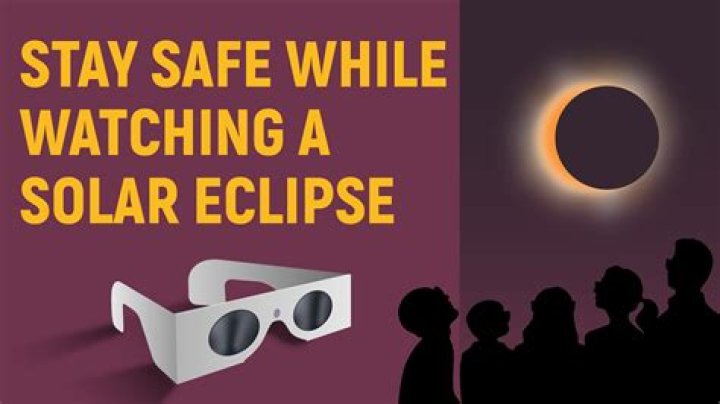
It takes some skill and some extra equipment to take dramatic pictures of a solar eclipse. But it is possible to capture the mood even with a simple cell phone camera.
First of all, protect your eyes!
Never look directly at the Sun without proper eye protection. You can seriously hurt your eyes, and even go blind.
If you don’t have a zoom lens, try to focus on details around the eclipse.
Plan Your Pictures
Whether you have a smartphone or a more complex camera, planning is the key to a successful shot.
- If you use a compass to angle your camera, make sure to take into account magnetic declination.
- Scout your location a few days ahead. Meet up early to avoid crowds and position yourself. ! Dense clouds can cover a solar eclipse, but scattered clouds can add interest to your image.
Phone camera opportunity: People watching the 2005 annular solar eclipse in Spain.
Can I Use My Phone Camera?
You cannot expect to take spectacular pictures of a solar eclipse using only your cell phone because smartphones and small compact cameras have a wide and small lens and a small sensor.
But, there are ways to capture the eclipse by playing to the strengths of your mobile phone.
- Find interesting scenery. Solar eclipses change both the light and shapes of the shadows. Compose your image by including trees, buildings, and reflections.
- Turn around. Sometimes the best picture is behind you.
- Project the Sun. Make a pinhole projector, and take pictures of the projection.
- Turn off your flash. Flash will disturb the natural light.
- Not happy with the result? Play around, and try again.
For detailed pictures of a solar eclipse you need more than a cell phone camera. Cameraman watching the 2015 partial solar eclipse in Spain.
DSLR Cameras and Extra Equipment
A good digital single-lens reflex (DSLR) camera gives more control over the image components, but it also requires more equipment and skill.
Soak up these safety tips for skywatchers wanting to take in the beauty of a solar eclipse.
We’ve all heard the warnings before: Looking directly at the sun, whether it’s with your naked eyes or through an optical aid, can be extremely dangerous.
This holds true on any regular sunny day—and when there is a partial solar eclipse. However, there are easy, safe ways to soak in the sun’s great disappearing act.
Join Us Live for the Total Solar Eclipse
For the fleeting few minutes during a total eclipse when the entire disk of the sun is completely covered by the moon’s silhouette, it is completely safe to look directly at it with your naked eyes.
However, during an annular (“ring of fire”) eclipse or a partial eclipse—where only a portion or even a tiny bite appears to be taken out of the solar disk—it is always extremely dangerous to look at the sun directly.
While viewing a total eclipse is safe, it’s important to be aware of when it ends and when the sun starts its return.
Don’t Stare at the Sun
Even if only a tiny sliver of the sun can be seen, it’s too bright for our eyes. Less than 1 percent of the visible sun is still 4,000 times brighter than the full moon.
The retina of an unprotected eye can burn in as little as 30 seconds. It is particularly dangerous to use binoculars or a telescope to look at the sun. A retinal burn in that case can be frighteningly fast—taking no more than a fraction of a second.
And what makes it even more scary is that because the retina of the eye lacks pain receptors, you won’t feel it happening. And the effects may not appear until hours after the damage has been done.
Use Approved Filters
Many materials and methods popularly used to observe an eclipse may be unsafe. Smoked glass, x-ray films, sunglasses, and camera filters, for example, are all dangerous and should be avoided completely.
That’s because while they reduce the incoming visible light, they fail to stop the full force of the sun’s hazardous infrared and ultraviolet radiation.
Despite the warnings, there are plenty of ways to safely enjoy one of Mother Nature’s most amazing spectacles.
Mylar Filters
Major telescope manufacturers sell aluminum-coated mylar plastic sheets that are available as eclipse viewing glasses or as ring filters that fit over the front of telescopes. These coated filters render the sun in steely blue-white color.
Forget about using those Mylar space blankets sold at camping stores; they are way too thin and flimsy, letting in dangerous amounts of strong light.
Live Q&A With Experts About the Total Solar Eclipse
Welders Glass
For those with more experience with solar viewing who want to catch the partial phases of an eclipse, a number 14 arc welder’s glass can work well. The rectangular piece of dark green glass filters out all ultraviolet and infrared radiation and reduces visible light by a factor of at least 300,000.
The only problem with this method is finding a handy local welder’s supply store when you need it.
Telescope Glass Filters
The best way to see the eclipse unfold up-close is by using metal-on-glass filters that fit on the front end of binoculars and telescopes.
Commonly available at local and online astronomy stores, these filters provide a safe, pleasing orange-yellow hue and are great to use for photography and sunspot viewing as well.
Pinhole Projection
By far the safest method of watching the sun anytime, even during an eclipse, is to avoid gazing at the spectacle directly at all but instead look at a projected image of the sun. A simple pinhole camera can do the trick.
To make one, poke a three-millimeter-wide (or thereabouts) pinhole into a square piece of cardboard paper. Then, with the sun behind you, project the sun through that hole onto another white piece of paper. Now you can safely view the projected image of the sun on that second piece of paper.
Remember never to look through the pinhole directly at the sun.
Notes for Astronomers
While it is possible to project an image of the sun through telescope optics onto a paper, it can damage your instrument. The sunlight can heat up optics in just a few minutes, damaging eyepiece coatings and even melting the cement that holds eyepiece optics together.
Also avoid so-called solar eyepieces that may come with less expensive telescopes. They are highly dangerous, as intense heat from incoming unfiltered sunlight can hit the eyepiece and cause the lens to crack, allowing the magnified sunlight to hit your eye.
Follow Andrew Fazekas, the Night Sky Guy, on Twitter and Facebook.
A solar eclipse begs to be seen, but only at the expense of your eyes—looking at one in the wrong way can do long term damage to your vision. It’s ironic (if only completely necessary) that we hype these phenomena as visual spectacles that we must also resist looking at with our naked eyes.
As the Ring of Fire annular eclipse nears later this month, promising to light up the fringes of the moon with the sun’s burning glare, it’s important to know that you can technically look at the eclipse—you just need the right tools and knowhow to do it without risking your eyeballs.
How looking at an eclipse can damage your eyes
This isn’t an old suburban myth like the one about the dangers of swimming unless you’ve waited exactly 30 minutes after eating, but a verifiable medical advisory: You definitely shouldn’t look at an eclipse with your bare eyes. As Dr. Ralph Chou explained for NASA in 1997 , looking directly at the sun during an eclipse can cause “‘eclipse blindness’ or retinal burns.”
Chou described just how and why the overwhelming light generated by an eclipse is very bad for your eyes:
Exposure of the retina to intense visible light causes damage to its light-sensitive rod and cone cells. The light triggers a series of complex chemical reactions within the cells which damages their ability to respond to a visual stimulus, and in extreme cases, can destroy them
Target breakouts and wrinkles at the same time
Each item is also free of all possible pore-cloggers and contains zero hormone disruptors.
The severity of this damage will vary depending upon the length of exposure. It’s entirely possible, god forbid, that you will completely lose your vision from staring directly at an eclipse. This is why, in Chou’s view, “It is never safe to look at a partial or annular eclipse, or the partial phases of a total solar eclipse, without the proper equipment and techniques.” Listen to the medical professionals, folks (and maybe not the disgraced former president ).
How to safely watch a solar eclipse
The first thing to remember is that regular sunglasses will not protect you from the harmful effects of looking at an eclipse, regardless of how dark they are. This also applies to just staring at the sun when it’s not in an eclipse phase. This giant, ever-burning ball of gas, located 93 million miles away from our planet, has sustained the entirety of all known carbon-based lifeforms for billions of years; it’s not to be trifled with. The only time that it’s largely safe to look at the sun during a solar eclipse is during the phase of “totality,” when the sun is completely blocked by the moon.
Chris Westphal, a photographer who’s captured pictures of more than a few eclipses, tells Lifehacker a bit more about the trickiness of ogling an eclipse at totality:
It is only during a total solar eclipse that it can be okay to look at it, but even then it is highly advisable that you know exactly when totality starts and ends, because if you look at the sun before or after these moments, it can lead to lasting eye damage or even blindness.
Barring the rarity of knowing exactly when totality will take place, you need the proper equipment. Luckily, eclipse glasses are widely available and don’t require much investment, but you need to watch out for counterfeits. One crucial certification to look for is that the glasses are approved by the International Organization for Standardization, which marks certified products with “ISO.”
Per Space.com , here’s what an ISO-approved sunglasses will promise you:
- No more than 0.00032 percent of the sun’s light may be transmitted through the filters.
- The filters must be free of any defects, such as scratches, bubbles, and dents.
- Handheld viewers must be large enough to cover both eyes.
- Labels on the viewers (or packaging) must include the name of the manufacturer, instructions for safe use, and warnings of the dangers of improper use.
There are plenty of companies that manufacture glasses for safely viewing an eclipse. If you’re looking to become something more than a casual viewer, however, Westphal recommends “a white light filter on a telescope or a more technical Hydrogen-Alpha telescope ,” the latter of which is used by astronomers to observe the sun’s atmosphere.
Either way, the bottom line is to simultaneously respect the sun and your retinas—which you can do with the right equipment on hand.
W hen the total solar eclipse occurs on Aug. 21, it will mark the first time the rare spectacle will be visible in the contiguous U.S. since 1979. In a shift from 38 years ago, many of the sky watchers this month will want to photograph the solar eclipse on their phone.
It’s not impossible to take a picture of the solar eclipse with a cellphone camera, but you’ll need extra equipment, both to keep your eyes safe and to get the best possible shot. “It’s one of the most challenging things to photograph, even with a good DSLR camera,” says Andrew Symes, an Ottawa, Canada-based astronomy photographer whose work has been published in outlets including The Weather Channel, io9, and All About Space magazine. “It’s challenging because the brightness of the sun is changing as the moon crosses in front of it.”
Still, there are ways to work around those difficulties, says Symes, who has been photographing the sun, moon and planets with his iPhone since 2011. Here are three of his suggestions for how to photograph the solar eclipse with your phone:
Use solar eclipse glasses to protect yourself
When viewing the solar eclipse at any stage other than totality, when the moon fully blocks the sun, it’s important to wear protective solar eclipse glasses to avoid damage to the eye. The eyewear, which blocks nearly all of the sun’s rays, can also be useful for getting a clear photo of the eclipse. Just hold a pair of eclipse glasses over the phone’s camera and then point it at the sun to snap a photo, says Symes, who has used this technique in the past. Without the glasses, the sun will be too bright for the phone’s camera to handle, resulting in an overexposed image. Symes suggests holding the glasses over the lens instead of taping them to the phone so that it’s possible to capture the area surrounding the sun as well. There’s no need to wear a separate pair of solar eclipse glasses while doing this as long as photographers look at the sun only through their phone’s screen while the glasses are being held over the camera. “[The glasses] dim the sun enough so that it doesn’t just look like a small circle,” he says. “You should be able to see the moon take a bite out of the sun.” That being said, the sun will still appear small in the resulting image, as shown in Symes’ photo below, which shows an un-eclipsed sun shot with his iPhone 7.
Use a telescope to take a better picture
Those planning to view the solar eclipse through a telescope can also use it as a tool for capturing more vivid photos of the eclipse. After attaching the phone to the telescope using a universal smartphone adapter, it’s possible to record the celestial occurrence by pointing the mobile device’s camera through the telescope’s eyepiece. This type of adapter should work with any telescope size and model. Simply holding the phone up to the telescope’s eyepiece will also get the job done, but it will be much more difficult to get a great shot without having that extra hand to adjust the exposure. The adapter will also be more efficient at holding the camera steady. With this technique, photographers won’t need to use eclipse glasses, but a proper filter must be attached to the telescope to prevent damage to the user’s eyes. This will result in larger, more detailed photos, as shown in Symes’ image of the sun below, which was taken on an iPhone 6 through a Cornonado PST telescope.
Fred Espenak created this self-portrait during a 2006 total solar eclipse. He’s using a small telescope equipped with a solar filter for observing the sun safely. Thank you, Fred!
You learned long ago you should never look at the sun directly. Gazing sunward without eye protection can permanently damage your eyes, even causing blindness. But Solar Cycle 25 is ramping up, and there are going to be an increasing number of spots on the sun in the coming years. Plus we’ve got a solar eclipse coming up on June 10, 2021. Look below for tips on observing the sun safely.
Do NOT use these techniques.
Whatever you do, never look at the sun directly without a safe filter in place to protect your eyes.
Besides your unprotected eyeballs, here are some other things you should not use: Do NOT use sunglasses, polaroid filters, smoked glass, exposed color film, X-ray film, or photographic neutral density filters.
DO use these techniques for observing the sun safely
Safe commercial solar filters for a telescope. If you have a ‘scope, you’ll need a safe solar filter on the sky end of it in order to search for sunspot or watch a solar eclipse safely. Do not use a filter on the eyepiece end of your telescope. There’s too much to say about solar filters to include in this article, so we refer you to Fred Espenak’s article on safe solar filters. If you don’t have a ‘scope, you still have plenty of options, such as …
A home-rigged, indirect viewing method. Creating a pinhole camera is another great option, because it lets your family and friends get a good view of the sun, too. We recommend this article by the masters of do-it-yourself science at the Exploratorium in San Francisco. Their article on how to view solar eclipses safely teaches you to make an easy pinhole projector. With it, you can shine the sun’s image onto a flat surface and impress your friends and neighbors while giving everyone (including yourself) a cool experience.
But don’t go yet. There’s more …
The use of a simple pinhole camera enables you to indirectly and safely view a solar eclipse. Photo credit: Eugene Kim
Local viewing at an astronomy club, park or nature center. We highly recommend this route for any kind of eclipse, any daytime solar viewing, or any nighttime astronomical event. If you watch among other amateur astronomers and casual sky gazers, you’ll have fun, learn about astronomy and get a great view of the objects and events going on in the sky. SkyandTelescope.com offers a way to search for astronomy clubs in your area. Or try the NASA Night Sky Network, which is another way to search. Here’s a search page from Go-astronomy.com. And here are astronomy clubs and societies affiliated with the Astronomical League, one of this nation’s most established confederations of amateur astronomers.
Commercial solar eclipse glasses. You might find these online or at a local nature center, or museum. Solar eclipse glasses are super easy to use, and they’re sort of cool-looking.
And there’s still more …
Big fun in Austin, Texas, at the May 20, 2012, solar eclipse when an EarthSky employee handed out solar eclipse glasses at a local restaurant.
Welder’s glass, #14 or darker. Be sure it is #14 or darker. The great thing about welder’s glass is that it allows you to view the sun directly. Plus welder’s glass is a bit more durable than commercial eclipse glasses. If you’re like me, between solar eclipses you’ll forget where you put your commercial eclipse glasses. With the welder’s glass, you can always add it to your rock collection. Search for a local “welding supply” company.
Last but not least, there’s …
Viewing the May 20, 2012, solar eclipse through welder’s glass.
Online viewing. When there’s a solar eclipse, many organizations will offer online viewing. That might be a good option for you, if, when the eclipse is occurs, you’re in the wrong part of the world to see it (when it’s nighttime outside for you). The disadvantage of online viewing is that you don’t get the fun of seeing the event with your family, friends and neighbors. Online viewing is nothing like the full experience of a total solar eclipse, which is nothing short of mind-blowing. Plus, any view of an eclipse is better than none. Happy viewing!
View at EarthSky Community Photos. | Soumyadeep Mukherjee of Kolkata, West Bengal, India, submitted this image on May 23, 2021. It shows how activity on the sun (such as sunspots) is increasing, now that we’re well into Solar Cycle 25. Soumyadeep wrote: “I imaged the sun for 150 days in a row, from December 25, 2020, to May 23, 2021. This image shows a side-by-side comparison among all the sunspot regions … during this period. The growing number of sunspots in the images from left to right clearly shows the growing activity in the solar disk and thus an indication that Solar Cycle 25 is gaining momentum.” Thank you, Soumyadeep!
Bottom line: Solar Cycle 25 has begun, and there are an increasing number of spots on the sun. Plus a solar eclipse might happen in your area. Safe solar eclipse viewing techniques, tips and links here.
A solar eclipse is coming—don’t be scared of it! Whether or not you’re on a place on Earth that will see it at sunrise (Canada and northeast U.S), as a “ring of fire” (Canada, Greenland and Siberia) or high in the sky as a small eclipse (Europe), nowhere will all of the Sun be blocked by the Moon.
That makes this “annular” (ring-shaped) and partial solar eclipse potentially dangerous. You can get excellent advice on how to safely watch a partial solar eclipse from Sky & Telescope and from an online guide and video on how to safely view the eclipse from the Royal Astronomical Society (RAS), the Society for Popular Astronomy (SPA) and the British Astronomical Association (BAA).
Here’s the official warning from the RAS:
Although annular and partial eclipses of the Sun are spectacular events, they should NOT be viewed with the unaided eye. Even though a large part of the solar disc will be covered, looking at the partially eclipsed Sun without appropriate protection can cause serious and permanent damage to the eyes.
So here are 7 ways to safely observe this week’s solar eclipse:
People watch a partial solar eclipse from the roof deck at the 1 Hotel Brooklyn Bridge on August 21, . [+] 2017 in the Brooklyn borough of New York City. While New York City isn’t in the path of today’s total solar eclipse, thousands of residents and tourists alike participated in the excitement by using special glasses to view the unique occurrence when nearly 72 percent of the sun is covered by the moon during the partial eclipse. (Photo by Spencer Platt/Getty Images)
1. Use solar eclipse glasses
With one very specific exception (see below) the only way to safely observe this eclipse while directly observing it is through solar eclipse safety glasses. They must be ISO-certified. If you have some leftover from 2017’s “Great American Eclipse” then do a brief check that they’re not damaged or have any tiny holes in (if they do, don’t use them—even dropping them on a lawn can spike them).
New Research Finds A Connection Between Domestic Violence And These Two Personality Disorders
This Scientist Helps Andean Forests And Ecuador’s Women In STEM
Exceptional Fossil Preservation Suggests That Discovering Dinosaur DNA May Not Be Impossible
2. Make a pinhole projector
You’ve lost your solar eclipse glasses and there’s no time to get new ones. What to do? Don’t use sunglasses. EVER. One answer is to make a pinhole camera, which will allow you to follow the progress of the Moon across the Sun safely without having to directly observe it.
Here’s how NASA says you should make a pinhole camera … but the image of the Sun is pretty small. There is another way.
Photo of images of the solar eclipse on 8/21/17 projected by a colander. The solar eclipse is at . [+] 80% and show up as little crescents.
3. Use a kitchen colander or a slotted spoon
This one’s my favourite. Instead of making holes you use something with small, well-defined holes already—like a kitchen colander.
It will project shadows onto the floor, or on to a wall, which when close to the peak of the eclipse where you are should resemble “crescent Suns.”
You can even see them on walls, floors and even on the sides of vehicles:
A total solar eclipse creates crescent shadows on car, Monmouth, Oregon, August 21, 2017 (Photos by . [+] David Hume Kennerly/GettyImages)
4. Use a pair of binoculars to project the eclipse
For a larger projection you can use optical equipment you might have in your home to make a Sun projector. You’ll need a pair of binoculars, and some patience to line it up (and adjust it as the eclipse progresses—after all, the Sun and Moon will move a lot during the few hours of the eclipse). A sturdy tripod will help. Just don’t ever be tempted to look at the Sun through the binoculars.
A projected image of a partial eclipse.
5. Put solar filters on binoculars, a telescope or a camera
You should never look at a partially eclipsed Sun through optical devices such as binoculars or telescopes. Remember when you were a kid using a magnifying glass to burn grass using sunlight? Yeah, THAT. The only exception is if you put professional solar filters or solar film from the brands like Thousands Oaks and Baader over the objective lenses. Just be sure that you don’t put solar filters on the eyepieces, and do not wear a pair of solar eclipse glasses while looking through any optical device.
6. Watch it when it’s a deep orange color (only) at sunrise
You should never view the Sun with the naked eye … with one very specific exception. If you are going to watch the sunrise—as with any sunrise, regardless of an eclipse taking place—it can briefly be safe to take brief glances with your naked eyes, but ONLY when it’s on the horizon and looking very orange. “While the Sun near the horizon may be bright, the spectral content of its radiation has relatively little short-wavelength light and thus the risk of retinal injury is much lower,” said Dr. Ralph Chou, Professor Emeritus at the University of Waterloo’s School of Optometry & Vision Science at Ontario, Canada, and an world-renowned expert on eclipse eye safety. “Once the Sun is more than a fist-width above the horizon … it greatly increases the risk for photochemical retinal injury.”
There is a caveat; on a perfectly clear, haze-free day even a rising Sun can be too bright to look at. So you’re going to have to use your judgement on the day, not mine. Think about the clarity of the sky, and think about the color of the Sun. It’s must be orange. If it’s above the horizon and turning yellow, forget it. If you don’t trust your own judgement, then forget it. Err on the side of caution.
A partial solar eclipse as seen during sunrise in the coastal town of Gumaca, Quezon province, . [+] southeast of Manila on May 21, 2012. Thousands turned their eyes to the sky on both sides of the Pacific to gaze excitedly as a partial eclipse occluded the sun at dawn in Asia and at dusk in the western United States. An annular eclipse occurs when the moon passes in front of the sun, but is too far from the Earth to block it out completely, leaving a “ring of fire” visible. AFP PHOTO/TED ALJIBE (Photo credit should read TED ALJIBE/AFP/GettyImages)
Taking photos of a solar eclipse could be very harmful to your eyes and also the equipment you use. Here are a set of instructions that you should strictly follow to safely take photos of a solar eclipse:
1) Setup your equipment early. If you have a tripod, this is the time to bring it out as it will save you from looking directly into the sun and also let you take long exposure shots.
2) Get a good solar filter that can be attached in front of your lens. Do not shoot without a filter as it can seriously damage your eyes or the camera sensor.
3) If you have a DSLR or a camera with interchangeable lenses, put on the lens with the longest focal length. A focal length of 200mm to 5oomm should give you a really good picture that captures the intricate details of the sun. If you are using a compact camera, set it to the maximum optical zoom level that is available.
4) Use an ISO value of 50 or 100, aperture size of 8-16 and focus on infinity. Take a series of photos at every shutter speed ranging from 1/1000 sec to 1 sec.
5) If your camera supports bracketing, turn it on. This will tell the camera to automatically take the same shot at 3-5 different exposure levels and you can choose the best of the lot offline. If you don’t have bracketing, manually change the exposure level for your shots so that you don’t miss out on the magic. The low exposure shots will give you the details, the high exposure shots will give you better outer coronal features and you can also combine them later to create an HDR image.
6) Take a few long exposure shots to further capture the coronal features better.
7) To take group photos during the eclipse, project the image of the eclipse on a wall or in water using a reflector and shoot against the backdrop.
You don’t need fancy glasses or equipment to watch one of the sky’s most awesome shows: a solar eclipse. With just a few simple supplies, you can make a pinhole camera that lets you watch a solar eclipse safely and easily from anywhere.
Before you get started, remember: You should never look at the sun directly without equipment that’s specifically designed for looking at the sun. Even using binoculars or a telescope, you could severely damage your eyes or even go blind! Solar eclipses themselves are safe. But looking at anything as bright as the sun is NOT safe without proper protection. And no, sunglasses do NOT count.
Stay safe and still enjoy the sun’s stellar shows by creating your very own pinhole camera. It’s easy! Here’s how:
Materials
2 pieces of white card stock
Pin or paper clip
1. Cut a square hole
2. Tape foil over the hole
3. Poke a hole in the foil
4. Try it out
Place your second piece of card stock on the ground and hold the piece with aluminum foil above it (foil facing up). Stand with the sun behind you and view the projected image on the card stock below! The farther away you hold your camera, the bigger your projected image will be.
To make your projection a bit more defined, try putting the bottom piece of card stock in a shadowed area while you hold the other piece in the sunlight.
Before you head outside on Monday, Aug. 21, to catch a glimpse of the Great American Solar Eclipse of 2017, astronomy experts and medical professionals say it is crucial to take special precautions to protect your eyes from serious damage.
They also say it's vital to use special solar filters to avoid damage to your camera lens or light sensor if you're shooting the eclipse with professional devices like an SLR or DSLR camera — although there's some debate about whether solar filters are needed for smartphone cameras.
Experts say special solar glasses must be worn to avoid eye damage when looking at the solar eclipse. (Yomiuri Shimbun | MCT)
Protect your eyes
Stop before you look up at the sun, and make sure you are wearing special solar glasses designed to protect your eyes from serious damage. That’s the advice being stressed by scientists, astronomers and eye doctors all across the nation.
Even on a normal day, when there’s no eclipse, you never should look directly at the sun without using solar glasses with protective lenses that conform to international safety standards, experts say.
How do you know if your solar glasses are legit? Make sure they are stamped with "ISO 12312-2" and manufactured by one of the many companies endorsed by NASA and the American Astronomical Society. Check this list of reputable vendors of solar filters, and beware of phony products being sold in some stores and on the internet.
Experts also say you should be wary of using solar glasses that are old, because they might not conform to the latest safety standards, and to avoid using glasses with torn or cracked solar filters.
Experts say special solar glasses must be worn to avoid eye damage when looking directly at the solar eclipse. (Len Melisurgo | NJ Advance Media for NJ.com)
If you look directly at the sun without wearing protective solar glasses, eye damage can occur within seconds of exposure, according to Marilyn Gordon, medical director for UnitedHealthcare of New Jersey.
“The sun is incredibly bright – some 400,000 times brighter than a full moon. For this reason, any amount of exposure can cause short-term and/or long-term damage,” Gordon said.
“Short-term issues can include solar keratitis, which is similar to a sunburn of the cornea (the front part of the eye). This can cause eye pain and light sensitivity, with symptoms often occurring within 24 hours after exposure,” she noted. “Long-term issues can include solar retinopathy, which is when the sun burns a hole in the retinal tissues, usually occurring at the fovea. This can cause loss of central vision, with symptoms occurring immediately to two weeks after exposure. Depending on the severity of the retinopathy, vision problems can last for months or be permanent.”
On Aug. 21, 2017, the moon will temporarily block the sun's powerful rays. (Dreamstime/TNS)
Don't use regular sunglasses
Although it might be tempting if you're unable to find a pair of protective solar glasses, experts warn you should not look at the sun with regular sunglasses, even those that are very dark or have a high UV rating. Regular sunglasses will not protect your eyes from infrared radiation, Gordon and other medical experts noted.
Two other options if you can't find solar glasses: Hand-held solar viewers or welder glasses. The hand-held viewers must be certified for safety standards, just like the solar glasses, and the welder glasses must be Shade 12 or higher.
Experts strongly recommend wearing special solar filter glasses to avoid eye damage during the solar eclipse. (Spencer Platt | Getty Images)
Symptoms to look for
If you happen to ignore all the experts’ warnings and look at the solar eclipse without wearing protective solar glasses, keep in mind that often there are no immediate signs of eye damage, Gordon said.
“Symptoms can occur immediately, within several hours or even weeks after exposure,” the doctor noted. “Potential signs of damage include sensitivity to light, eye pain and loss of vision in one or both eyes.”
If you experience any of those symptoms, you should see an eye care professional for a thorough exam.