- Share
- Pin it
- Tweet
- Share
Do you have children? Would you like to give them more fun in studying? Do you want to help them in ace-ing their tests at school? If so, you should definitely continue reading, as there are amazing things your child can learn from you! After reading this article, you will be a personal mind-mapping coach for your child.
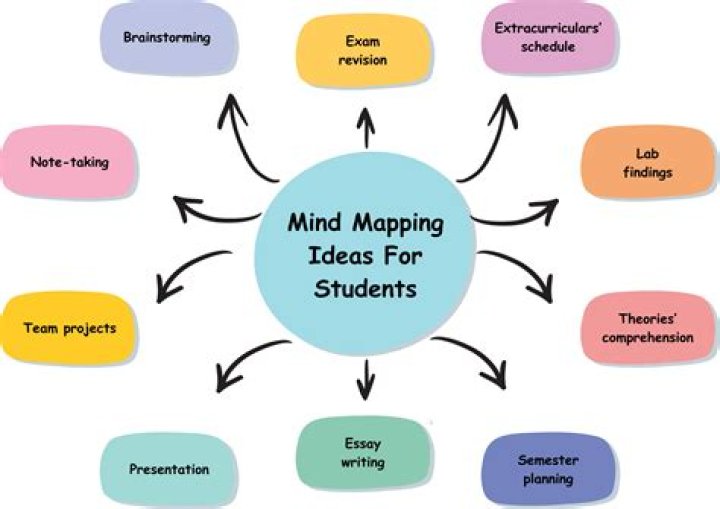
Most people know about mind-mapping already. Do you use it yourself as well? I am sure most people use or have used the technique in one form or the other. The reason it works so well is because it makes use of both sides of your brain, taking the slightly more analytical left side and using words and relationships. It also benefits from the slightly more creative or colourful right side, using images and colours.
For adults this does wonders: We normally tend to use more of the ‘left’ side of our brains, using more words than images, more relationships than colours. Children, on the other hand, tend to work the other way around. For young children who have not been exposed to the adult way of thinking, drawing pictures still comes as natural. This is very important when you want to teach them mind-mapping.
I have to correct myself immediately when I write “teach them”, as we should not teach them mind-mapping: the moment we do that, we will only try to impose our rules and limitations onto their way of thinking. I believe we should help them explore this whole brain thinking on their own. The moment children learn mind-mapping or visual mapping techniques, they will have an advantage over the people who aren’t using these tools. They will be able to summarize books more quickly, create better notes, outline ideas and stories much more easily, etc. In short, their time in school becomes a lot more fun! They will enjoy studying and get better grades.
This Is Your Coaching Outline
You are a coach, not a teacher. You are there to assist your child in finding out about different ways to outline ideas, thoughts and books, so don’t judge. Don’t impose ideas. Let them see where this journey will take them.
Great, now we have that out of our way, we can begin.
First, you make sure your child gets a big sheet of paper and a couple of different pens. You only tell your child that the next exercise is something they should be drawing; they can be as creative as possible.
Take a piece from one of their school books, or tell a story, making sure you use enough image words (words that are easily transformed into pictures). Image words could be those such as “tree”, “house”, “car”, or “power plant” no, I am just kidding… although, your child could probably create a really cool picture of that!).
While you tell the story or read from the book, let your child draw.
After you are done, and your child is done drawing, you ask them to tell the story again using their drawing. Can they do that? Is their story about the same as the one you told? If so, you and your child did a wonderful job. If not, what caused the difference? Were the images not powerful enough? Or perhaps did you not use enough image words? Investigate together.
When your child knows how to do this, you can even go one step further. Take a new sheet of paper, and divide it in a couple of areas (the same number as you have topics in your story). The process starts all over again. You talk, your child draws. Just make sure that each topic is drawn in a single section. You then ask your child to recall the story using the drawing, and give them a pen to draw a line from one part of the story to the other. This is your branch!
If there are parts in your story that you could add more sub branches to, ask your child to add more (small) images with even more pictures. In the end, your child creates something that is almost a real mind map (perhaps even better than any mind map you ever created before!). For the real overachieving parent, you can do one more thing: after you created the map, give your child a new piece of paper and let them re-create the entire map from memory. You can of course give hints about what to add when they are lost—you might be amazed how wonderful their memory is!
The final step is that you step away from your child, and you let them go through a book and create the images and story themselves.
This is the moment your child knows how to outline their ideas, thoughts, books, and much more in a visual map, without your assistance! The maps may not be what traditional mind mappers feel is right, but the map helps them achieve their goal and enjoy studying again.
Don’t worry if your child doesn’t create a perfect map—it isn’t about perfect maps, remember? This is all about your child handling information in a smarter, more efficient manner, and with more fun. The entire process of your child being able to do that depends on their age, interest in the topics, and perhaps even if it is wonderful weather outside. What I can say is that you usually can expect results quickly. Children love to draw, and this is completely in line with their way of thinking.
From now on, make sure you help your child when they are stuck or need motivation.
Action Points
Action point 1: Be a supportive coach, not a parent who says what is right and wrong.
Action point 2: Use the step-by-step outline above to teach your child mind mapping.
Action point 3: Just sit back and smile when your child shows you their work (not much action, but a great feeling!)
Last Updated: April 30, 2019 References Approved
This article was co-authored by Takiema Bunche-Smith, MS, MPA. Takiema Bunche-Smith is the President of Anahsa, an educational consulting company based in New York City. She holds three Master’s degrees: an MPA in nonprofit leadership and management from New York University, an MS in Urban Education Policy from the CUNY Graduate Center, and an MS in Early Childhood & Elementary Education from Bank Street College of Education. Takiema was also the Content Director for Sesame Street from 2007-2009. Takiema was awarded a “Bammy Award” by the Academy of Education Arts and Sciences in 2014, one of 25 educators and education professionals to receive the award across the United States.
There are 12 references cited in this article, which can be found at the bottom of the page.
wikiHow marks an article as reader-approved once it receives enough positive feedback. This article received 22 testimonials and 92% of readers who voted found it helpful, earning it our reader-approved status.
This article has been viewed 459,347 times.
As kids make the transition from toddlerhood to childhood, they grow at a remarkable rate. Their cognitive and language skills develop dramatically during these years, as they transition from simple “why?” questions to enjoying jokes, riddles, and telling stories that follow a sequential order. During these years, children also have rich imaginations, strong fears, and love to play, so it’s important to employ educational strategies that are both adapted to their current developmental stage while also challenging them to grow. Whatever your role in a child’s life (teacher, parent, or another caregiver), you can make learning productive and enjoyable for both of you.
It’s never too early to teach young children spatial awareness. Teaching children how to read a map and relate it to real world objects can start when they are fairly young. Teaching basic map skills can be achieved through reading books about mapping as well as hands on mapping lessons.
Henry’s Map
Billed as “ A fun-filled introduction to maps through the eyes of an adorable pig”, Henry’s Map is a book aimed towards preschoolers – second graders (4-8 years). Henry, a fastidious pig living on a farm, is upset when he looks out his window and is disturbed by the mess he sees. He sets off on a journey to map out his farm so that every animal gets back to where they need to be. “I shall make a map,” he said, “so that everyone will know what belongs where.” After getting the chickens back in the coop, the horses in the stable, and the sheep in the woodshed, Henry then uses his map to get himself back home where he can rest knowing his map has made “a place for everything and everything in its place” possible.
The book is a simple and easy to follow read for young children to follow along with Henry as he spatially organizes everything on the farm. This book provides a great introduction to the concept of what a map is and why people create maps. The book is available in hardcover and Kindle format on Amazon.
Henry’s Map by David Elliot.
Once the basic concept of what a map is and what it does has been introduced, a great next step is to actually produce a map of a small area such as your child’s room or back yard. This map can either be done by hand or by using an online program such as the Cat in the Hat mapping application.
The Cat in the Hat Can Map This and That!
This free online mapping application aimed towards 3-6 year olds, allows for the creation of basic maps of either an indoor room or an outdoor space. From the web site, this mapping tool is geared towards teaching geometry and spatial orientation:
Creating simple maps of familiar places, and then asking kids to use these maps to find hidden objects is a fun way to teach kids basic map skills and hone their spatial skills. This activity will also help kids develop an understanding of direction (which way?), location (where?), and representation (what a drawing stands for). As you do the activity with your child, use words that describe an object’s location and position relative to other objects, such as above, next to, below, behind, and between . Encourage your child to use these words, too.
To get started, visit the Cat in the Hat can Map This and That mapping tool. Have your child select the general shape of the space they want to map. The next page allows the child to select the main pattern and color of the background space they will be mapping. The next page is where your child can get into the nitty gritty of the map elements. The child can pick where they want to map an indoor or outdoor space. Features about the space such as furniture, sand boxes, windows, doors, and north arrow can be selected from three different categories. There are even symbols to create a treasure map including an “x marks the spot” and a chest of gold. There is also a fourth category for marking up the map with free form drawings. The “?” in the upper right hand corners provides onscreen annotation explaining what each area of the mapping tool does. At the bottom there is a text tool so parts of the map can be labeled.
Maps for Kids
You can also check out the article listing five books about maps for young children for more book ideas.
For more mapping resources for teaching children about maps and mapping skills, Carol McAuliffe from the University of Florida’s Map & Imagery Library in Gainesville has compiled a great list of resources. You can access the recorded seminar from when she presented her talk entitled “Maps for Kids: Online Resources for K-12 Geography Education” to MAGIRT as well as the powerpoint slides and handouts.
Enter your email to receive the Geography Realm newsletter:
Adah Chung is a fact checker, writer, researcher, and occupational therapist.
Did you know that intelligence isn’t set in stone? You may have been brought up to believe that some people were just good at challenging subjects, and others just didn’t have the natural ability to learn how to solve very complex math and science problems.
You might be surprised to find out that education and brain research in recent decades has shown otherwise.
Researchers have found that children and adults can develop and train for intelligence.
One of the important factors for being able to develop this intelligence is the belief that intelligence is the result of hard work and study.
Teachers call this a growth mindset. The term was coined by Stanford educational researcher Dr. Carol Dweck. Dweck compares her growth mindset to a fixed mindset. While people with a growth mindset believe that they can develop their intelligence, people with fixed mindsets believe that intelligence cannot be developed. Essentially, researchers now believe that the ability to learn difficult and challenging material comes from a belief that you can.
How Do You Develop a Growth Mindset in Your Children?
These tips are all written with completing school and homework in mind. You will probably notice that these are really approaches that work for solving any problem in life. It’s good to apply a growth mindset to more than just school work. You want a growth mindset to become an overall attitude, not limited to schoolwork.
1. Teach Your Children It’s Okay to Be Wrong
You know how hard it can be to try something new when you are afraid of failing.
Teaching your child that it is okay to make mistakes will free your child up to try a new challenge.
In the process of making that effort, they will learn what works — and what doesn’t.
2. Teach Them to Try out New Ideas and Approaches to Problem Solving
Various problems and tasks require different strategies and methods to be completed. If your child is struggling with a problem, ask them if there is another way that might work to solve the problem.
Even though you will be tempted to solve the problem for them, don’t. If your child is really stuck with an issue, help them brainstorm what else they can try to solve their problem or complete their work. Try asking them what other resources they have that they can check for more info, such as different places in their textbook, online websites, or even asking their friends how they solved a problem.
3. Teach Them to Keep Trying to Solve a Hard Problem, Even if They Can’t See the End Solution
Some problems require several steps in order to be completed. You probably remember your advanced high school math classes as having these kinds of problems. But the new rigorous standards being used in school are designed to expose kids to problems that need to be analyzed and thought through — not just answered through rote memorization or quick calculations.
Work designed to encourage these problem-solving skills is being given out in the early grades, to give kids an early start in problem-solving. Rather than telling your child to give up right away and ask the teacher what to do when they see them, have your child just beginning to try to work their way through. Sometimes the next steps become clear after the first steps are taken. Sometimes your child will realize that they need to approach the problem differently. The thing is, they can’t get there without taking those first few steps.
4. Teach Them the Mantra, “Mistakes Help My Brain Grow”
Dr. Carol Dweck repeatedly encourages teachers to remind students that mistakes help their brain grow. She teaches that when someone easily finds an answer, they have shown the knowledge they already have without learning anything. When someone makes a mistake, they are forced to find out why and then learn something new in the process.
Using the saying “Mistakes Make My Brian Grow” not only takes away some of the fear of possibly being wrong, it validates the effort required in making a mistake.
It then goes even further into encouraging learning what the right answer is. Rather than rewarding someone for being smart (fixed mindset), it encourages a path of continuous learning.
5. Teach Them to Pay Attention to Their Approaches to Problem-Solving
This isn’t just making sure they are following a series of steps to complete their English paper or perform a math algorithm. This is asking them to look at how they themselves chose to solve a problem. Did they draw out a picture to gain a better understanding of what they are trying to solve? Did they look for the specific questions they were being asked by an assignment?
Problem-solving strategies can often be used in other situations that may not appear related on the surface. You can ask your child how they decided to solve a problem or praise them for stopping to think about which approach to take to solve a problem. You can ask about this as soon as they completed work if you are sitting near them while they are working, or when you look over their work to see if it is completed.
6. Teach Them to Talk About Mistakes
This one isn’t about appearing humble. You want your child to feel comfortable discussing what didn’t work, so they learn to discuss approaches to solving problems and completing work. This can help them learn to identify what they have already tried out that hasn’t worked, so they can try again and find what does work. This will also help develop good skills for working with other people, a skill gaining in value in the workplace.
7. Remember That You Won’t be 100% Growth Mindset All the Time
Growth mindset may be an overall way of looking at learning challenging material and solving hard problems, but it is unrealistic for you to always be sharing a growth mindset. Don’t beat yourself up if you find yourself saying something to your child that doesn’t encourage a never give up and always work hard viewpoint. No one is perfect all of the time.
It is more important to strive for growth mindset feedback than to be perfect. The more you adopt this attitude, the more your child will.
This also holds true for your child. Even if your child’s teachers believe that every child can strengthen their intelligence through learning, your child may have moments where they are unsure if they will ever be able to master something. Just remind them to keep trying.
The thought of your teen driving, just a couple years removed from middle school, is difficult to grasp. Rather than deny it, though, it’s best to accept and do your best to teach your child sound driving skills.
To help with the process, consider the following.
Before Each Driver Training Session
- Take time to map out a route, rather than randomly driving. Consider quiet side streets, avoiding busy thoroughfares. Inform your teen of the route as well.
- Have an agenda of what road skills to work on before each drive begins. For example, you could practice left turns or maintaining proper distance.
- Adjust the passenger side mirror so as to use it as your rearview mirror.
- Remind yourself to stay calm and avoid raising your voice. You want the driving session to be a positive experience for your child.
Driver Training On the Road
- Be sure to give your child advance warning on where to turn, or what you want them to do. Shouting, “Turn here!” at the last second denigrates the learning process and creates unneeded tension.
- Keep talking to a minimum so as to not distract your child.
- If a mistake is made don’t wait until the driving session ends to explain. Instead have your teen pull over and explain the error.
- Don’t talk down or scold. Instruct in a calming tone. If you sense tension with your teen, end the driving session.
- Be on the look out for potential hazards or dangers. Beginning drivers don’t have scanning techniques down, usually focusing only on what’s in front of them.
- When starting, limit the first few driving sessions to 15 to 20 minutes. And then as your teen’s driving confidence grows, gradually increase the sessions to 30 and then 40 minutes.
- Retract your instruction if it goes against what your teen was taught in drivers education. This fosters confusion. Put your ego aside while keeping in mind that your teen’s drivers ed teacher is a certified instructor, especially trained on how best to teach new drivers.
Home, After the Driver Training Session
- Go over the entire session, explaining mistakes, but still accenting the positive.
- Ask your teen to assess how he or she drove and what was learned.
Additional Teen Driver Tips
Don’t forget to lead by example. Now that your teen is “driver-aware,” practice sound driving habits when behind the wheel. Avoid racing through yellow signal lights, or passing when the center line is solid. Convey that owning a drivers license is a privilege that cannot be taken lightly.
Have you ever helped a teen driver practice driving? Do you have any tips to add?
- Login
Startup
- Best industries
- Funding
- Incubators
- Business Plans
- Naming
- Home-Based Business
- The Ups Store View
- Strategy
- Operations
- Sales
- Marketing
- Customer Service
- Franchises
- Build
- Safeguards
- Peak Performance
- Company Culture
- Public Speaking
- Hiring
- HR/Benefits
- Women Entrepreneurs
- Productivity
- Rising Stars
Innovate
- Creativity
- Invent
- Design
- Pivot
Technology
- Cloud Computing
- Social Media
- Security
- Data Detectives
Money
- Exit Interview
- Personal Capital
- Bootstrapping
- Crowdfunding
- Venture Capital
- Borrowing
- Business Models
- Personal Finance
Inc. 5000
- Inc. 5000 Series: California
- The 2019 US List
- The 2019 Europe List
- Apply Inc. 5000 US
- Apply Inc. 5000 Europe
Inc. BrandView
- Cox Business
- Deloitte
- Intel
- PPG
- The UPS Store View
- Whoop View
- Principal
- Branded Content
Subscribe
Subscribe
- Watch
- Guides
Subscribe
Best Workplaces
Awarding excellence in company culture.
Regular Rate through January 15
- Login
Subscribe
Subscribe
Subscribe
How to Use 2020 to Teach Your Children to Be More Resilient, According to Psychology
The pandemic is terrible, but living through it might teach your kids to be mentally tougher.
We all know firsthand how mentally difficult 2020 has been for us adults. Data is starting to trickle in showing just how hard it has been on our kids.
According to one recent survey, 14 percent of American children are showing worsening mental health because of the pandemic. Studies out of China, Australia, and other countries confirm how brutal the isolation and uncertainty of lockdowns can be for young people.
“Parents are reporting an increase in anxiety levels for children who were already kind of anxious in their temperament, and kids who previously had not had anxiety have developed anxious behaviors,” Adiaha Spinks-Franklin, a pediatrician at Texas Children’s Hospital, told the New York Times. Which probably just confirms what you’re seeing with your own eyes.
This is clearly bad news, but experts do offer some comfort for worried parents. With the right support, going through a serious challenge like a pandemic can help your child develop resilience that will benefit them throughout their lives.
How to help your kids develop resilience
This is not to say anyone would wish stress and unhappiness on kids. Of course they wouldn’t. But given that we’re stuck with a rampaging virus, Rutgers University psychologist Vanessa LoBue reminded parents in the Conversation recently that at least this crazy year may help your kids develop the grit to get through whatever life will throw at them later.
“Resilient kids don’t have some kind of superpower that helps them persevere while others flounder. It isn’t a trait we’re born with; it’s something that can be fostered,” she insists. How do you support your kids so that this important skill can grow and develop?
Really listen. We all need to talk through our feelings sometimes, but listening offers kids more than an opportunity to vent. “Allowing children to talk — and really listening — shows caring and acceptance, validates their feelings, and helps them contextualize issues,” claims LoBue. So make a point of putting down your screens and giving your kids your full attention periodically.
Give them as much autonomy as possible. All of our choices are constrained by the virus. Kids feel helpless just like adults. Counterbalance these feelings by offering your children as much self-determination as the situation allows. “Trusting them to try things on their own — and even fail — can help them learn to solve problems or deal with anger, disappointment, or other uncomfortable emotions,” LoBue says.
Teach them “calm breathing.” LoRue links to a resource explaining how to teach your family (and maybe yourself) this useful skill for emotional regulation.
Support your community. As they say, it takes a village, so don’t ask yourself just how you can support your own kids’ resilience, but also how you can support others during this time too. Initiatives like donating to a food bank, helping out a neighbor, or voting for candidates who will support struggling families are important too.
Difficult times can pay lifelong dividends
Helping your kids navigate the current crisis is important for your family’s sanity now, but weathering trauma when you’re young can pay dividends for years to come. Research shows that an incredible 75 percent of high achievers went through serious trauma when they were children. You wouldn’t wish trauma on any child, but it can build the resilience necessary to persevere and succeed later in life.
It might be helpful to remember that when you’re bouncing between work and Zoom classes or stuck in the house for what feels like the 900th weekend in a row and starting to feel like you might lose your mind. Approach the situation with love and thoughtfulness and at least it might do your kids some good in the long term.
One of the most vital characteristics of a child is confidence.
When equipped with a high level of self-esteem, kids stand a better chance of dealing with social pressure and responsibilities, especially when they grow up.
Thus, it is of utmost importance that parents help kids build up trust in themselves.
1. Give kids compliments when they have achieved a good deed, but do not shower them with praises
The easiest step towards teaching your child confidence is to acknowledge their efforts.
Sometimes, parents gloss out on kids’ achievements, deeming them as trivial or unimportant.
The truth is, kids are extremely sensitive to how adults react to their actions.
When received compliments after performing a certain behavior, kids will consider them as incentives and are more likely to repeat that behavior in the future.
In short, praising kids when they have done something appropriately is a necessary move towards building kids’ confidence.
It can be when they finish their homework in due time, or when they offer to help you with cleaning the dishes.
However, giving encouragement does not mean you have to flatter your kids all the time, no matter what they do.
For example, telling a child he or she is great at football right after they lose to an opponent team is uncandid.
Instead, you can find a more realistic approach, such as commenting on how hard they have tried during the match, or how much they have improved since the last game.
2. Guide kids through negativity
Avoiding groundless negativity and looking on the bright side is crucial to building a child’s self-esteem.
Whenever you hear your kids complain about them not being good enough, help them understand that a person possesses unique talents.
All kids have to do is to find a way to nurture, develop and sharpen their own abilities.
Steer kids away from saying: “I can’t do this”, “I am terrible at this”, or “There must be something wrong with me because I suck at this”.
Instead, ask them to think the other way round by focusing on what they can do to solve the problem.
“I cannot do this math exercise yet, so I will study harder and see how things work out.”
“I may not be good at drawing, but at least I can tell the difference between different shades of red.”
This mindset needs to be reinforced over and over again so that kids no longer turn to negative thoughts once challenges arise.
3. Help kids aspire towards self-reliance
If you want your kids to become confident, let them grow their sense of independence.
Allow them to pick out their daily outfits, pack their school bags, or decide where to sit at the dinner table.
In case your child is still too small, you can stand by and supervise from afar to make sure nothing goes wrong.
For complicated tasks, like folding clothes or making a sandwich, you can help by giving them a model demonstration, then instruct them to do the same.
When kids are used to doing things on their own, they are less likely to expect support from other people.
Gradually, as kids experience first-hand what it feels like to handle stuff by themselves, their self-belief will be boosted.
4. Give kids a chance to lead
Nothing makes kids prouder than leading other people since being assigned as a leader means kids are trusted to shoulder certain responsibilities.
To make this happen, parents should actively join kids in their daily routines and give them the opportunity to supervise and give orders to everyone.
For example, you are having a mini-baseball game in the backyard.
Vote for your kid to be the team captain and give out strategies so you can follow.
After being regarded as a commander for a few times, your kid will slowly realize that their works are recognized.
This will act as motivation so that the kid will continue trying their best in the future.
5. Ask for kids’ opinions when it comes to relevant issues
If there is a situation pertinent to kids, make sure the kids have a vote in the matter.
Whether it is the smallest thing, like the color for the family uniforms, or more serious issues, like choosing an extracurricular activity, parents should include kids in the decision-making process.
When asked for advice or simply comments on suitable circumstances, kids will feel like their ideas are appreciated, thus enhancing their self-esteem.
But remember, do not shut down what the kids have voiced out, however pointless, irrelevant, or naive they are.
Instead, simply embrace their suggestions as “thoughtful”, “creative”, or “nice”.
Not only will this help kids avoid embarrassment, but it also encourages kids to keep thinking and expressing their viewpoints.
6. Make sure kids always receive unconditional love from their families
Family love is a sturdy foundation to build up a child’s confidence.
If kids know they are taken care of and supported by their family, they are more likely to cultivate a sense of self-belief.
This is because, for kids, the initial step of being confident is feeling accepted and valued, starting by the closest people.
Tell kids how much they mean to you, and show them no matter what happens, you will always stand by their side.
7. Do not compare kids to other people
No one likes comparison, adults and kids alike.
Comparison is not supposed to make kids feel more motivated and try to act better.
Instead, when being put on a scale with another person – especially someone their age – kids are more likely to be bitter, resentful, and doubtful of their abilities.
Even when you think there is a child better than your kid, there is no need in saying: “Oh, look at that girl! She can go to school on her own already when you still need me to drive you to school.”
Everyone has their own worth, and reminding kids of certain qualities they currently lack by pointing out at other children will not help.
Conclusion
Teaching a child confidence is also about giving them the preparation they need in order to succeed in the future.
Thus, parents need to be consistent and delicate in how they approach their kids.
Do not turn kids into egoists, but at the same time, do not let kids lose hope in themselves.
To raise good kids, we have to help them think independently
Posted Jun 05, 2017
We all want our kids to grow up knowing right from wrong, with the moral courage to act on what they know. Courage is something they have to develop through experience and practice. Talking can help, as kids encounter tricky situations at school or with friends; story books also help us along with these conversations. But acquiring courage has to be a gradual, interactive process: we can’t just sit down one afternoon and tell our kids how to be courageous, hoping that talking will be enough.
What about knowing what’s right and what’s wrong? Can we just sit down and tell our kids the facts? Up to a point, yes. We do tell kids they shouldn’t lie, shouldn’t be mean to one another, should help others where they can. Just telling them once isn’t likely to do the trick, but there’s nothing mystical here—we can pass along some basic moral knowledge just as we pass along knowledge of arithmetic, geography, or exotic animals.
But only up to a point. There seems to be something special about moral education, which means that just accepting what your elders and betters tell you isn’t really enough. We’re happy for our kids to learn about lions and elephants from TV, or a trip to the zoo. If they believe what they’re told they can learn all they need to, without becoming tiny zoologists doing original scientific research.
In contrast, argues philosopher Alison Hills of Oxford University, just believing what you’re told isn’t enough when it comes to morality. Kids really understand the difference between right and wrong only when they can think things through for themselves, appreciating why they shouldn’t lie or be mean to one another. A kid who is nice to others only because her mother told her to be nice still lacks something very important: moral understanding. And that can’t be remedied by simply telling her more facts about right and wrong, she has to learn to think this through independently.
The same issues arise for adults, especially as we face morally complex dilemmas in life, and may struggle to know what to do for the best. Can we gain moral understanding simply by listening to experts, just as we gain understanding of elephants by listening to animal experts? Or do we need something deeper, going beyond a deference to authority?
Responding to Hills, Cambridge philosopher Paulina Sliwa argues that whilst moral understanding is complex and subtle, gaining understanding is ultimately just a matter of getting enough moral knowledge. In Sliwa’s view, understanding is not something separate from ‘mere’ knowledge.
So how can we come by this moral understanding? Can we learn from others, and in turn teach our children, or do we all have to work this out for ourselves? In the end, a middle way seems to match what we often do. We can learn about morality from speaking with others, whether these are our friends, family members, teachers or religious leaders, or even a wise stranger met by chance. But each of us must take responsibility for deciding where to place our trust, rather than blindly following advice.
And as parents, we must strike a very delicate balance. Our children need our advice and guidance, but they also need to learn how to question authority, even parental authority. Parents need generous doses of courage, humility, and wisdom: nobody said it would be easy!
Read more: Hills, Sliwa and others discuss these ideas in more detail at the Pea Soup blog.
Hills, Alison (2009): ‘Moral Testimony and Moral Epistemology’, Ethics 120: 94-127.
Sliwa, Paulina (2017): ‘Moral Understanding as Knowing Right From Wrong’, Ethics 127: 521-52.
Very nice informative post.
Very nice informative post. The future development of our country depends on the children, but nowadays many children are helpless. If you see those kinds of helpless children, just inform to Nandini Voice For Deprived, they will take care of their.. Call 044-24916037
Why Should Kids Learn How to Swallow a Pill?
Swallowing a pill is an important skill that many of us take for granted until we have a child who needs to do it. Many things — from anxiety to stubbornness — can make it harder for some kids to swallow pills.
Many medicines come in chewable or liquid form. But some are best taken as a pill or tablet. In fact, some pills that are meant to be swallowed whole should never be crushed or chewed. Doing so can be dangerous or prevent them from working as they should. Some medicines work over a few hours instead of all at once. That won’t happen if the pill or tablet changes form.
As with any skill, learning to swallow a pill takes practice. Teach your child at the right time and in the right way to make it a positive experience that builds your child’s confidence.
When Should Kids Learn?
The age at which kids can best learn to swallow a pill varies. Try to avoid comparing your child with other kids, even siblings. In general, kids should be at least 4 years old and at a stage when they seem cooperative and motivated to learn new skills.
Consider starting before your child needs to take medicine so there is no pressure. Start with something very small, like an ice cream or cake sprinkle. After a few successful tries, slowly increase the size of the candy (mini-chocolate chips or chocolate chips may work). Then you can move on to a pill such as a non-chewable vitamin.
Practice when things like TVs and devices are turned off and there are no distractions. Don’t expect your child to learn this skill overnight. Practice for 5–10 minutes a day for about 2 weeks.
What to Do
Before kids swallow their first real pill, remind them of other skills they have mastered (like riding a tricycle or tying a shoelace). Explain why taking medicine is important so they’ll feel good about taking it. Then model the behavior. If possible, let kids see you take one of your own medicine pills or a multivitamin before it’s their turn.
When it’s your child’s turn to swallow a pill, stay calm and positive, even if things don’t go right the first time. Praise your child for trying. You also want to avoid negative experiences related to pills. For example, if you sneak a pill into your child’s food and get caught, it may backfire and create mistrust.
To swallow a pill, kids should:
- Sit up straight with their head centered and straight.
- Tilt their head back only a bit. Leaning too far back can make it harder to swallow.
- Take a few sips of water to “practice” swallowing.
- Put the pill on their tongue and then drink the water again. (Sometimes having kids drink through straws can help.)
If the pill doesn’t have to be taken on an empty stomach, your child can take sips with something thicker than water, like milk or a milkshake. You also can try putting the pill in a semi-solid food like pudding, ice cream, or applesauce.
Praise your child if they swallow the pill successfully. If not, try again. If your child refuses, stop and take a break. You can try again later.
If the pill seems too big for your child to swallow, ask the pharmacist if it’s safe to cut it into smaller pieces.
When Should I Call the Doctor?
With patience and practice, most kids will learn the skill of swallowing a pill.
Some kids, though, might have trouble with it, including:
- Kids who are very anxious about new medicines or new experiences.
- Kids who had a bad experience earlier (like gagging or vomiting) when they tried to swallow a pill.
- Kids with developmental delays; oral-motor problems (such as speech problems or refusal to eat certain food textures); or behavioral problems (which could include refusing to take any medicine)
For these kids, it may be wise to delay training and to speak to a doctor first. There might be other ways to take the medicine, such as in liquid form or as a tablet that can be chewed or dissolved.
When you give your child any medicine, follow the directions on the label and talk to your doctor or pharmacist if you have questions.