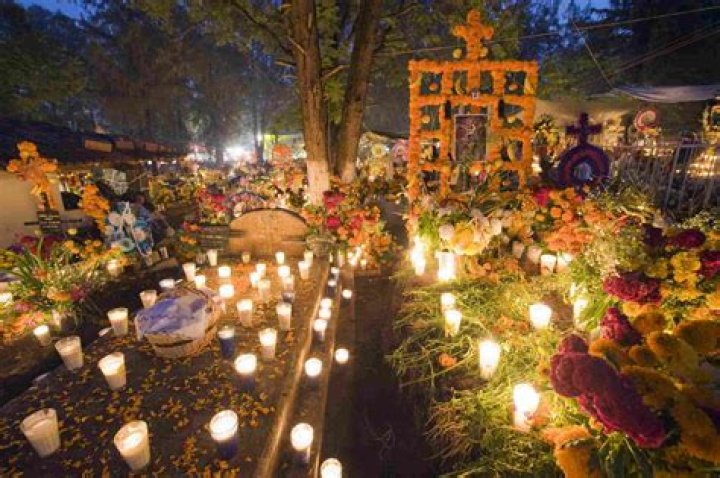
Stunning pics capture Mexico's 'Day of the Dead' preparations where thousands dress up as the skeletons of their deceased relatives
By Daniel Hoffman
STUNNING pictures have captured celebrations for the upcoming 'Día de Muertos', or Day of the Dead, in Mexico City.
During the holiday, which falls on November 1st and 2nd, families and friends honour those close to them who have died.
Observers across Mexico - as well as in other Central American countries and the United States - don intricate face paint which resembles a skull - based on 'La Calavera Catrina', or 'the elegant skull', a drawing by famous Mexican artist José Guadalupe Posada.
The early 20th century sketch of a female skeleton wearing an elaborate hat was intended to mock Mexicans who rejected their heritage in favour of European culture.
35
Day of the Dead celebrations originated in the cultural area of MesoamericaCredit: AP:Associated Press
35
Mesoamerica refers to the area extending from northern Mexico down through Central American nations including Guatemala, Honduras and El SalvadorCredit: AP:Associated Press
35
Observers of the holiday usually wear elaborate 'Catrina' and 'Catrin' costumes based on the early 20th century drawing La Calavera Catrina, or 'the elegant skull'Credit: AP:Associated Press
35
The holiday used to fall in the beginning of summer, but following Spanish colonisation moved to the beginning of NovemberCredit: Reuters
35
This is because it gradually became associated with the Christian traditions of Hallowe'en, All Saints' Day and All Souls' DayCredit: Getty Images
35
During the holiday, families and friends of the dead often build private altars known as 'ofrendas', the Spanish word for 'offerings'Credit: Getty Images
35
The altars are usually adorned with traditional sugar skulls, flowers, and the deceased person's favourite foods and drinksCredit: Getty Images
35
Day of the Dead was effectively unknown in northern Mexico, where indigenous people had different traditions, until the 20th centuryCredit: Getty Images
35
Now, it is celebrated all across Mexico, as well as in other Central American countriesCredit: Getty Images
35
It is also widely celebrated in the United States, which has a large Hispanic populationCredit: Getty Images
35
Day of the Dead is highly observed in the American states of California, Texas and ArizonaCredit: Reuters
35
Traditionally, families will also clean their loved ones' graves and tell stories about the deceased to remember themCredit: Getty Images
35
Many cities organise festival and artistic costumes, with prizes for the best Catrina costumeCredit: Getty Images
35
Mexicans will also bake 'pan de muerto' (which translates as 'bread of the dead'), a sweet bread roll often decorated with bone-shaped pieces and a tear dropCredit: Getty Images
35
Pan de muerto is usually eaten alongside the deceased person's favourite foods in remembranceCredit: Getty Images
35
Although there are plenty of public celebrations, the holiday is mostly a private, family affairCredit: Getty Images
35
But unlike Halloween, Day of the Dead is not about being scared of the supernatural - but rather celebrating the spirits of loved onesCredit: Getty Images
35
November 1st is known as 'Día de los Angelitos', or 'Day of the Little Angels', and is for remembering deceased childrenCredit: Getty Images
35
It is also sometimes called "Dia de los Inocentes", or 'Day of the Innocents'Credit: Getty Images
35
Meanwhile Día de Muertos itself is on November 2Credit: Getty Images
35
In ancient times, the celebrations fell in the ninth month of the Aztec calendar and were celebrated for an entire monthCredit: Getty Images
35
Now, plans for the day are made throughout the year, which includes preparing the offerings for the deadCredit: Getty Images
35
As well as foods, toys are often brought for dead childrenCredit: Getty Images
35
Meanwhile, dead adults are often offered a bottle of tequila, mezcal or pulque - Mexican spiritsCredit: Getty Images
35
Another common offering for adults is atole, a sweet drink prepared with flour which is a traditional comfort food in northern Meixco and southern TexasCredit: Getty Images
35
The 'ofrendas' are usually located in family homes, featuring Christian crosses and statues of the Virgin MaryCredit: Getty Images
35
Day of the Dead is such a big part of Mexican heritage that altars are also built in schools and in government officesCredit: Getty Images
35
It is believed along with other items, the offerings on the altar are supposed to symbolise the earth, wind, water, and fireCredit: Getty Images
35
The elements are often signified with in the form of fruits, shredded paper, water and candlesCredit: Reuters
35
Some suggest that folklore says neglected spirits may feel angry and upset at being ignored on Day of the Dead, and seek vengeanceCredit: Reuters
35
As a result, while is has a joyous tone and is generally celebrated out of love, some observe it as a result of fearCredit: AP:Associated Press
35
Some folktales suggest those who do not celebrate their loved ones are also at risk of falling ill, or even dying themselves shortly after the holidayCredit: AP:Associated Press
35
Day of the Dead is celebrated by all ages, and Mexican children learn about its traditions as part of the national curriculumCredit: AP:Associated Press
35
The holiday has become more well-known around the world, with the Catrina becoming an iconic imageCredit: AP:Associated Press
35
Similar celebrations can be seen in other Latin American countries, such as Dia de los ñatitas (Day of the Skulls) in BoliviaCredit: AP:Associated Press
Wepay for yourstories! Do you have a story for The Sun Online news team? Email us at or call 0207 782 4368