Lookup NU author(s): Dr Nhat Khai Bui,Dr Joseph Gray,Professor Waldemar Vollmer
Full text for this publication is not currently held within this repository. Alternative links are provided below where available.
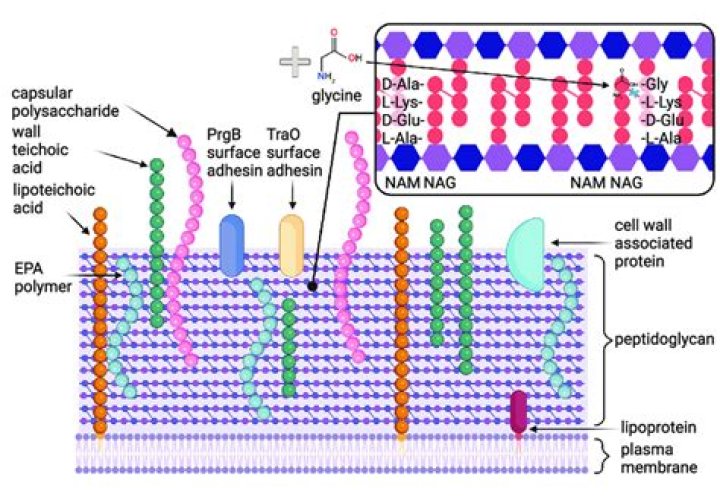
Upon nutrient limitation cells of the swarming soil bacteriumMyxococcus xanthus form a multicellular fruiting body in whicha fraction of the cells develop into myxospores. Spore developmentincludes the transition from a rod-shaped vegetative cell toa spherical myxospore and so is expected to be accompanied bychanges in the bacterial cell envelope. Peptidoglycan is theshape-determining structure in the cell envelope of most bacteria,including myxobacteria. We analyzed the composition of peptidoglycanisolated from M. xanthus. While the basic structural elementsof peptidoglycan in myxobacteria were identical to those inother gram-negative bacteria, the peptidoglycan of M. xanthushad unique structural features. meso- or LL-diaminopimelic acidwas present in the stem peptides, and a new modification ofN-acetylmuramic acid was detected in a fraction of the muropeptides.Peptidoglycan formed a continuous, bag-shaped sacculus in vegetativecells. The sacculus was degraded during the transition fromvegetative cells to glycerol-induced myxospores. The spherical,bag-shaped coats isolated from glycerol-induced spores containedno detectable muropeptides, but they contained small amountsof N-acetylmuramic acid and meso-diaminopimelic acid.
Author(s): Bui NK, Gray J, Schwarz H, Schumann P, Blanot D, Vollmer W
Publication type: Article
Publication status: Published
Journal: Journal of Bacteriology
Year: 2009
Volume: 191
Issue: 2
Pages: 494-505
ISSN (print): 0021-9193
ISSN (electronic): 1067-8832
Publisher: American Society for Microbiology
URL:
DOI: 10.1128/JB.00608-08